Somewhere around the third hour of a long bus ride or flight, your ankles stop looking like your ankles. The skin feels tight, your shoes feel smaller, and pressing a finger into the top of your foot leaves a dent that takes a moment to fill back in. This is not unusual and it is not dangerous for most people, but understanding why it happens is what makes the difference between guessing at remedies and actually using the ones that work.
What Sitting Still Does to the Blood in Your Legs
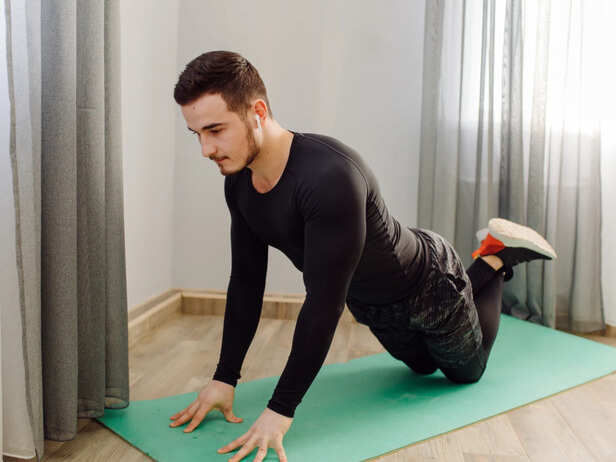
![Push through the floor with your legs.]()
Push through the floor with your legs.
Image credit : Freepik
Your leg veins carry blood back up to the heart against gravity. They manage this partly through a system of one-way valves, and partly because the muscles in your calves act as a pump every time you walk. Each step squeezes the deep veins and pushes blood upward. When you sit with your knees bent at a right angle for hours, that calf pump stops working. Blood pools in the lower leg veins. Fluid leaks from the vessels into the surrounding tissue. The result is the tight, heavy, slightly shiny swelling you feel at the ankle and the top of the foot.
The position itself makes things worse. A seat edge pressing into the back of the thigh compresses the large femoral vein that runs through it, slowing return flow further. The cabin pressure on a flight adds a layer: lower cabin pressure means lower atmospheric pressure on the body's surface, which makes it slightly easier for fluid to move outward from the vessels into the tissue.
The Moves That Actually Work
The calf pump is the mechanism. Restoring it is the solution. The most effective thing you can do on a long journey is recreate what walking does, from your seat.
Heel raises work. With your feet flat on the floor, lift both heels as high as they will go, hold for two seconds, and lower them. Repeat twenty times. This contracts the calf muscle and squeezes the deep veins in exactly the way walking does. Ankle circles in both directions for thirty seconds each achieve something similar. Toe presses, pushing the balls of your feet into the floor as if you are trying to push through it, contract the smaller muscles of the lower leg and add to the effect.
Get up when you can. On a flight, once every ninety minutes is enough to make a real difference. On a bus, use every stop. You do not need to walk far. Standing for two minutes at the back of the aircraft or on a platform while the bus refuels is enough to restart the pump.
What You Wear on Your Legs Matters
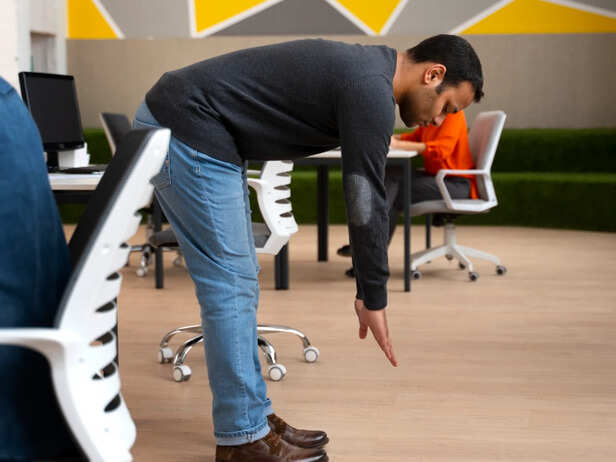
![Back]()
Back
Image credit : Freepik
Compression socks work on a simple principle: they apply graduated external pressure that is highest at the ankle and decreases up the leg. This mechanically assists venous return, the blood that would otherwise pool at the ankle is squeezed back upward. They do not need to be medical-grade for a journey. Mild compression socks, widely available in pharmacies, provide enough support for travel in most healthy adults.
What does not help is tight clothing around the knee or mid-thigh. A pair of jeans with a tight waistband or leggings that grip at the knee can restrict return flow at exactly the wrong point. Loose trousers or stretchy fabric that does not constrict at any joint works better than anything snug.
Shoes matter too. Lace-up shoes that feel fine when you board can feel unbearable three hours in as the foot swells. Slip-ons or shoes with a little give are easier to loosen or remove mid-journey.
Hydration and Salt
Dehydration thickens the blood slightly and makes the venous system less efficient. Drinking water through a long journey is not just general advice, it has a direct effect on how much fluid shifts into the tissue. Aim for a small glass of water every hour or so rather than a large amount at once.
Salt encourages the body to hold onto water in the tissue rather than pulling it back into the bloodstream. This does not mean avoiding all salt on a travel day, but the combination of a salty airport meal, alcohol, and several hours of immobility is a reliable way to arrive with ankles that do not fit your shoes. Alcohol also dilates blood vessels and reduces the tone in the venous wall, which adds to pooling.
When Swelling Is Worth a Doctor's Attention
Travel swelling is almost always symmetrical, both ankles, roughly equally. It improves within an hour or two of arriving and walking around. That pattern is benign and the steps above address it.
Swelling that is only in one leg, that is accompanied by warmth, redness, or pain in the calf, or that does not reduce after you have been moving for a few hours is a different matter. Deep vein thrombosis, a clot forming in a deep leg vein, can develop on very long journeys, particularly in people with certain risk factors including recent surgery, a clotting disorder, active cancer, or a history of previous clots. A one-sided, painful, warm swelling after a long journey is worth a same-day medical assessment, not a wait-and-see approach.
People with heart failure, kidney disease, or chronic venous insufficiency may find that even a short journey causes significant swelling. For them, travel compression and movement strategies still help, but the plan is worth discussing with their doctor before a long trip, not after.
The swelling that most travellers experience is the body doing something predictable in an unusual situation. The calf pump stops, fluid redistributes, and the ankles pay the price. Start the heel raises early in the journey, before the swelling begins, and the mechanism never gets a chance to fall behind.
Experiencing frequent stress, fatigue, or health challenges? Your name energy may be worth exploring. Check it here. Unlock insightful tips and inspiration on personal growth, productivity, and well-being. Stay motivated and updated with the latest at
My Life XP.