Exfoliation has a reputation for being simple, scrub or dissolve, pick one. But chemical exfoliants split into two families that work at genuinely different depths, on genuinely different problems, because of a single molecular property that has nothing to do with marketing. That property is solubility. Whether an acid dissolves in water or in oil determines where it can travel inside the skin, and that geography is the whole story.
The Surface Layer and What Water-Soluble Acids Can Do There
AHAs, alpha hydroxy acids, which include glycolic, lactic, mandelic, and tartaric acid, dissolve in water. Skin's outermost layer, the stratum corneum, is made up of dead cells held together by a protein-rich, relatively water-accessible matrix. AHAs can move through that environment. Once there, they loosen the bonds that keep dead cells stuck to each other and to the live cells below. The result is that surface cells shed more evenly instead of clumping and flaking. Skin looks smoother because it is smoother at the level you can see and touch.
This is also why AHAs are the acid of choice for uneven tone, post-inflammatory marks, and the kind of dullness that comes from cells sitting on the surface longer than they should. The pigment that darkens a healed spot sits in those upper layers. An AHA reaches it. A BHA, for reasons the next section explains, mostly does not.
Why Oil Solubility Sends BHAs Somewhere Else Entirely
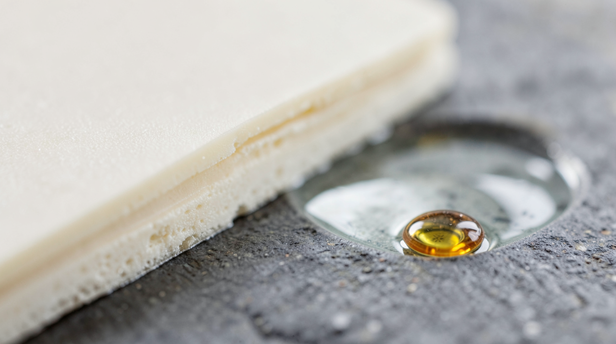
![Creamy Layers and Amber Droplet]()
Creamy Layers and Amber Droplet
Image credit : MyLifeXP Bureau
BHAs, the main one used in skincare is salicylic acid, dissolve in oil, not water. That single fact changes their entire route through the skin. The pore lining is lipid-rich, meaning it is more chemically similar to an oil-based molecule than to a water-based one. Salicylic acid can travel down into the pore itself, through the sebum that fills it, and work on the material stuck inside.
This is not a small distinction. A water-soluble acid sitting on top of a pore does not meaningfully penetrate it. An oil-soluble acid slides in. Inside the pore, salicylic acid loosens the plug of dead cells and oxidised sebum that causes a blackhead, and it reduces the conditions that allow the pore to stay congested. For someone whose primary concern is congestion, enlarged pores, or breakout-prone skin, a BHA is doing something an AHA structurally cannot.
What Each One Cannot Do
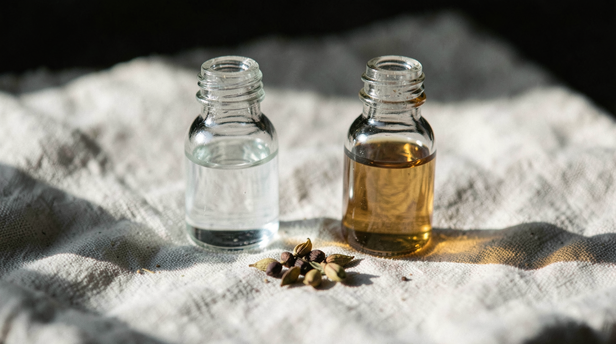
![Botanical Elixirs Unveiled]()
Botanical Elixirs Unveiled
Image credit : MyLifeXP Bureau
Neither acid is a complete solution on its own, and the gap is worth being direct about. AHAs do not meaningfully decongest pores. A glycolic acid toner applied over active congestion will smooth the skin around the pores without clearing what is inside them. It may make the surface look more even, but the congestion remains.
BHAs, working deeper in the pore, do comparatively less for surface texture irregularities and pigmentation. Salicylic acid is not the first choice for someone dealing with post-acne marks or uneven tone without congestion. It exfoliates, but its primary action is inside the follicle, not across the surface layer where pigment sits.
This is why combination skin often responds to both used in different areas, or used on alternating days, rather than one replacing the other. They are not competing products doing the same job differently. They are doing different jobs in different locations.
Concentration, pH, and Why These Numbers Matter More Than the Acid Name
An AHA or BHA only exfoliates if the formulation's pH is low enough for the acid to stay in its active, protonated form. Most effective leave-on AHA products sit between pH 3 and 4. Most effective BHA products sit between pH 3 and 4 as well. Above pH 5, both acids are largely neutralised and the exfoliation is minimal regardless of the percentage on the label.
Concentration matters, but it interacts with pH. A 10% glycolic acid product at pH 4.5 may deliver less active acid than a 5% product at pH 3.5. This is why a product with a higher percentage does not automatically mean stronger exfoliation, and why a gentle-sounding low percentage can still cause irritation if the pH is very low. The label tells you the ingredient; it does not tell you the whole story of how it behaves.
Skin Type as a Starting Point, Not a Rule
Oily, congestion-prone skin is often directed toward BHAs, and that is usually reasonable. But the decision is better made by identifying the actual concern. Someone with oily skin and no congestion but significant post-inflammatory hyperpigmentation may get more visible improvement from an AHA. Someone with dry skin and persistent blackheads may need a BHA despite the conventional advice pointing dry skin toward AHAs.
Sensitive skin sits differently with each acid. Lactic acid, an AHA, is larger in molecular size than glycolic and penetrates more slowly, which generally means less irritation at equivalent concentrations. Mandelic acid is larger still. Salicylic acid has a mild anti-inflammatory property alongside its exfoliant action, which is part of why it is often tolerated by reactive, breakout-prone skin even when stronger AHAs are not.
Starting with a lower concentration and a higher pH is the reliable approach for any new exfoliant. Skin that is already compromised, flaking, tight, or visibly irritated, is not a candidate for either acid until the barrier has recovered.
The choice between AHAs and BHAs is not a preference question. It is a geography question. AHAs work where water can go; BHAs work where oil can go. Knowing which part of the skin is causing the problem tells you which acid belongs there.
Unlock insightful tips and inspiration on personal growth, productivity, and well-being. Stay motivated and updated with the latest at
My Life XP.