Gram flour does not dissolve in water. It suspends. Left raw in a liquid, it tastes of chalk and settles into a paste at the bottom of the pot. Every culture that cooks with it has found a way around this, and the Sindhi solution is one of the oldest and most technically interesting: toast the flour first in fat, then build the curry around it. The result is a dish that behaves nothing like the yoghurt-based kadhis of Gujarat and Rajasthan, and everything like a French velouté, except it was arrived at independently, in a kitchen on the banks of the Indus, long before anyone used that word.
What Toasting Does to the Flour
![Besan Kadhi Preparation]()
Besan Kadhi Preparation
Image credit : MyLifeXP Bureau
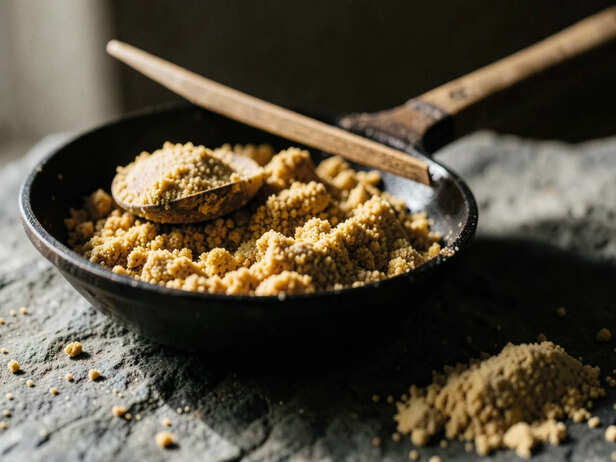
Gram flour is mostly starch, with a significant protein fraction and the grassy, slightly bitter compounds that give raw besan its edge. When you heat it in oil, three things happen in sequence. The moisture inside the flour evaporates first, which is why the paste hisses and steams. Then the proteins begin to denature and the Maillard reaction starts, the same browning reaction that gives bread its crust and coffee its depth. Finally, the starch granules swell and partially gelatinise in the fat rather than in water, which means they will later absorb liquid evenly instead of clumping.
The practical result: toasted besan thickens a liquid without going lumpy, carries a nutty flavour that raw besan cannot, and loses most of its raw bitterness. The colour shift from pale yellow to deep gold is the cook's signal that all three changes have happened. Pull it too early and the curry tastes floury. Push it too far and it turns acrid. The window is narrow, which is why experienced Sindhi cooks describe this step as the one that cannot be rushed or left unattended.
Why the Souring Agent Matters More Than It Seems
Sindhi kadhi is soured with tamarind, occasionally with dried kokum or raw mango, never with yoghurt. This is not a stylistic preference, it is a structural decision. Yoghurt contains live cultures and proteins that can split when held at a boil for a long time. Tamarind is stable. It can simmer for an hour without breaking, which matters because Sindhi kadhi is a long-cooked dish: the vegetables, drumstick, cluster beans, lotus stem, raw banana, need time, and the curry needs to hold together while they get it.
Tamarind also contributes pectin and organic acids that interact with the gelatinised starch in a specific way, keeping the sauce glossy rather than dull. The tartness it brings is sharper and cleaner than yoghurt's sourness, which is why Sindhi kadhi tastes bright even though it is rich. The two elements, the fat-toasted flour and the tamarind, are doing opposite things and balancing each other: one adds body and warmth, the other cuts through it.
The Vegetables That Go In, and Why Those Particular Ones
![Lotus, Drumstick, Tamarind Still Life]()
Lotus, Drumstick, Tamarind Still Life
Image credit : MyLifeXP Bureau
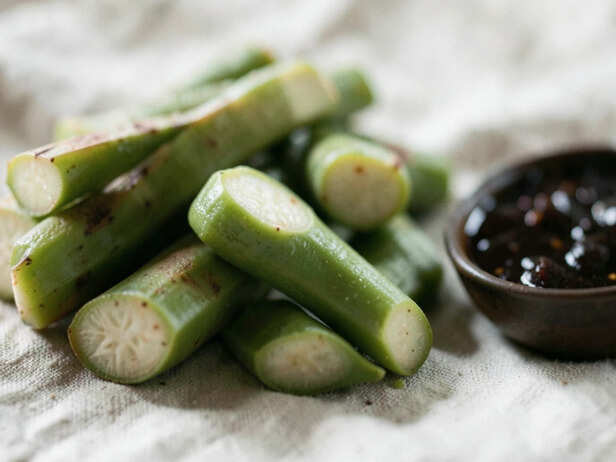
The vegetable selection in a traditional Sindhi kadhi is not random. Drumstick, cluster beans, lotus stem, raw banana, and sometimes colocasia are all low-moisture, dense vegetables that hold their shape through a long simmer. Soft vegetables, tomatoes, spinach, zucchini, would dissolve into the sauce and make it muddy. The dense ones stay distinct, which means every spoonful has both the smooth curry and a piece of something with texture.
Lotus stem is worth noting separately. It grows in the wetlands of Sindh and was a staple ingredient in the region's cooking for centuries. Its presence in the kadhi is one of the clearest markers that this is a dish with a specific geography, not a generic curry that happens to use besan. When lotus stem is unavailable, Sindhi cooks substitute other dense vegetables, but the dish changes character slightly each time, which is how you know the original ingredient was doing more than just filling space.
What Partition Did to This Recipe
In 1947, most Sindhi Hindus left what became Pakistan with very little. They resettled across India, in Mumbai, Delhi, Pune, Ahmedabad, Ulhasnagar, and rebuilt communities in cities where they had no ancestral land, no inherited property, and no local food supply chain that matched what they had known.
Gram flour was available everywhere. Tamarind was available everywhere. The technique for Sindhi kadhi required no special equipment and no ingredient that could not be found in any Indian market. This is part of why the dish survived the crossing intact, when many other regional recipes did not. A cuisine that loses access to its geography often loses its ingredients along with it. Sindhi kadhi was built on technique rather than terroir, which made it portable in a way that more place-specific dishes were not.
The community's cooking also absorbed local influences wherever it landed, Mumbai Sindhis cook slightly differently from Delhi Sindhis, but the kadhi's core method, the toasted roux built in fat before any liquid enters the pot, has stayed consistent across generations and cities. It is one of the most stable recipes in a cuisine that has had to be unusually adaptable.
How to Read the Dish When You Eat It
A well-made Sindhi kadhi should be glossy, not opaque. The sauce should coat a spoon lightly, thick enough to cling to rice but not so thick that it sits in a mound. The colour is a warm amber from the tamarind and the toasted flour together, with the red of the tempering oil floating on top. The taste should hit in three stages: the nuttiness of the besan first, then the tartness of the tamarind, then the heat of the whole spices in the final tadka.
If the sauce is pale and tastes floury, the besan was not toasted long enough. If it is dark and bitter, it went too far. If it has split into a grainy liquid, the heat was too high when the water went in. The dish is legible: it tells you exactly what happened in the pot, which is the mark of a recipe built on a real technique rather than a combination of flavours that happens to work.
The gram flour curry that Sindhi kitchens built is, at its core, a solution to a problem, how to make a stable, rich, long-cooking sauce without dairy, without a protein to anchor it, and with the ingredients that were reliably at hand. That the solution also happens to be delicious is not incidental. It is what kept the recipe alive across a displacement that erased so much else.
Unlock insightful tips and inspiration on personal growth, productivity, and well-being. Stay motivated and updated with the latest at
My Life XP.