A Kerala egg roast is not a curry. There is no coconut milk, no tamarind, no ground paste doing the heavy lifting. The gravy is built entirely from onions cooked past the point most cooks stop at, and from the fat they release when they finally collapse. Get the onion base right and the rest of the dish follows. Get it wrong and no amount of spice will fix the result.
Why Weight Matters More Than Volume for the Onion Base
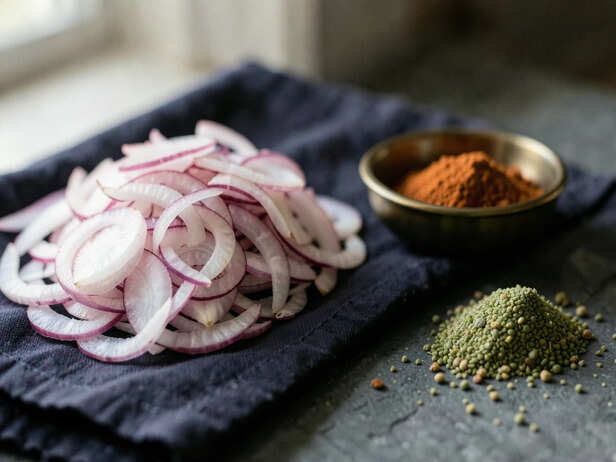
![Onion, Chili, Coriander Still Life]()
Onion, Chili, Coriander Still Life
Image credit : MyLifeXP Bureau
Onions vary enormously in water content depending on variety, age, and how long they have been sitting in your kitchen. A cup of sliced onions from a fresh, heavy onion is not the same thing as a cup from a dry, papery one. The first will cook down to almost nothing; the second will hold more body. Recipes written in cups or pieces produce different gravies every time, which is why this one works by weight.
For four eggs, use 400 grams of red onions after peeling. Red onions are the choice here because they carry more sugar than white onions and caramelise faster. Slice them thin, about two millimetres, so they cook evenly. At 400 grams raw, you will end up with roughly 120 to 140 grams of cooked onion base after the moisture drives off, enough to coat four eggs generously without the gravy becoming a paste.
If you are scaling up, keep the ratio: 100 grams of raw sliced onion per egg.
The Onion Cook: Three Stages, Not One
Most recipes say cook the onions until golden. That instruction skips two stages that matter.
Start with three tablespoons of coconut oil in a wide, heavy pan over medium heat. Wide matters because surface area is how moisture escapes. Add the onions with half a teaspoon of salt. The salt draws water out immediately and speeds the first stage.
Stage one is softening. The onions turn translucent and release liquid. This takes eight to ten minutes on medium heat. Do not rush it with high heat, the outside chars before the inside softens and you lose the sweetness you are building toward.
Stage two is the colour change. The liquid has mostly cooked off and the onions begin to take on colour at the edges. Stir every two minutes. The pan will look dry and the onions will stick slightly. This is correct. Add a tablespoon of water if they stick aggressively, but only enough to lift them off the surface. This stage takes another eight minutes.
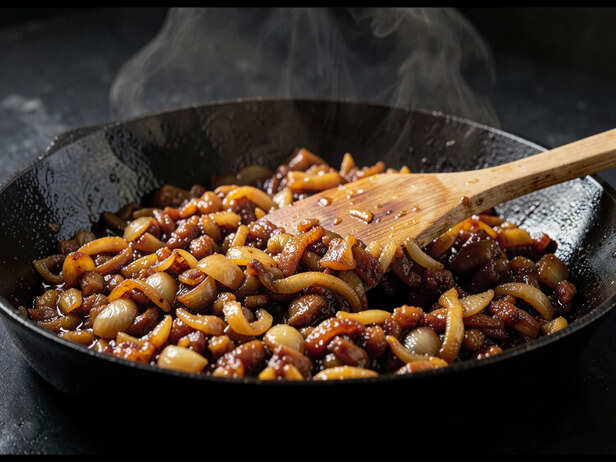
Stage three is the jamming. The onions are now deep brown, reduced to a fraction of their original volume, and smell sweet rather than sharp. Press one between your fingers, it should feel almost like soft toffee. This is the base. Do not stop at stage two. A stage-two onion base produces a thin, slightly bitter gravy. A stage-three base produces the one you are trying to make.
Building the Spice Layer
![Caramelized Onion Jam]()
Caramelized Onion Jam
Image credit : AI
Once the onions are at stage three, lower the heat. Add one teaspoon of ginger-garlic paste and cook for ninety seconds until the raw smell is gone. Then add the spices in this order, stirring between each: one teaspoon of Kashmiri chilli powder, half a teaspoon of coriander powder, a quarter teaspoon of turmeric, a quarter teaspoon of black pepper. Kashmiri chilli is mild and gives the gravy its characteristic deep red without making it searingly hot. If you want more heat, add a quarter teaspoon of regular chilli powder on top of it.
Stir the spices into the fat for about a minute. They should smell toasted, not burnt. A burnt spice smell means the heat was too high; add a tablespoon of water and stir quickly to stop the cooking.
Add two medium tomatoes, roughly chopped, about 200 grams. Stir to combine and cook on medium heat until the tomatoes break down completely and the oil begins to separate at the edges of the pan. This takes ten to twelve minutes. The oil separating is the signal that the base is cooked through, if you add the eggs before this point, the gravy will taste raw.
The Eggs and the Finish
Hard-boil four eggs. Peel them and score each one with three or four shallow cuts through the white. The cuts let the gravy get into the egg rather than sitting only on the surface.
Some cooks fry the peeled eggs in a little oil before adding them to the gravy. This is worth doing. Two minutes in hot oil gives the white a slightly firm, lightly golden exterior that holds up better in the gravy and takes on the spice more readily. It is not essential, but the texture difference is noticeable.
Add the eggs to the pan and turn them gently to coat. Add two tablespoons of water, cover, and cook on low heat for three minutes. Finish with a sprig of curry leaves dropped into the hot oil at the edge of the pan, they should crackle immediately. Stir through.
What to Adjust and When
If your gravy is thin after the tomatoes cook down, the onions did not reach stage three. You can correct it partially by cooking the whole base uncovered for another five minutes on low heat, but the sweetness will not fully develop. Note it for next time.
If your gravy is too thick and paste-like, the pan was too small and the moisture could not escape evenly. Add warm water, a tablespoon at a time, and stir. Never add cold water to a hot spice base.
If the gravy tastes flat despite the correct spice quantities, the issue is usually the salt. Taste the base before adding the eggs and adjust. A flat egg roast is almost always an under-salted onion base.
Kerala egg roast is traditionally eaten with parotta, appam, or plain white rice. The gravy is assertive enough to hold against the flakiness of a good parotta and mild enough not to overwhelm appam's slight sourness. It keeps well for a day in the refrigerator; reheat gently with a tablespoon of water to loosen it.
The onion base is the technique, and the technique is the dish. Everything else, the spices, the eggs, the finish, is assembly. Cook the onions to stage three once and the ratio makes sense in a way no written description fully conveys until you have done it.
Unlock insightful tips and inspiration on personal growth, productivity, and well-being. Stay motivated and updated with the latest at
My Life XP.