Coriander is one of those ingredients that seems impossible to get wrong. You chop it, you throw it in, the dish looks finished. But there is a version of that dish where the coriander actually tastes like coriander, and a version where it tastes like cooked green matter. The difference is not the quality of the bunch or how finely you chop it. It is when the heat stops.
What Coriander Actually Tastes Like Before Heat Touches It
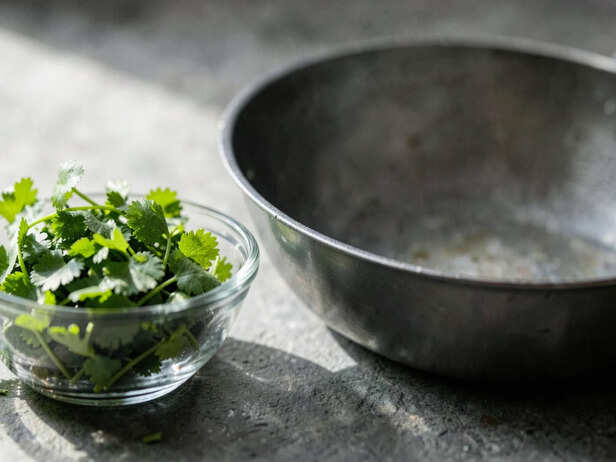
![Fresh Coriander Beside Pan]()
Fresh Coriander Beside Pan
Image credit : MyLifeXP Bureau
Fresh coriander leaves hold their character in a group of compounds called volatile aromatic oils, linalool, geranyl acetate, and a handful of aldehydes that together produce the sharp, faintly citrus, green smell that divides opinion at dinner tables. These compounds sit in tiny structures within the leaf tissue. When you bruise or chop the leaves, those structures break open and the oils release. That is the smell on your chopping board. It is also, in full, what the dish should taste like.
The word volatile is doing real work here. These oils do not stay put under heat. They are light, they move fast, and above roughly 60 to 70 degrees Celsius they begin to evaporate rather than flavour. A hot pan, a simmering dal, a tarka still spitting, all of them are well above that point. Add coriander to any of them and you are watching the flavour leave the room.
What Happens When You Add It to a Hot Pan
The moment chopped coriander hits a hot surface or hot liquid, two things happen in quick succession. The volatile oils flash off, you smell them briefly and then they are gone. What remains is the structural part of the leaf: fibre, chlorophyll, some residual moisture. The chlorophyll darkens as it breaks down, which is why coriander added too early turns from bright green to a dull, slightly grey shade. The texture softens past the point where it adds anything.
The result is a garnish that looks like coriander, takes up space like coriander, and contributes almost nothing of what coriander is for. The dish does not taste wrong, exactly. It just tastes less finished than it should.
Why Off the Heat Works
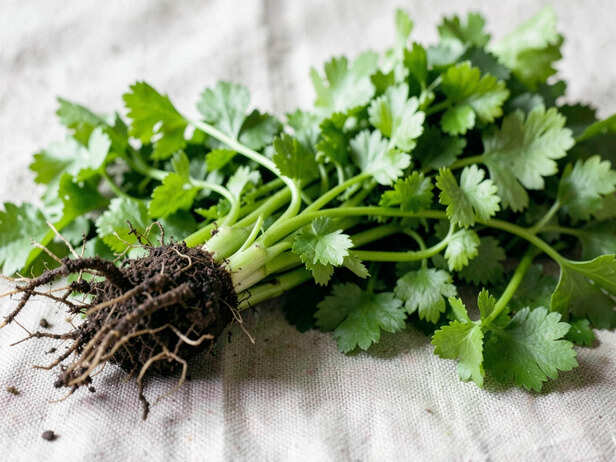
![Fresh Coriander Roots Detailed]()
Fresh Coriander Roots Detailed
Image credit : MyLifeXP Bureau
Pulling the pan off the flame before you add coriander keeps the residual temperature high enough to wilt the leaves slightly, which is what you want, because a raw, stiff leaf sitting on top of a hot curry is its own problem, but low enough that the volatile oils stay in the food rather than escaping into the air above it.
The wilting matters. A leaf that has softened just enough releases its oils into the dish rather than holding them locked in its structure. You get the flavour distributed through the top layer of the food, not just sitting on the surface. This is why coriander added off the heat smells stronger when you lift the lid a minute later than it did when you added it. The oils have had time to move into the dish rather than evaporate out of it.
The same logic applies to raita and chutneys, where there is no heat at all. The act of mixing bruises the leaves gently against the curd or the other ingredients, releasing the oils directly into the cold base. No heat required, no loss.
When Coriander Stem and Root Behave Differently
The stem and root of the coriander plant hold a different ratio of compounds, more of the heavier, earthier aromatics that do not flash off as quickly. This is why coriander stems survive in a slow-cooked dish better than the leaves do, and why Thai cooking adds root to curry pastes that will be fried in oil. The root's compounds are more heat-stable; they contribute to the base flavour rather than the finish.
For Indian cooking, this means stems can go in earlier than leaves, into the tarka, into the base, into a marinade that will see the grill. The leaves are always the finish. If a recipe asks you to add coriander leaves at the start of cooking, it is asking you to add colour and texture at the cost of flavour.
The Practical Rule, Stated Simply
Turn the flame off. Add the coriander. Put the lid on for thirty seconds if the dish needs it to wilt. Serve. That is the whole technique.
For dishes that go from pan to bowl quickly, a dal tadka, a dry sabzi, a khichdi, the residual heat in the food does the work without any lid time. For something thicker or denser, a brief covered rest lets the steam do what the flame would have done badly.
The one situation where this does not apply is a dish that will be reheated. Coriander added off the heat before refrigeration will lose most of its character by the time the dish is hot again. Add a fresh handful when the reheated dish comes off the flame, and it will taste like it was made today.
Coriander is not a garnish in the decorative sense, something placed on top for colour before a photograph. It is a flavour element that happens to be added last, and it behaves like one only when the heat is already gone. The pan does the cooking. The coriander does the finishing. They work best when they do not overlap.
Unlock insightful tips and inspiration on personal growth, productivity, and well-being. Stay motivated and updated with the latest at
My Life XP.