Fermented idli batter looks simple: ground rice and urad dal, left overnight, poured into moulds and cooked. The cooking step takes twelve to fifteen minutes. What happens inside those moulds during those minutes is not simple at all, and the choice of steam over boiling water is not tradition for tradition's sake, it is the only method that keeps the batter's structure from collapsing before it can set.
The batter arrives at the mould carrying two things that matter: trapped carbon dioxide from fermentation, and raw starch granules suspended in water. Steam preserves both. Boiling destroys one and waterloads the other.
What Fermentation Actually Puts Into the Batter
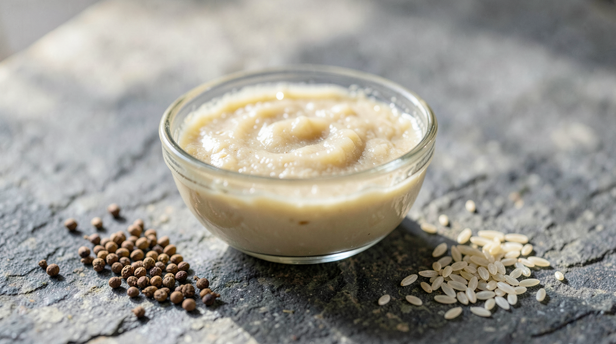
![Fermented Idli Batter Ready]()
Fermented Idli Batter Ready
Image credit : MyLifeXP Bureau
When urad dal and rice ferment together, the bacteria and wild yeasts in the mix consume sugars and release carbon dioxide. That gas does not escape cleanly, the ground dal proteins trap it in a loose foam. This is why well-fermented batter looks slightly risen and feels airy when you ladle it. The bubbles are small and distributed. They are the future texture of the idli: each one will become a tiny air pocket once the surrounding starch sets around it.
The protein network holding those bubbles in place is fragile. It holds at room temperature. It needs gentle, even heat to set before it collapses. Steam delivers that. Submerging the same batter in boiling water does not.
What Steam Does That Boiling Water Cannot
Steam at 100°C surrounds the mould from every side and transfers heat through the metal or silicone gradually. The outer layer of batter begins to set first, forming a skin that holds the shape. Heat then moves inward, setting each layer in sequence. The air pockets stay where they are because the batter firms up around them before they can merge and escape.
Boiling water does something different in two ways. First, it physically agitates. The rolling motion of boiling water rocks the mould, and that movement is enough to collapse the foam before the starch has had any chance to set. Second, and more damaging, water infiltrates. Steam condenses on the surface of the idli and runs off. Boiling water soaks in. The batter absorbs water faster than the starch can gelatinise and hold it, and the result is a dense, wet, gummy mass, cooked through, but with no air structure left.
The Starch Gelatinisation Window
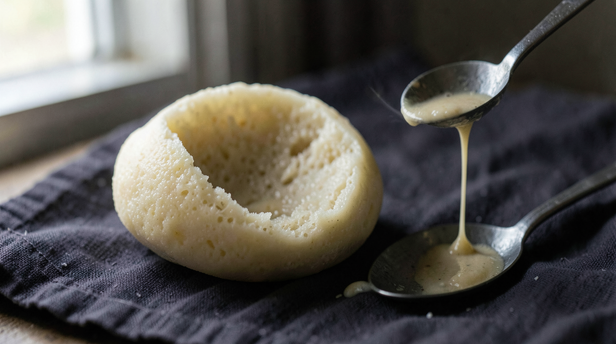
![Steamed Idli Texture Study]()
Steamed Idli Texture Study
Image credit : MyLifeXP Bureau
Rice starch granules absorb water and swell when heated, then gelatinise, meaning they form a continuous gel that gives idli its characteristic soft-but-cohesive bite. This process happens in a temperature range, not at a single point. For rice starch, gelatinisation begins around 60°C and is largely complete by 80°C.
In a steamer, the batter moves through this range slowly and from the outside in. The starch at the surface sets and holds the shape while the interior is still liquid. By the time the centre reaches gelatinisation temperature, the outer structure is already firm enough to keep the idli from spreading or sinking.
In boiling water, the mould is surrounded by water already at 100°C. The outer batter is hit with far more heat than it needs for gelatinisation, and it hits it all at once. The starch at the surface overcooks and becomes rubbery while the interior is still trying to catch up. The foam collapses in the chaos between the two.
Why the Lid Matters as Much as the Water Below
A steamer works because the space above the water fills with vapour and stays filled. The lid traps that vapour so it circulates around the moulds at consistent temperature. Lifting the lid mid-cook releases the vapour and drops the temperature inside the steamer suddenly. The batter, which has partially set, contracts slightly. This is why a half-cooked idli that gets a cold blast of air from an opened lid comes out with a slightly sunken centre, the structure was not yet firm enough to hold its shape through the temperature drop.
The same principle explains why idlis steamed in a pressure cooker without the weight, so that steam escapes rather than building pressure, come out softer than those cooked under full pressure. Pressure raises the boiling point of water, which raises the temperature of the steam above 100°C. At higher temperatures the starch gelatinises faster, leaving less time for the foam structure to set gradually. The idli cooks, but it is slightly more compressed and less airy than one steamed at atmospheric pressure.
What Happens When the Batter Is Too Thin or Too Thick
Consistency changes the equation. A batter that is too thin has less protein to hold the fermentation foam, and the foam collapses under its own weight before heat can set anything. The idli spreads, flattens, and comes out dense at the edges. A batter that is too thick traps the foam well but does not allow steam heat to penetrate to the centre in the usual cooking time. The outside sets, the inside stays gummy, and the texture is uneven from edge to centre.
The consistency that works, thick enough to coat a ladle and fall in a slow ribbon, is calibrated to the time it takes steam to move through the mould. This is not arbitrary. It is the consistency at which the heat transfer rate of steam and the gelatinisation rate of rice starch arrive at the centre of the mould at roughly the same moment.
The softness of a good idli is not a matter of the recipe being right. It is a matter of three things arriving together: foam held by fermentation, heat delivered by steam at the right rate, and starch that sets around the air before the air can leave. Boiling water breaks all three at once. Steam keeps all three in balance long enough for the batter to become something it could not become any other way.
Unlock insightful tips and inspiration on personal growth, productivity, and well-being. Stay motivated and updated with the latest at
My Life XP.