Pull a piece of mutton from a curry cooked for twenty minutes and one cooked for two hours, and the difference is not subtle. The slow-cooked piece yields at a touch, the gravy clings to it, and the mouthfeel is almost creamy. The fast-cooked piece is edible but tight, and the gravy sits around it rather than with it. The reason is not the spices, not the marination, and not the cut. It is what heat does to the structural proteins inside the meat when given enough time to finish the job.
Collagen Is the Reason Mutton Needs Time
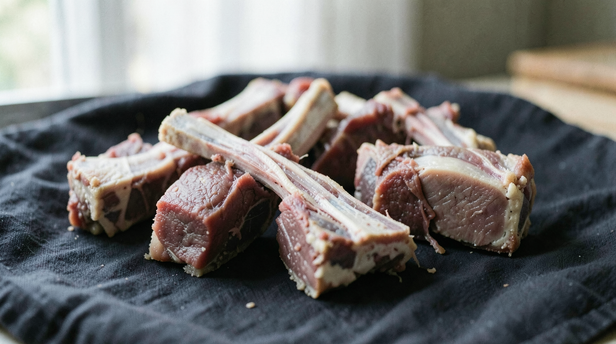
![Mutton Texture Study]()
Mutton Texture Study
Image credit : MyLifeXP Bureau
Mutton, meat from an older animal, carries far more connective tissue than chicken or young lamb. That connective tissue is built primarily from collagen, a fibrous protein that wraps around muscle bundles, holds joints together, and runs through cartilage. In a live animal, collagen is what keeps the leg from pulling apart under load. In a pot, it is the thing that makes poorly cooked mutton feel like chewing a rubber band.
Collagen does not dissolve quickly. At temperatures below roughly 70°C, it holds its structure almost intact. Between 70°C and 80°C, it begins to denature, the tight triple-helix structure starts to unwind. But unwinding is not the same as dissolving. For the collagen to convert into gelatin, which is what actually changes the texture of the meat and the gravy, it needs sustained heat over time. A pressure cooker gets the temperature high enough to break muscle fibres fast, but the window of time is short. A slow braise on a low flame keeps the meat in the conversion zone long enough for the collagen to finish the transformation.
What Gelatin Does to the Gravy
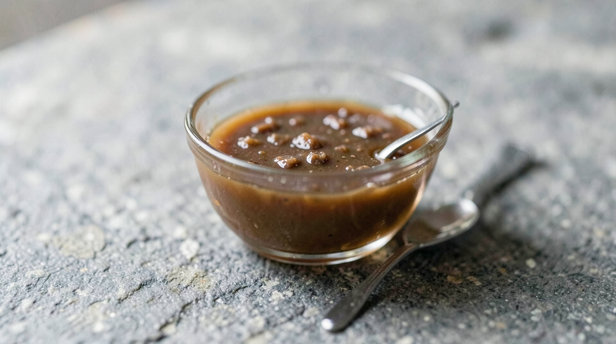
![Mutton Curry Gelatin Study]()
Mutton Curry Gelatin Study
Image credit : MyLifeXP Bureau
Gelatin is collagen that has been hydrolysed, broken into shorter protein chains that dissolve in water. As collagen converts during slow cooking, it releases gelatin into the liquid in the pot. This is what gives a well-made mutton curry its body. The gravy is not thick because of flour or cornstarch; it is thick because dissolved gelatin changes the way the liquid moves. It coats a spoon, it clings to rice, and it sets to a soft jelly if the pot is refrigerated overnight, which is why leftover mutton curry often has a layer of firm, glossy gravy at the bottom of the container the next morning.
The gelatin also acts as an emulsifier between the fat rendering out of the meat and the water-based gravy. This is why a slow-cooked curry looks unified rather than oily on top: the fat is held in suspension by the gelatin rather than pooling separately. A curry cooked fast and then reduced on high heat to look thick will never have the same quality, because the gelatin was never released in quantity.
Why the Meat Becomes Tender in Two Stages
Something counterintuitive happens when mutton goes into a hot pot. In the first twenty to thirty minutes, the meat actually tightens. Muscle fibres contract as their proteins denature, and the meat becomes firmer and drier. This is the stage where an impatient cook tastes the curry and decides it needs more time, and is right, but for reasons they may not fully understand.
Past this point, if the heat stays low and the liquid stays present, the connective tissue begins its slow conversion. The muscle fibres themselves do not re-soften, once contracted, they stay contracted, but the collagen sheath holding them together dissolves away. What was a tight bundle held in place by connective tissue becomes a loose collection of fibres that pull apart easily. The tenderness of well-braised mutton is not the tenderness of raw meat; it is a different structural state entirely, where the fibres are intact but no longer bound to each other.
Bone-In Cuts and Why They Cook Differently
Bone-in mutton, the shoulder, the shank, the neck, carries more collagen than boneless cuts because the connective tissue is densest near joints and around the periosteum, the membrane covering the bone. This is why a mutton shank braised for two hours produces a richer, more gelatinous gravy than the same weight of boneless leg meat cooked the same way. The bone itself also releases marrow, which is fat-rich and contributes to the body of the gravy, but the primary driver of texture is still the collagen from the surrounding tissue.
The marrow bones used in some regional curries, particularly in Hyderabadi and Lucknawi cooking, are not there purely for flavour. They are structural collagen sources that a long cook converts into the glossy, coating gravy those dishes are known for. Cutting the cooking time in half does not just change the tenderness; it changes the fundamental character of the dish.
The Role of Acid and Salt in the Process
Many mutton marinades use yogurt, raw papaya, or vinegar, and the functional reason is that acid begins to denature collagen before the pot even goes on the flame. A long yogurt marinade gives the collagen a head start on unwinding, which is why marinated mutton tends to reach the tender stage faster during cooking than unmarinated meat of the same cut.
Salt draws moisture out of the meat through osmosis and then, over a longer marination period, draws it back in along with the dissolved salt. This changes the ionic environment inside the muscle fibres and slightly loosens the protein structure, making the eventual heat-driven contraction less severe. The result is meat that tightens less dramatically in that first stage of cooking and reaches the conversion stage with more moisture retained.
Neither acid nor salt replaces time. They shorten the time needed, but a mutton curry that is marinated and then cooked fast still does not develop the gelatin content of one that is slow-braised, because the collagen conversion is fundamentally a time-and-temperature equation, not just a chemistry one.
The difference between a mutton curry that is merely cooked and one that is finished is entirely in what happened to the collagen. Every other variable, the spice blend, the onion base, the fat used, shapes the flavour. The slow flame shapes the structure. Both matter, but only one of them cannot be rushed.
Unlock insightful tips and inspiration on personal growth, productivity, and well-being. Stay motivated and updated with the latest at
My Life XP.