Teacher’s Day: 2 Changes India’s Education System Needs
Noopur Kumari | Sept 03, 2026, 16:00 IST
What if the biggest problem with education is not what children are learning, but how they are being taught to learn it? This Teacher’s Day, two changes deserve serious attention: textbooks that connect lessons with real life and exams that measure understanding instead of becoming the final definition of a child’s ability, intelligence and potential.

Teacher’s Day
Image credit : ChatGPT (ai)
Every Teacher’s Day, we celebrate teachers for shaping young minds. We thank them for their patience, guidance and hard work.
But there is another question worth asking. Are we giving teachers and students the right education system to work with? A child can memorise an entire chapter, reproduce it in an examination and still struggle to explain where that knowledge fits into real life. Another student may understand a concept deeply but fail to score well because examinations reward a very specific kind of performance.
This is where the conversation needs to change. Education should not only ask, “How many marks did you get?” It should also ask, “What did you actually learn?”
![Students Learning From Practical Textbooks]()
One major change India’s education system needs is a stronger connection between textbooks and real life. Students often learn formulas, definitions and theories without seeing how these ideas work outside the classroom. Mathematics can explain household budgets, science can explain everyday technology, and economics can help students understand money and markets. When lessons include practical examples, children are more likely to understand why they are learning something. The goal should not be to remove theory, because theory matters. The goal should be to connect theory with experience so students can answer a simple but important question: “Where will I use this?”
![Students Learning From Practical Textbooks]()
There is a major difference between remembering an answer and understanding an idea. A student may memorise ten points the night before an examination and forget them soon afterward. Another student may understand the concept well enough to explain it in their own words or apply it to a new situation. The second kind of learning is what education should encourage more strongly. Teachers can help by using discussions, projects, demonstrations and real-world problems alongside traditional lessons. When students are encouraged to think instead of simply reproduce information, classrooms can become places of curiosity rather than places where children are only preparing for the next test.
Examinations are not automatically the problem. A good assessment can show students what they understand and where they need more work. Teachers also need some way to evaluate progress. The problem begins when one examination becomes the biggest measure of a child's ability. A single score cannot capture creativity, communication, problem-solving, curiosity, teamwork or practical understanding. Exams should therefore remain part of education, but they should not become the entire education system. A useful assessment should answer more than whether a student remembered the right information. It should also reveal whether the student can understand, apply and explain what they have learned.
Ask children what adults usually want to know after an examination, and the answer is predictable: “How many marks did you get?” The question sounds harmless, but repeated often enough, it can change how children see education itself. Instead of learning because they are curious, they may start learning only for scores. Pressure can push some students toward rote memorisation, shortcuts or unhealthy competition. Marks can provide useful information, but they should be treated as one indicator rather than a complete judgment of a student. A better question would be, “What did you understand, and what can you do with what you learned?”
Changing education is not only about changing textbooks or examination papers. Teachers also need the freedom and resources to create meaningful learning experiences. A teacher who can connect a history lesson with current life, demonstrate a science concept or turn mathematics into a practical problem can make an ordinary chapter memorable. Students should also feel comfortable asking questions without fearing that every question must have an immediate textbook answer. Teacher training, classroom resources and thoughtful assessment can support this approach. When teachers are encouraged to teach for understanding rather than simply completing a syllabus, students gain a very different experience of education.
Imagine a student learning percentages through a textbook and then using the same concept to calculate a discount while shopping. Suddenly, the chapter has a purpose. This is the kind of connection that can make education memorable. Schools can introduce more projects, experiments, presentations, financial literacy activities and problem-solving exercises wherever appropriate. Students should get opportunities to make mistakes, ask questions and try again. Real learning often happens when knowledge is used rather than simply repeated. The objective is not to make every lesson entertaining. It is to make learning meaningful enough that students understand why the knowledge matters beyond the examination hall.
Perhaps the biggest change begins with one small question. Instead of asking only, “How many marks did you get?”, we should increasingly ask, “What did you learn?” That question changes the conversation. It makes understanding important. It gives teachers a chance to see where students are struggling. It encourages children to think about knowledge rather than simply scores. This Teacher’s Day, celebrating educators should also mean thinking about the system in which they work. Teachers can inspire students, but education must give that inspiration room to grow. The real success of education should not be measured only by marks, but by what students can understand, question, create and use.
Unlock insightful tips and inspiration on personal growth, productivity, and well-being. Stay motivated and updated with the latest at My Life XP.
But there is another question worth asking. Are we giving teachers and students the right education system to work with? A child can memorise an entire chapter, reproduce it in an examination and still struggle to explain where that knowledge fits into real life. Another student may understand a concept deeply but fail to score well because examinations reward a very specific kind of performance.
This is where the conversation needs to change. Education should not only ask, “How many marks did you get?” It should also ask, “What did you actually learn?”
Textbooks Need a Real-Life Connection
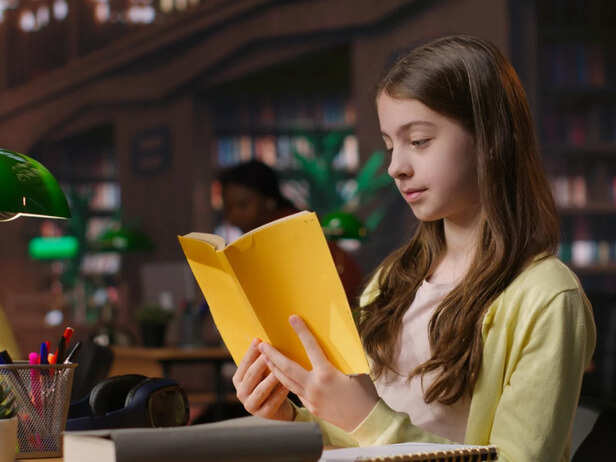
Students Learning From Practical Textbooks
Image credit : Freepik
One major change India’s education system needs is a stronger connection between textbooks and real life. Students often learn formulas, definitions and theories without seeing how these ideas work outside the classroom. Mathematics can explain household budgets, science can explain everyday technology, and economics can help students understand money and markets. When lessons include practical examples, children are more likely to understand why they are learning something. The goal should not be to remove theory, because theory matters. The goal should be to connect theory with experience so students can answer a simple but important question: “Where will I use this?”
Learning Should Go Beyond Memorising

Students Learning From Practical Textbooks
Image credit : Freepik
There is a major difference between remembering an answer and understanding an idea. A student may memorise ten points the night before an examination and forget them soon afterward. Another student may understand the concept well enough to explain it in their own words or apply it to a new situation. The second kind of learning is what education should encourage more strongly. Teachers can help by using discussions, projects, demonstrations and real-world problems alongside traditional lessons. When students are encouraged to think instead of simply reproduce information, classrooms can become places of curiosity rather than places where children are only preparing for the next test.
Exams Should Be a Reality Check
Marks Have Become the Wrong Question
Teachers Need More Freedom to Teach
Students Should Learn to Use Knowledge
The Question That Could Change Education
Unlock insightful tips and inspiration on personal growth, productivity, and well-being. Stay motivated and updated with the latest at My Life XP.