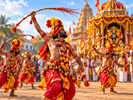
There is a reason you feel different during Diwali, not just festive, but genuinely lighter. The shift is real, and it has less to do with the occasion and more to do with what the occasion asks your brain and body to do. Several of the things Diwali involves, gathering with people you know well, moving through brightly lit spaces, following a familiar sequence of rituals, eating alongside others, are the same things that researchers studying mood, stress, and social behaviour have identified as reliably shifting mental state in a positive direction. The festival does not create those effects. It concentrates them into a few days.
What Shared Rituals Do to the Nervous System
When a group of people perform the same action together, lighting a lamp at the same moment, saying the same prayer, moving through the same sequence of a puja, something specific happens neurologically. Synchronised behaviour between people activates the brain's reward circuitry in a way that solo action does not. This is not a mystical claim; it is what happens when humans coordinate. The effect has been documented in contexts ranging from rowing teams to religious ceremonies across cultures. Shared rhythm produces a mild but genuine release of endorphins, the same compounds involved in the runner's high and in laughter.
Diwali's rituals are unusually rich in this kind of synchrony. The cleaning of the house before the festival, the arrangement of diyas at the same hour across a neighbourhood, the collective noise of crackers, each of these is a moment where individual action merges with the action of everyone around you. The nervous system reads that convergence as safety. Threat-detection quiets. Cortisol, the hormone most associated with sustained stress, tends to drop in socially synchronised settings.
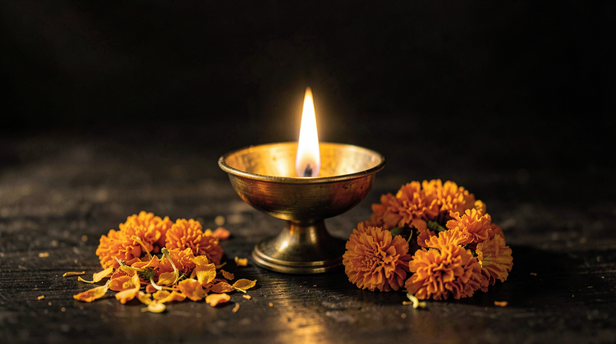
![Brass Lamp's Golden Glow]()
Brass Lamp's Golden Glow
Image credit : AI
Light Has a Direct Effect on Mood Chemistry
The brain's serotonin system is light-sensitive. Bright light, particularly warm, directional light rather than flat overhead light, stimulates serotonin production through pathways that involve the eye's retinal cells. This is the same mechanism behind light therapy used for seasonal mood dips in countries with long winters. Diwali concentrates warm, flickering light in domestic spaces at a time of day, early evening, when the body is already transitioning into its rest-preparation phase.
Candlelight and diya light are not as intense as clinical light therapy lamps. But they are present across multiple evenings, they are associated with positive memory and anticipation, and they arrive in spaces, a home, a courtyard, a familiar street, where the person already feels some degree of safety. The combination of light stimulus and positive context amplifies the mood effect beyond what either would produce alone. The brain does not process light in isolation; it processes light plus meaning.
Social Connection Is One of the Strongest Predictors of Wellbeing
The evidence here is among the most consistent in the psychology of mental health: people who feel socially connected report better mood, lower anxiety, and greater resilience to stress than those who feel isolated. The effect is not about the number of people involved. It is about the quality of the connection, whether the person feels seen, recognised, and part of something larger than their daily routine.
Diwali creates conditions for exactly this kind of connection. Visits between households that do not happen at other times of year resume. Meals are prepared and eaten together rather than separately. Gifts move between people as a physical expression of regard. Even the act of preparing sweets alongside another person, measuring, stirring, tasting, involves the kind of low-stakes shared attention that research on social bonding identifies as particularly effective at building felt closeness. These are not trivial effects. A few days of genuine social connection can shift the baseline mood of someone who has been living in relative isolation for weeks.
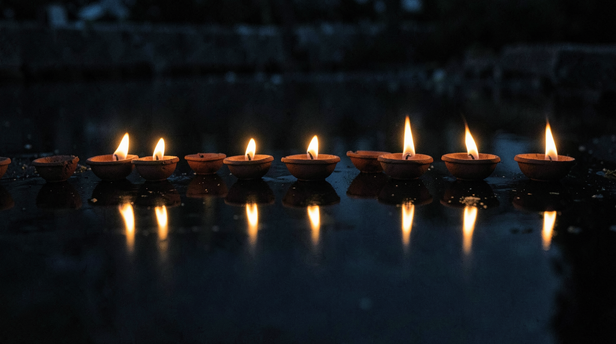
![Diya Flames Dance on Water]()
Diya Flames Dance on Water
Image credit : AI
Anticipation Is Itself a Mental Health Resource
A less obvious mechanism: the weeks before Diwali matter as much as the days of the festival. Anticipating a positive event activates the brain's dopaminergic reward system, the same system involved in motivation, pleasure, and goal-directed behaviour. The anticipation of a reward often produces as much dopamine activity as the reward itself, sometimes more. This means that the process of planning a Diwali celebration, choosing what to cook, deciding which family to visit first, buying diyas, is not just preparation. It is itself a source of mood benefit.
For people whose daily life offers few events to look forward to, a festival with a long run-up and a clear date functions as a sustained source of positive anticipation. The mental health benefit begins well before the first lamp is lit.
What Happens After the Festival Ends
The days immediately after a major celebration can bring a noticeable dip. The house is quieter, the routine resumes, and the contrast with the intensity of the preceding days can make ordinary life feel flat. This is a normal neurological adjustment, not a sign that something is wrong. The brain recalibrates after any period of elevated social and sensory stimulation.
The practical implication is that the benefit of Diwali is not lost when the festival ends, it is stored in memory and in the strengthened social connections the festival produced. Research on autobiographical memory consistently shows that shared positive experiences are recalled with greater vividness and emotional warmth than solo experiences. The memory of a Diwali meal eaten with people you love is a resource the brain returns to, often without being asked to. That is not sentiment. That is how episodic memory works.
The festival concentrates, in a few days, several of the things that most reliably improve mental state: synchronised ritual, warm light, genuine social connection, and something to look forward to. None of those effects require the occasion to be Diwali specifically, but Diwali delivers all of them at once, which is rarer than it sounds.
Unlock insightful tips and inspiration on personal growth, productivity, and well-being. Stay motivated and updated with the latest at
My Life XP.