Sanitiser became the default somewhere along the way. A pump at the entrance, a bottle in the bag, a quick rub between tasks, and the assumption that clean and sanitised mean the same thing. They do not. Alcohol-based sanitisers are genuinely effective against a wide range of bacteria and viruses, and there are situations where they are the better choice. But there is a category of things on your hands that alcohol cannot remove, and knowing what falls into that category changes how you think about the sink.
The Difference Between Killing and Removing
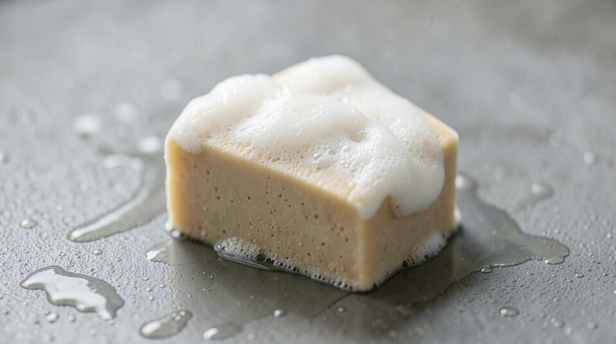
![Lathering Soap Bar]()
Lathering Soap Bar
Image credit : MyLifeXP Bureau
Sanitiser works by denaturing the proteins in a pathogen's outer membrane. When the concentration is right, typically 60% alcohol or above, it disrupts that membrane fast enough to render most bacteria and enveloped viruses inactive. What it does not do is physically lift anything off the surface of the skin. The alcohol evaporates. Whatever was underneath, or trapped in the ridges of your skin, stays exactly where it was.
Soap works differently. The soap molecule has two ends: one that bonds to water, one that bonds to oil and fat. When you lather and rinse, those molecules surround oily residue and the things embedded in it, including pathogens, and the running water carries them away. The action is mechanical as much as chemical. Friction, water, and time do work that no amount of alcohol can replicate.
What Only Soap and Water Can Shift
Norovirus is the clearest example. The virus responsible for most stomach illness outbreaks has no lipid envelope, it is a non-enveloped virus, which means alcohol cannot disrupt its outer structure the way it disrupts an enveloped pathogen. The Centers for Disease Control and Prevention, along with most national health bodies, explicitly states that soap and water are more effective against norovirus than alcohol-based sanitiser. The same applies to Cryptosporidium and Clostridioides difficile spores, both of which alcohol cannot deactivate.
Beyond specific pathogens, there is the category of visible and invisible contamination. Pesticide residue, heavy metal traces from certain work environments, and chemical compounds that sit in the oils on your skin are not neutralised by alcohol, they are simply redistributed as the sanitiser evaporates. If you have been handling soil, raw meat, or any substance with a chemical residue, the only thing that actually removes it is soap, water, and the physical act of rinsing.
Dirt itself matters here. Sanitiser applied over visibly soiled hands is significantly less effective, because the organic material acts as a barrier between the alcohol and the skin surface. Most sanitiser instructions note this, though the note is easy to miss. The WHO's hand hygiene guidelines are direct on this point: when hands are visibly dirty, wash with soap and water.
When Sanitiser Is the Right Call
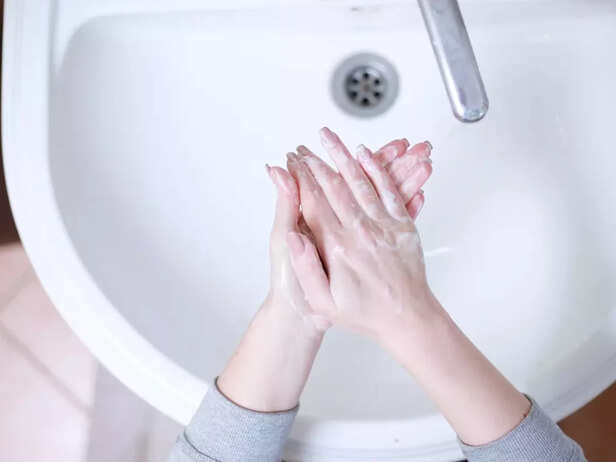
![hand-washing frequently]()
hand-washing frequently
Image credit : Pixabay
None of this means sanitiser is ineffective. Against enveloped viruses, influenza, coronaviruses, and most common respiratory pathogens, a properly formulated alcohol sanitiser works quickly and reliably. In situations where a sink is not available, it is far better than doing nothing. In clinical settings, alcohol hand rub has a strong evidence base for routine use between patient contacts, precisely because the hands are not visibly soiled and the target pathogens are ones alcohol handles well.
The problem is not sanitiser. The problem is the assumption that it covers everything soap covers, and that a quick rub is always equivalent to a proper wash.
How Long the Wash Actually Needs to Be
Twenty seconds is the figure most health bodies recommend, and it exists for a reason. Studies measuring bacterial counts on hands after washing consistently show that shorter washes remove significantly less. Twenty seconds is roughly the time it takes to work lather across the backs of the hands, between the fingers, around the thumbs, and under the nails, the areas that get skipped in a fast rinse.
The nails are worth a separate mention. The underside of the nail is one of the places where pathogens and residue accumulate most, and it is the place most people touch least during a wash. If you handle food, care for someone who is unwell, or work in any environment with chemical exposure, a brief pass of the fingertips across the opposite palm, enough to work lather under the nail edge, is not optional.
The Skin Barrier Consideration
Frequent sanitiser use without regular washing has a secondary effect that is worth knowing. Alcohol is drying, and most sanitisers contain some moisturising agent to offset that, but repeated use without the rinse that washing provides can gradually disrupt the skin's outer barrier. A compromised barrier is more permeable, which means it is, in a small but real sense, more vulnerable to the things you are trying to keep out. This is not an argument against sanitiser. It is an argument for not treating it as a complete substitute for washing.
If your hands are frequently exposed to sanitiser through the day, washing with a gentle, non-stripping soap when you reach a sink, rather than adding another pump of sanitiser, gives the skin barrier a chance to recover.
The sink is not inconvenient. It is just slower. And for a specific, important set of situations, it is the only thing that actually works.
.
Experiencing frequent stress, fatigue, or health challenges? Your name energy may be worth exploring. Check it here.