Why Meditation Has Deep Roots in Hinduism
Shashank Purohit | Wed, 25 Feb 2026
Meditation is often seen today as a modern wellness practice, but its origins go back thousands of years. Hinduism is one of the oldest living traditions in the world, and meditation has always been a core part of its spiritual path. From ancient scriptures to daily rituals, meditation is deeply woven into Hindu philosophy, culture, and way of life. This article explains why meditation holds such an important place in Hinduism and how it developed over time.

Meditation in Ancient India
Image credit : ChatGpt(AI)
Hinduism is not built around a single founder or one fixed book. It is a broad spiritual tradition that focuses on self-realization, inner discipline, and connection with the divine. Meditation fits naturally into this framework because it is a direct method to explore the mind and understand the self. In Hindu thought, true knowledge does not come only from books or rituals but from personal inner experience. Meditation is the tool that makes this experience possible.
![Sage in Deep Meditation]()
The roots of meditation in Hinduism can be traced to the earliest sacred texts. The Vedas, which are among the oldest spiritual writings in the world, mention deep contemplation and focused awareness. Later texts, such as the Upanishads, place even greater emphasis on meditation. The Upanishads explain that the true self, or Atman, lies beyond the body and mind. Meditation is described as the way to turn inward and realize this inner truth. Instead of seeking answers outside, practitioners are encouraged to sit quietly, control their breath, and observe their thoughts. This inward journey became the foundation of Hindu meditation practices. Over time, meditation evolved from simple contemplation into structured techniques. These methods were passed from teacher to student through oral tradition, ensuring that meditation remained a living practice rather than just a written idea.
![Yoga and Meditation Connection]()
One of the main reasons meditation is so central to Hinduism is its ultimate goal: self-realization. Hindu philosophy teaches that suffering comes from ignorance of our true nature. People identify too strongly with the body, emotions, and material world, forgetting their deeper spiritual identity. Meditation helps remove this ignorance. By calming the mind and reducing distractions, a person begins to observe thoughts instead of being controlled by them. This awareness slowly leads to clarity and inner freedom. In Hindu belief, when a person fully realizes the self, they experience liberation, also known as moksha. Unlike practices focused only on relaxation, Hindu meditation is deeply transformative. It is not just about feeling calm but about changing how one understands life, death, and existence itself.
3. Connection Between
![Inner Self and Awareness]()
Meditation in Hinduism is closely linked with yoga. In its original sense, yoga is not just physical exercise. It is a complete system for disciplining the body, mind, and senses. Meditation is a key part of this system. Traditional yoga texts describe meditation as a higher stage of spiritual practice. Physical postures prepare the body to sit comfortably, while breathing techniques steady the mind. Once the body and breath are controlled, meditation becomes deeper and more effective. This connection explains why meditation in Hinduism is seen as a daily discipline rather than an occasional activity. It is meant to be practiced regularly, with patience and commitment, as part of a balanced spiritual life.
![Finding Peace in Everyday Moment]()
Another reason meditation has deep roots in Hinduism is that it is not limited to monks or spiritual seekers living in isolation. Hindu teachings recognize different paths for different people. Some focus on devotion, some on action, and others on knowledge. Meditation supports all these paths. Householders are encouraged to meditate to maintain mental balance and moral clarity. Spiritual teachers use meditation to deepen wisdom. Even daily rituals often include moments of silence, chanting, or focused attention, which are forms of meditation. Because Hinduism values inner discipline, meditation becomes a way of life rather than a separate practice. It shapes how people think, act, and respond to the world around them.
Meditation has deep roots in Hinduism because it directly supports the religion’s core aim: understanding the self and achieving inner freedom. From ancient scriptures to everyday spiritual practices, meditation has always been seen as a powerful tool for self-discovery. It is not treated as a trend or technique but as a timeless method to explore consciousness and live with awareness. This deep philosophical foundation is why meditation continues to remain central to Hinduism even in the modern world.
Unlock insightful tips and inspiration on personal growth, productivity, and well-being. Stay motivated and updated with the latest at My Life XP.
1. Meditation in Ancient Hindu Scriptures
Sage in Deep Meditation
Image credit : ChatGpt(AI)
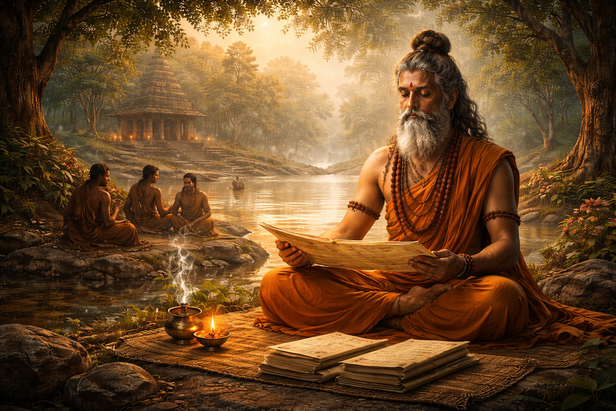
The roots of meditation in Hinduism can be traced to the earliest sacred texts. The Vedas, which are among the oldest spiritual writings in the world, mention deep contemplation and focused awareness. Later texts, such as the Upanishads, place even greater emphasis on meditation. The Upanishads explain that the true self, or Atman, lies beyond the body and mind. Meditation is described as the way to turn inward and realize this inner truth. Instead of seeking answers outside, practitioners are encouraged to sit quietly, control their breath, and observe their thoughts. This inward journey became the foundation of Hindu meditation practices. Over time, meditation evolved from simple contemplation into structured techniques. These methods were passed from teacher to student through oral tradition, ensuring that meditation remained a living practice rather than just a written idea.
2. The Goal of Self-Realization
Yoga and Meditation Connection
Image credit : ChatGpt(AI)
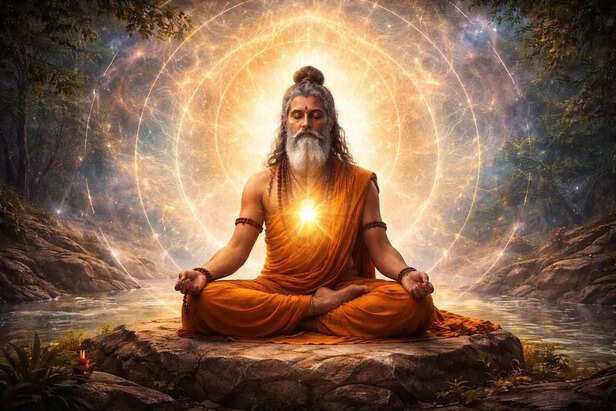
One of the main reasons meditation is so central to Hinduism is its ultimate goal: self-realization. Hindu philosophy teaches that suffering comes from ignorance of our true nature. People identify too strongly with the body, emotions, and material world, forgetting their deeper spiritual identity. Meditation helps remove this ignorance. By calming the mind and reducing distractions, a person begins to observe thoughts instead of being controlled by them. This awareness slowly leads to clarity and inner freedom. In Hindu belief, when a person fully realizes the self, they experience liberation, also known as moksha. Unlike practices focused only on relaxation, Hindu meditation is deeply transformative. It is not just about feeling calm but about changing how one understands life, death, and existence itself.
3. Connection Between Yoga and Meditation
Inner Self and Awareness
Image credit : ChatGpt(AI)
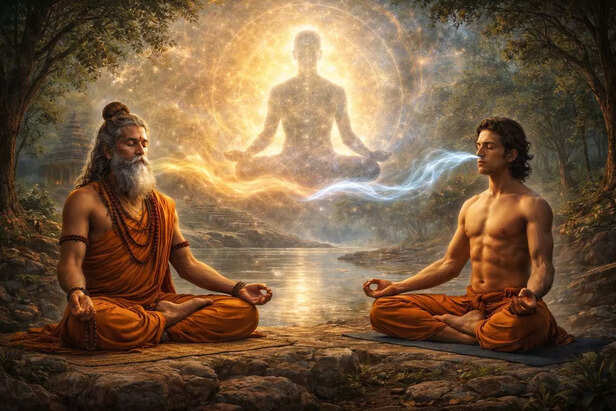
Meditation in Hinduism is closely linked with yoga. In its original sense, yoga is not just physical exercise. It is a complete system for disciplining the body, mind, and senses. Meditation is a key part of this system. Traditional yoga texts describe meditation as a higher stage of spiritual practice. Physical postures prepare the body to sit comfortably, while breathing techniques steady the mind. Once the body and breath are controlled, meditation becomes deeper and more effective. This connection explains why meditation in Hinduism is seen as a daily discipline rather than an occasional activity. It is meant to be practiced regularly, with patience and commitment, as part of a balanced spiritual life.
4. Meditation as a Way of Life
Finding Peace in Everyday Moment
Image credit : ChatGpt(AI)
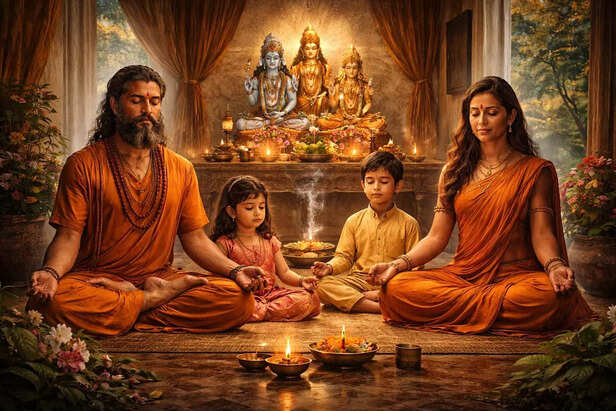
Another reason meditation has deep roots in Hinduism is that it is not limited to monks or spiritual seekers living in isolation. Hindu teachings recognize different paths for different people. Some focus on devotion, some on action, and others on knowledge. Meditation supports all these paths. Householders are encouraged to meditate to maintain mental balance and moral clarity. Spiritual teachers use meditation to deepen wisdom. Even daily rituals often include moments of silence, chanting, or focused attention, which are forms of meditation. Because Hinduism values inner discipline, meditation becomes a way of life rather than a separate practice. It shapes how people think, act, and respond to the world around them.
Unlock insightful tips and inspiration on personal growth, productivity, and well-being. Stay motivated and updated with the latest at My Life XP.