Is There Really a 2,000-Year-Old Shiva Lingam in Vietnam? 5 Hindu Sites That Will Amaze You
Noopur Kumari | Wed, 25 Feb 2026
Hinduism’s legacy is not limited to India. Across Southeast Asia and beyond, ancient temples and relics reveal the spiritual reach of Sanatan Dharma. From a 2,000-year-old Shiva Lingam in Vietnam to hidden sites in Indonesia, Cambodia, and Thailand, archaeologists are uncovering sacred connections once forgotten. These sites show how trade, culture, and devotion spread Hinduism far beyond its birthplace. Each discovery tells a story of faith, art, and divine energy preserved across centuries. But what makes these 5 sites so extraordinary, and why do they still inspire awe today?

2,000-Year-Old Shiva Lingam in Vietnam
Image credit : ChatGPT(AI)
Hinduism is one of the world’s oldest religions, and its influence has traveled far beyond India. While the temples of India are famous, archaeologists and historians have recently uncovered ancient Hindu relics and temples outside India. From Vietnam to Indonesia, these sites are evidence of trade, cultural exchange, and devotion to deities like Lord Shiva, Lord Vishnu, and Goddess Durga. Many date back over a thousand years, and some even show 2,000-year-old connections. For travelers, devotees, and historians, these sites offer a unique glimpse into the global footprint of Hinduism. Let’s explore five remarkable ancient Hindu sites discovered outside India.
A 2,000-Year-Old Shiva
![Ancient Shiva Lingam in Vietnam]()
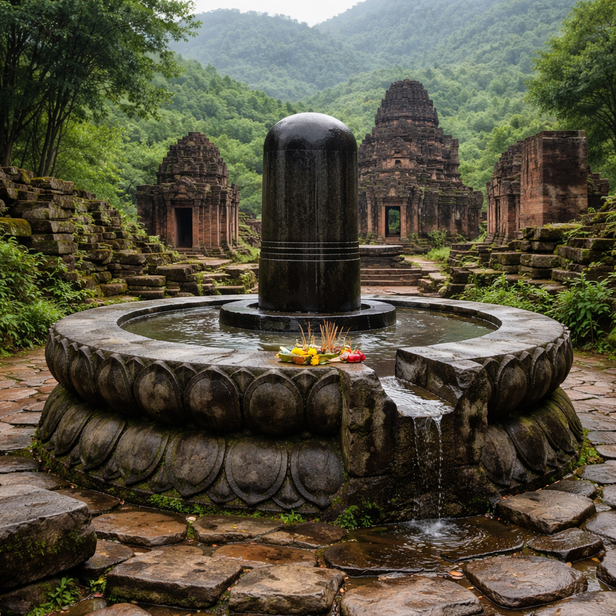
In Central Vietnam, researchers unearthed a massive Shiva Lingam dating back around 2,000 years. This relic highlights the Chams, an ancient Southeast Asian civilization that practiced Hinduism before the arrival of Buddhism. The Lingam shows early Shaivite rituals and carvings similar to those in India, reflecting cultural exchange through trade routes. Scholars suggest the artifact indicates that Hindu devotion, especially to Lord Shiva, was practiced far from its homeland much earlier than previously believed.
The My Son Sanctuary in Vietnam is a UNESCO World Heritage site renowned for its stunning collection of Hindu temples, built between the 4th and 14th centuries. Primarily dedicated to Lord Shiva, these brick structures are adorned with intricate carvings depicting deities, mythological stories, and sacred symbols. The Champa Kingdom, which once ruled central Vietnam, skillfully blended Indian architectural techniques with local artistry, creating a unique cultural fusion. Beyond its architectural beauty, My Son symbolizes the spread of Hindu faith and philosophy across Southeast Asia, reflecting centuries of devotion, trade, and cultural exchange that left a lasting spiritual legacy in the region.
![Angkor Wat Temple Complex]()
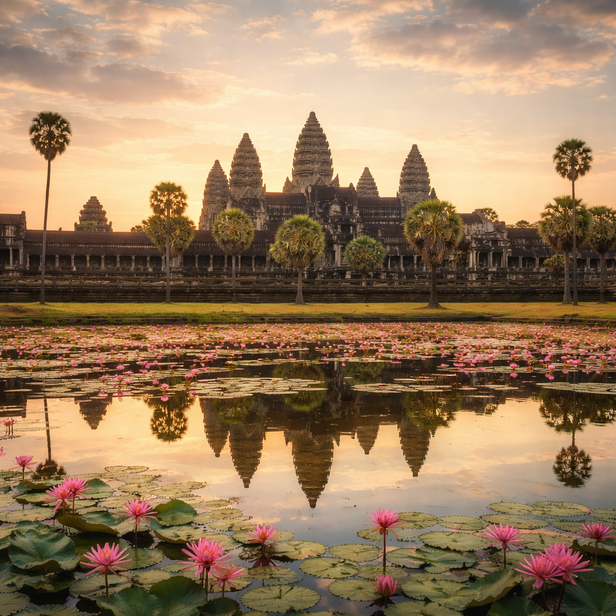
Angkor Wat, one of the largest temple complexes in the world, was originally constructed in the 12th century by King Suryavarman II as a Hindu temple dedicated to Lord Vishnu. Its vast courtyards, intricately carved walls, and majestic towers showcase the zenith of Khmer architecture and devotion. While the temple was later gradually converted to Buddhism, Hindu symbolism remains deeply etched into its bas-reliefs and statues. Epic scenes from the Ramayana and Mahabharata cover its walls, reflecting moral lessons and divine stories. Angkor Wat not only served as a spiritual center but also reinforced the king’s authority, blending religion, art, and governance into a lasting cultural legacy.
In Central Java, Indonesia, the Prambanan Temple Complex was built in the 8th century and stands as one of Southeast Asia’s most impressive Hindu architectural marvels. Dedicated to the Hindu Trimurti Shiva, Vishnu, and Brahma, the complex features soaring spires, intricately carved bas-reliefs, and detailed depictions of the Ramayana, telling timeless tales of devotion, valor, and dharma. Prambanan reflects the historical spread of Hinduism to Indonesia through maritime trade and cultural exchange, influencing art, architecture, and spirituality across the region. Even today, it remains an active site of worship, hosting ceremonies and rituals, while drawing thousands of pilgrims and tourists who marvel at its sacred grandeur.
![Phimai Hindu Temple Ruins]()
Phimai, in northeastern Thailand, contains 11th-century Hindu temples dedicated primarily to Lord Shiva. The architecture reflects the Khmer Empire’s connection to Hinduism, with stone carvings of deities and mythological events. Like other Southeast Asian sites, it shows the fusion of Indian spiritual practices with local traditions. Phimai illustrates how Hindu worship influenced politics, architecture, and culture beyond India’s borders.
These five sites from a 2,000-year-old Shiva Lingam in Vietnam to Cambodia, Indonesia, and Thailand reveal Hinduism’s global cultural and spiritual reach. They show how devotion, art, and architecture traveled with traders, kings, and monks, leaving behind relics that inspire awe even today.
For devotees and travelers, these sites are not just ancient ruins. They are living evidence of faith, perseverance, and the timeless power of Hinduism’s sacred stories. Each site tells a story of connection between India and the world, reminding us that the spirit of devotion knows no boundaries.
Unlock insightful tips and inspiration on personal growth, productivity, and well-being. Stay motivated and updated with the latest at My Life XP.
1. Where is the 2,000-year-old Shiva Lingam discovered?
A massive Shiva Lingam, estimated to be around 2,000 years old, was discovered in Central Vietnam. It highlights the early presence of Hinduism in Southeast Asia and reflects the cultural and religious influence of Indian civilization through trade and migration.
2. What is the significance of the Prambanan Temple in Indonesia?
The Prambanan Temple Complex in Central Java, Indonesia, is an 8th-century Hindu site dedicated to the Trimurti Shiva, Vishnu, and Brahma. It showcases intricate carvings of the Ramayana, represents the historical spread of Hinduism via maritime trade, and continues to be a major site of worship and pilgrimage.
3. Are there Hindu temples in Thailand outside India?
Yes. Phimai Historical Park in northeastern Thailand contains 11th-century Hindu temples, primarily dedicated to Lord Shiva. These temples reflect Khmer architecture and illustrate the influence of Hinduism on Southeast Asian culture, politics, and religious life.
4. Is Angkor Wat a Hindu temple?
Originally, Angkor Wat in Cambodia was built as a Hindu temple dedicated to Lord Vishnu in the 12th century. Later, it was gradually converted to a Buddhist temple. Its bas-reliefs, architecture, and mythological depictions still reflect Hindu traditions, showing the integration of Indian religious and artistic influence in Southeast Asia.
A 2,000-Year-Old Shiva Lingam in Vietnam
Ancient Shiva Lingam in Vietnam
Image credit : ChatGPT(AI)
In Central Vietnam, researchers unearthed a massive Shiva Lingam dating back around 2,000 years. This relic highlights the Chams, an ancient Southeast Asian civilization that practiced Hinduism before the arrival of Buddhism. The Lingam shows early Shaivite rituals and carvings similar to those in India, reflecting cultural exchange through trade routes. Scholars suggest the artifact indicates that Hindu devotion, especially to Lord Shiva, was practiced far from its homeland much earlier than previously believed.
My Son Sanctuary, Vietnam
Angkor Wat, Cambodia
Angkor Wat Temple Complex
Image credit : ChatGPT(AI)
Angkor Wat, one of the largest temple complexes in the world, was originally constructed in the 12th century by King Suryavarman II as a Hindu temple dedicated to Lord Vishnu. Its vast courtyards, intricately carved walls, and majestic towers showcase the zenith of Khmer architecture and devotion. While the temple was later gradually converted to Buddhism, Hindu symbolism remains deeply etched into its bas-reliefs and statues. Epic scenes from the Ramayana and Mahabharata cover its walls, reflecting moral lessons and divine stories. Angkor Wat not only served as a spiritual center but also reinforced the king’s authority, blending religion, art, and governance into a lasting cultural legacy.
Prambanan Temple, Indonesia
Phimai Historical Park, Thailand
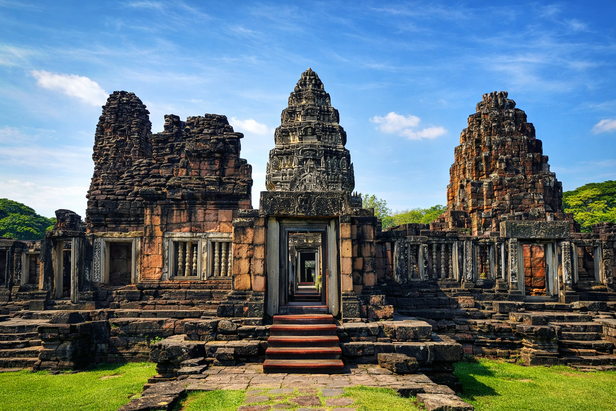
Phimai Hindu Temple Ruins
Image credit : ChatGPT(AI)
Phimai, in northeastern Thailand, contains 11th-century Hindu temples dedicated primarily to Lord Shiva. The architecture reflects the Khmer Empire’s connection to Hinduism, with stone carvings of deities and mythological events. Like other Southeast Asian sites, it shows the fusion of Indian spiritual practices with local traditions. Phimai illustrates how Hindu worship influenced politics, architecture, and culture beyond India’s borders.
2,000-Year-Old Shiva Lingam in Vietnam
For devotees and travelers, these sites are not just ancient ruins. They are living evidence of faith, perseverance, and the timeless power of Hinduism’s sacred stories. Each site tells a story of connection between India and the world, reminding us that the spirit of devotion knows no boundaries.
Unlock insightful tips and inspiration on personal growth, productivity, and well-being. Stay motivated and updated with the latest at My Life XP.
Frequently Asked Questions (FAQs)
A massive Shiva Lingam, estimated to be around 2,000 years old, was discovered in Central Vietnam. It highlights the early presence of Hinduism in Southeast Asia and reflects the cultural and religious influence of Indian civilization through trade and migration.
2. What is the significance of the Prambanan Temple in Indonesia?
The Prambanan Temple Complex in Central Java, Indonesia, is an 8th-century Hindu site dedicated to the Trimurti Shiva, Vishnu, and Brahma. It showcases intricate carvings of the Ramayana, represents the historical spread of Hinduism via maritime trade, and continues to be a major site of worship and pilgrimage.
3. Are there Hindu temples in Thailand outside India?
Yes. Phimai Historical Park in northeastern Thailand contains 11th-century Hindu temples, primarily dedicated to Lord Shiva. These temples reflect Khmer architecture and illustrate the influence of Hinduism on Southeast Asian culture, politics, and religious life.
4. Is Angkor Wat a Hindu temple?
Originally, Angkor Wat in Cambodia was built as a Hindu temple dedicated to Lord Vishnu in the 12th century. Later, it was gradually converted to a Buddhist temple. Its bas-reliefs, architecture, and mythological depictions still reflect Hindu traditions, showing the integration of Indian religious and artistic influence in Southeast Asia.