It happens on an ordinary evening. You are standing at the kitchen counter, or sitting at the edge of the bed, or staring at nothing in particular, and your child walks in. They stop. They look at you. And then, without you saying a word, they do something. They bring you a drawing. They climb into your lap. They say, very seriously, "Are you sad, Mama?" Or they just sit down next to you and stay.
That moment is not small. It is one of the most significant things a child can do, and most parents let it pass without understanding what they just witnessed.
What Your Child Is Actually Doing
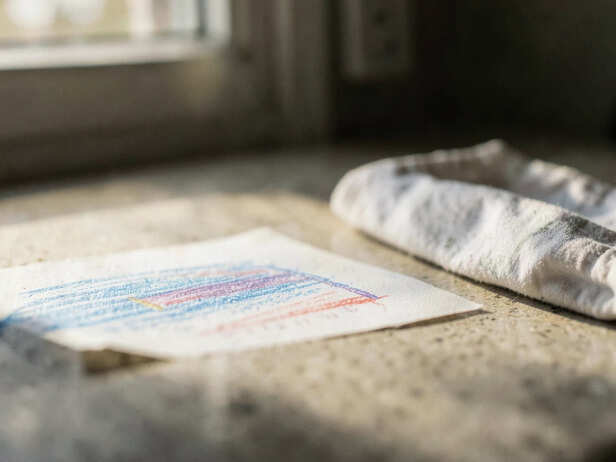
![Child's Art, Kitchen Counter]()
Child's Art, Kitchen Counter
Image credit : MyLifeXP Bureau
Reading another person's emotional state from their face, posture, and silence is a skill called affective empathy. It is not something children are taught. It develops, slowly and unevenly, from infancy onward, first as a raw sensitivity to tone of voice, then as a recognition of expressions, then as a genuine understanding that the person in front of them is having an inner experience that is separate from their own.
When your child notices you are upset, they are demonstrating that this development has reached a real threshold. They have moved past the stage where your distress is simply something that happens around them. They are now tracking it as something that belongs to you, and that they might be able to do something about.
The attempt to fix it is a separate step, and it is the more remarkable one. It requires your child to hold their own feelings aside long enough to act on yours. That is not instinct. That is something they have been building toward.
Where They Learned This
Children learn emotional responsiveness the same way they learn everything else that matters: by experiencing it, repeatedly, from the people closest to them.
Every time you noticed they were tired before they said so. Every time you sat with them through something hard without rushing to make it stop. Every time you named what they seemed to be feeling, "you look frustrated, do you want to talk about it?", you were showing them the shape of the thing they are now doing for you.
This is not a reason to feel proud of yourself in a self-congratulatory way. It is simply how it works. The child who brings you a drawing when you are sad learned, somewhere, that presence is a form of care. They learned it from watching presence offered to them.
There is also something harder here. Children who grow up in households where emotional states are unpredictable, or where a parent's distress often requires managing, can become very skilled at reading adult feelings very early. That early skill can look like emotional intelligence, and in some ways it is. But it is worth knowing the difference between a child who responds to your sadness because they feel safe enough to notice it, and a child who monitors your sadness because they have learned they need to.
What to Do in That Moment
![When Children's Tiredness Signals Low Iron]()
When Children's Tiredness Signals Low Iron
Image credit : Freepik
Most parents, caught off guard, do one of two things. They minimize, "I'm fine, don't worry about it", or they over-explain, pulling the child into a problem that belongs to the adult world.
Neither is necessary.
What your child needs in that moment is not a full account of what is wrong, and not a performance of being fine. They need to know that what they saw was real, that it is not their fault, and that you are going to be okay.
Something like: "You noticed I was feeling sad. You're right, I was. It's something grown-up and it's not about you. I'm going to be okay. And thank you for coming to check on me, that meant a lot."
That is the whole thing. It takes thirty seconds. It does several things at once: it confirms their read of the situation, which builds trust in their own perception; it removes the ambient worry that they caused it; it models that difficult feelings are nameable and survivable; and it receives their care, which is what they were offering.
Why Receiving Their Care Matters
There is a reflex, especially among parents who are used to being the one who holds things together, to deflect when a child tries to comfort them. It can feel like a role reversal, or like a burden being placed on someone too small to carry it.
But receiving a child's care, simply and briefly, without making it a big moment, is not the same as leaning on them. It is acknowledging that what they did was real and that it landed. Children who offer care and have it gently received learn that their emotional gestures matter. Children who offer care and have it waved away learn, slowly, that there is no point in offering it.
You do not need to make it a lesson. You do not need to explain empathy to them. You just need to let the drawing sit on the counter where they left it, and mean it when you say thank you.
What This Moment Tells You About Them
A child who notices your distress and moves toward you rather than away is telling you something specific about how they feel in your presence. They feel safe enough to see you clearly. They feel capable enough to try. They trust that the attempt will be received without consequence.
That is not a given. Some children, when a parent is upset, go very still and wait. Some leave the room. Some become loud and demanding in a way that looks like ignoring the situation but is often its own kind of response to it. None of these are failures of empathy. They are different ways of managing something that feels large.
The child who walks toward you is not more loving than the child who goes quiet. They are just at a different place in learning how to be with another person's pain.
What you do with the moment, whether you receive it, name it, or let it pass, shapes what they learn to do next time.
The drawing they brought you is already doing its work. The question is whether you let it.
A Note on When to Seek Support
If you find that your child is frequently in the position of noticing and responding to your emotional states, if it feels like a pattern rather than an occasional moment, it is worth reflecting on whether the emotional load in the household is more than a child should be navigating regularly. A counsellor or family therapist can help sort out what belongs to the adult and what is appropriate to share. That conversation is for you, not for your child to manage.
The evening your child looks at your face and sees what is there, and then does something about it, is one of the quieter milestones of childhood. It does not come with a date or a checklist. It arrives on an ordinary evening, and it is gone before you have time to name it. What stays is what you did with the thirty seconds after.
Unlock insightful tips and inspiration on personal growth, productivity, and well-being. Stay motivated and updated with the latest at
My Life XP.