What if the greatest tragedy in Ashwatthama’s life was not that he became immortal, but that he had to live forever with the consequences of his own actions? In the Mahabharata, Dronacharya’s son possessed extraordinary power and a divine gem that protected him from many dangers. Yet, during the final night of the Kurukshetra war, grief, attachment and anger drove him towards acts that changed his fate forever. A popular retelling connects his downfall with four divine forces: Yama, Kama, Rudra and Krodha. But how did these powers become part of the story of his terrible curse?
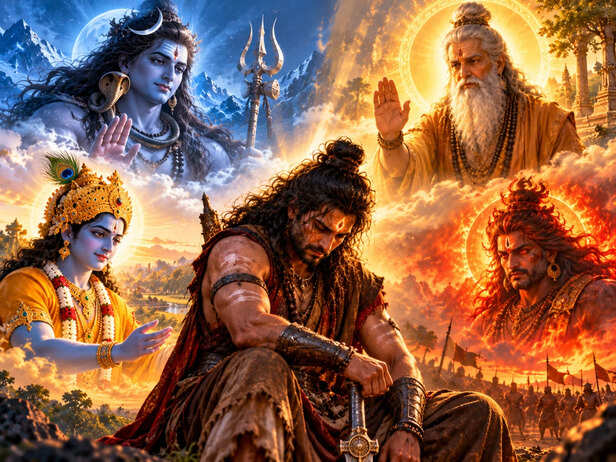
The Four Forces Behind Ashwatthama
![Ashwatthama and His Four Divine Powers]()
Ashwatthama and His Four Divine Powers
Image credit : chatgpt(ai)
According to a popular retelling of Ashwatthama’s story, his extraordinary nature was connected with four forces: Yama, Kama, Rudra and Krodha. These represent death and justice, desire, destructive divine power and anger. This interpretation offers a symbolic way to understand his downfall. Although Ashwatthama possessed immense strength and martial skill, his story raises a deeper question: can extraordinary power protect someone from the consequences of uncontrolled emotions? His fate suggests that physical strength and divine blessings are not enough when a person loses control over his own choices.
The Blessing of Lord Shiva
![Dronacharya’s Prayer to Lord Shiva]()
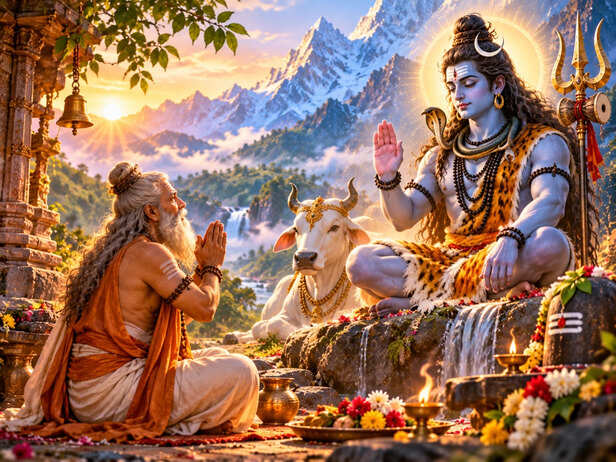
Dronacharya’s Prayer to Lord Shiva
Image credit : chatgpt(ai)
Ashwatthama was the son of Dronacharya, the legendary teacher of the Pandavas and Kauravas. According to the Mahabharata tradition, Ashwatthama was born with exceptional abilities, and a divine gem on his forehead became one of the most recognisable features of his story. Popular retellings associate his birth with Lord Shiva's blessings and describe the gem as a source of protection against hunger, thirst, disease and other dangers. Yet, even such extraordinary gifts could not protect Ashwatthama from the consequences of his decisions during the Kurukshetra war.
The Night Revenge Took Over
The eighteenth night of the Kurukshetra war changed Ashwatthama’s fate. After witnessing Duryodhana’s defeat, he was consumed by grief and a desire for revenge. Instead of accepting the end of the war, he decided to attack the Pandava camp while its occupants were asleep. In the Mahabharata, Ashwatthama kills the sleeping sons of Draupadi and other warriors. A popular symbolic interpretation connects this decision with Kama, the force of desire and attachment. His loyalty to his friend became entangled with vengeance, leading him towards an act he could never undo.
When Rudra’s Power Unleashed Destruction
Ashwatthama’s night attack is one of the darkest episodes of the Mahabharata. Some retellings connect the destruction with Rudra, the fierce form of Shiva, suggesting that Ashwatthama became an instrument of overwhelming destructive power. However, this symbolic interpretation should not be confused with every version of the epic. The central event remains clear: Ashwatthama chose to attack sleeping warriors rather than confront his enemies in an open battle. His actions show how revenge can distort a person's sense of justice until even victory becomes impossible to separate from wrongdoing.
The Brahmastra Against Uttara’s Child
The tragedy did not end with the night attack. When the Pandavas confronted Ashwatthama, the conflict escalated further. He unleashed the Brahmastra, and the weapon's destructive power threatened Uttara's unborn child, Parikshit, the future heir of the Pandava lineage. Lord Krishna intervened to protect the child. In the epic's account, this act deepened the gravity of Ashwatthama's wrongdoing. A confrontation driven by revenge had now threatened an innocent life, turning his anger into a decision with consequences far beyond his personal rivalry.
Krishna’s Curse of Immortality
Lord Krishna condemned Ashwatthama for his actions and pronounced a terrible curse. In the Mahabharata tradition, Ashwatthama was destined to wander the earth for a long period, bearing the consequences of his deeds. The popular image of Krishna removing his forehead gem is closely associated with this episode in later retellings. His immortality became a burden rather than a blessing. Instead of receiving the peace that comes with an ordinary life, Ashwatthama was left to endure the consequences of his choices. The story turns immortality into a punishment that no amount of strength could overcome.
The Lesson Behind Ashwatthama’s Fate
Ashwatthama’s story is more than a tale of supernatural powers and an extraordinary curse. It is also a warning about what happens when grief turns into revenge and anger overrides judgment. The four forces described in popular interpretations offer a symbolic reading of his downfall: desire clouded his decisions, destructive power magnified his actions, and anger pushed him towards an even greater sin. His story reminds us that strength is not measured only by what we can destroy. True strength also lies in controlling our impulses, recognising our mistakes and refusing to let pain become a reason to harm others.
Unlock insightful tips and inspiration on personal growth, productivity, and well-being. Stay motivated and updated with the latest at
My Life XP.