5 Forms of Vishwakarma Ji That Built India’s Craft Legacy
Noopur Kumari | Sept 14, 2026, 11:00 IST
The story of Vishwakarma Ji becomes even more interesting when these five craft traditions are viewed together. One represents ironwork, another woodworking, another metalwork, another stone and architectural craft, and the fifth gold and silver work. Rather than treating them as unrelated occupations, the tradition presents them as different branches of shilpa, the knowledge of making and building.

hidden Truth Behind Vishwakarma Ji’s 5 Forms
Image credit : ChatGPT (ai)
What if the five traditions associated with Lord Vishwakarma were not simply names from an old religious tradition, but a way of understanding how different forms of craftsmanship shaped society? In Vishwakarma community traditions, five figures, Manu, Maya, Tvashtr, Shilpi and Daivajna, are associated with different crafts: iron, wood, copper and bronze, stone and gold. Their story connects worship with the skills used to make tools, homes, temples, sculptures, vessels and ornaments.
![Lord Vishwakarma Surrounded by Five Traditional Crafts]()
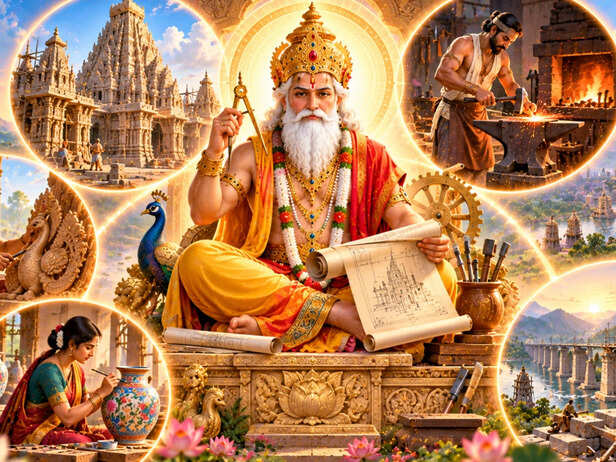
The five names traditionally associated with Vishwakarma’s craft lineage are Manu, Maya, Tvashtr, Shilpi and Daivajna. Sources describing the Vishwakarma tradition connect them with iron, wood, copper and bronze, stone or architectural work, and gold and silver respectively. This is more than a list of occupations. It presents craftsmanship as a form of knowledge passed through specialised traditions. Instead of separating physical work from intelligence, the tradition gives skilled makers an important place in society. Every tool, building, vessel or ornament began with someone who knew how to transform raw material into something useful.
![Manu Associated With Ancient Iron Craft]()
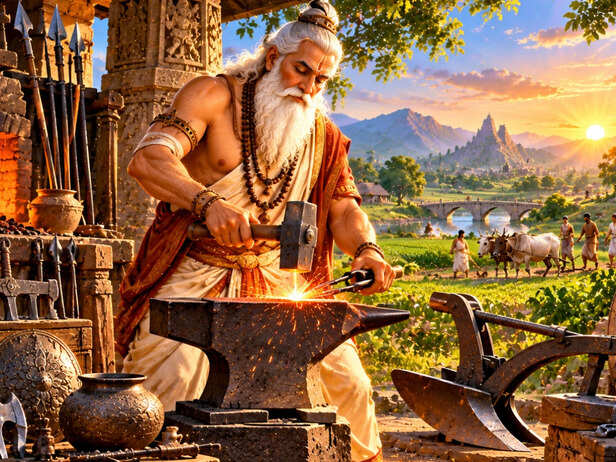
Manu is traditionally associated with iron and blacksmithing. Think about what working with iron demanded: heat, patience, control and an understanding of how metal changes under fire. Tools, agricultural equipment and other objects could be shaped from a material that was difficult to handle without skill. The deeper lesson is about transformation. A rough piece of metal could become something precise and useful in the hands of a trained craftsperson. This tradition therefore places value not only on the finished object, but also on the knowledge and discipline required to create it.
Maya is linked with woodworking and carpentry in the Vishwakarma tradition. Wood was central to everyday life long before modern construction materials existed. Skilled workers could turn timber into furniture, tools, structures and other useful objects. Working with wood also required an understanding of strength, balance, measurement and design. The tradition associated with Maya shows how craftsmanship begins with observing the material itself. A good craftsperson does not simply force material into a shape. They understand its nature first and then use that knowledge to create something that can last.
Tvashtr is associated with copper and bronze work. Metalworking required a different kind of knowledge from woodworking or stone carving. Craftspeople had to understand heat, shaping, casting and the behaviour of different metals. Copper and bronze became useful for making vessels, tools, decorative objects and other crafted items. This part of the Vishwakarma tradition reminds us that progress often comes from learning how materials behave. The skill was not simply in having metal available. It was in knowing how to transform it into something stronger, more useful or more beautiful through careful workmanship.
Shilpi represents stonework, sculpture and related architectural craftsmanship in traditional accounts. Stone demanded patience because one wrong strike could damage the material permanently. The craft required measurement, proportion and an understanding of structure as well as artistic judgment. Temples, sculptures and other stone structures show how building and art could exist together. The word shilpi itself is closely connected with the idea of a skilled artisan. This tradition gives us a useful reminder: creating something that survives for generations requires both technical knowledge and careful attention to detail.
Daivajna, also called Visvajna in some traditions, is associated with gold and silver craftsmanship. Precious-metal work required accuracy because even a small mistake could change the shape or finish of an object. Gold and silver were used for ornaments, ritual objects and other forms of decorative craftsmanship. Their value was not limited to decoration. Skilled artisans developed techniques for shaping, joining and detailing materials that were difficult and expensive to work with. The tradition therefore connects precious metals with patience, precision and the responsibility that comes with handling valuable material.
The most interesting part of the Vishwakarma tradition is how these crafts fit together. Iron provided tools, wood supported construction, metalworking expanded what could be made, stone shaped architecture and sculpture, while precious-metal craftsmanship added detailed decorative and ritual work. These associations are part of Vishwakarma community tradition rather than a simple historical timeline of how technology developed. That distinction matters. The story is best understood as a cultural tradition that honours specialised craftsmanship. Its message remains relevant: societies grow when people respect knowledge, skilled hands and the patience required to turn an idea into something real.
Unlock insightful tips and inspiration on personal growth, productivity, and well-being. Stay motivated and updated with the latest at My Life XP.
Five Crafts, One Vishwakarma Tradition
Lord Vishwakarma Surrounded by Five Traditional Crafts
Image credit : ChatGPT(ai)
The five names traditionally associated with Vishwakarma’s craft lineage are Manu, Maya, Tvashtr, Shilpi and Daivajna. Sources describing the Vishwakarma tradition connect them with iron, wood, copper and bronze, stone or architectural work, and gold and silver respectively. This is more than a list of occupations. It presents craftsmanship as a form of knowledge passed through specialised traditions. Instead of separating physical work from intelligence, the tradition gives skilled makers an important place in society. Every tool, building, vessel or ornament began with someone who knew how to transform raw material into something useful.
Manu And The Power Of Iron
Manu Associated With Ancient Iron Craft
Image credit : chatgpt(ai)
Manu is traditionally associated with iron and blacksmithing. Think about what working with iron demanded: heat, patience, control and an understanding of how metal changes under fire. Tools, agricultural equipment and other objects could be shaped from a material that was difficult to handle without skill. The deeper lesson is about transformation. A rough piece of metal could become something precise and useful in the hands of a trained craftsperson. This tradition therefore places value not only on the finished object, but also on the knowledge and discipline required to create it.
Maya And The World Of Wood
Tvashtr And Metal Innovation
Shilpi And The Art Of Building
Daivajna And The Value Of Precious Metal
The Real Lesson Behind The Five Traditions
Unlock insightful tips and inspiration on personal growth, productivity, and well-being. Stay motivated and updated with the latest at My Life XP.