7 Beautiful Krishna Traditions India Celebrates Differently
Noopur Kumari | Aug 31, 2026, 12:00 IST
Krishna Janmashtami is celebrated differently across India. Maharashtra is known for Dahi Handi, Tamil Nadu welcomes Krishna with tiny footprints, Gujarat honours Dwarkadhish, Kerala observes Ashtami Rohini, and Karnataka celebrates Vittal Pindi. Odisha connects Krishna devotion with the Jagannath tradition. Though customs vary, every celebration shares one feeling: love, devotion and joy for Lord Krishna.

Krishna Janmashtami
Image credit : ChatGPT(ai)
What does Janmashtami look like across India? In one place, thousands cheer as a human pyramid reaches a hanging pot. Somewhere else, tiny Krishna footprints are drawn from the doorway. In Udupi, a colourful procession brings Krishna’s childhood stories to life, while Kerala celebrates the festival as Ashtami Rohini. These traditions may look completely different, but they all tell the same story of love for Krishna. Janmashtami 2026 will be observed on September 4 by many traditions, while some calendars and temples may follow a different observance.
![Janmashtami Celebration at Dwarkadhish Temple]()
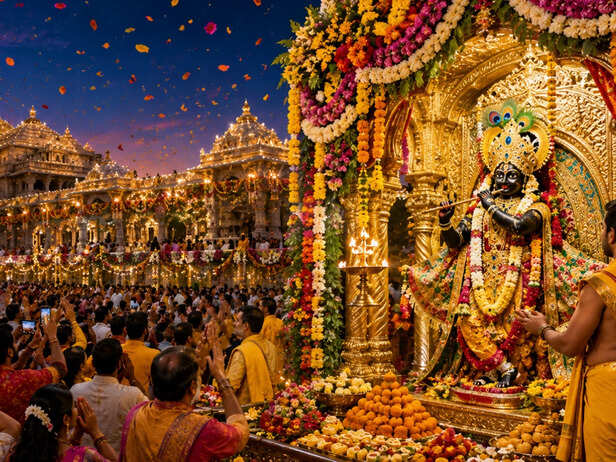
In Gujarat, Janmashtami has a special connection with Dwarka, the city traditionally associated with Krishna’s later life as Dwarkadhish. Temples are decorated, devotional programmes fill the atmosphere and devotees gather for midnight worship. The celebration reflects a different side of Krishna from the playful child seen in Gokul stories. Here, he is remembered as a king, protector and divine leader. This makes Gujarat’s celebration especially fascinating because the same Krishna appears in another form. The festival becomes a journey from the mischievous child of Gokul to the revered ruler of Dwarka.
![Govinda Teams Forming a Dahi Handi Pyramid]()
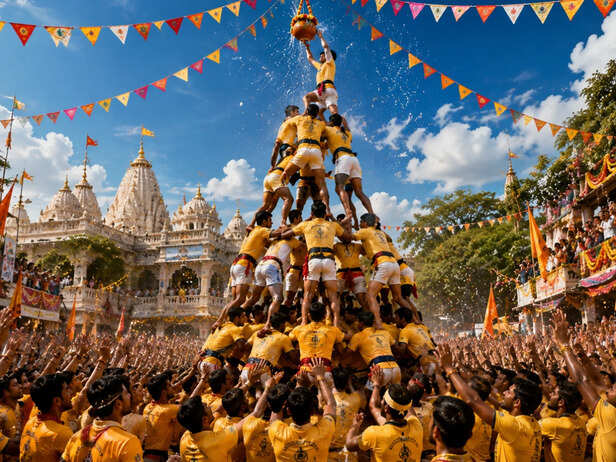
In Maharashtra, the excitement reaches another level with Dahi Handi. Govinda teams form human pyramids to reach and break a pot filled with curd or other offerings. The tradition recalls stories of young Krishna and his friends trying to reach butter and curd kept in high pots. But there is more to the spectacle than entertainment. Maharashtra Tourism describes Dahi Handi as a celebration of teamwork, determination and community spirit. What looks like a playful competition therefore carries a deeper message: difficult goals become possible when people trust and support one another.
In Tamil Nadu, Krishna Jayanti is often celebrated with one of the most beautiful visual traditions: tiny footprints leading from the entrance towards the puja room. The little marks are designed to look like the footprints of baby Krishna entering the house. The tradition turns the home itself into part of the celebration. Along with worship, families may prepare traditional offerings such as seedai, murukku and appam. The sight of tiny footprints quietly entering the house creates a beautiful devotional thought: what if, for one night, it feels as though Krishna has actually come home?
In Kerala, Krishna Janmashtami is widely known as Ashtami Rohini. The festival has its own regional identity, with Guruvayur becoming an important centre of Krishna devotion. Children may dress as Krishna and other characters, while traditional celebrations include devotional processions and Uriyadi, a pot-breaking custom. The name itself reflects the connection between Ashtami Tithi and Rohini Nakshatra in this regional observance. In 2026, Ashtami Rohini is observed on September 4 under the solar-calendar tradition used in Kerala.
Udupi in Karnataka has a spectacular Janmashtami tradition known as Vittal Pindi, also associated with Mosaru Kudike. Participants form human pyramids to break a hanging pot, recalling Krishna’s childhood butter-stealing stories. Karnataka Tourism describes it as a major part of Sri Krishna Janmashtami celebrations in Udupi. The festival also features a colourful procession connected with Krishna’s leelas. This makes Udupi especially fascinating because the celebration does not remain inside the temple. Krishna’s playful childhood becomes a living public spectacle filled with devotion, energy and community participation.
Odisha celebrates Krishna through a rich devotional culture closely connected with Lord Jagannath. At the Jagannath Temple in Puri, Krishna-related rituals and devotional traditions form part of the wider religious culture. The famous temple tradition is also known for its extensive food offerings, with 56 varieties prepared and offered to the deities as part of the temple’s bhoga tradition. During Janmashtami, Krishna’s birth is observed through special rituals and devotional practices. Here, the festival becomes another reminder that Krishna worship in India can take remarkably different forms while remaining spiritually connected.
The most beautiful part of Janmashtami is perhaps this diversity. Gujarat remembers Krishna as Dwarkadhish, Maharashtra celebrates his playful butter-stealing through Dahi Handi, Tamil Nadu welcomes him with tiny footprints, Kerala observes Ashtami Rohini, and Karnataka brings his leelas into a grand procession. Odisha adds its own Jagannath tradition. These customs may look completely different, but their emotional centre remains the same. Krishna is remembered as a child, king, friend, guide and divine presence. That is why Janmashtami feels less like one fixed celebration and more like millions of families telling their own version of the same beloved story.
Unlock insightful tips and inspiration on personal growth, productivity, and well-being. Stay motivated and updated with the latest at My Life XP.
Gujarat Brings Dwarka Alive
Janmashtami Celebration at Dwarkadhish Temple
Image credit : ChatGPT(ai)
In Gujarat, Janmashtami has a special connection with Dwarka, the city traditionally associated with Krishna’s later life as Dwarkadhish. Temples are decorated, devotional programmes fill the atmosphere and devotees gather for midnight worship. The celebration reflects a different side of Krishna from the playful child seen in Gokul stories. Here, he is remembered as a king, protector and divine leader. This makes Gujarat’s celebration especially fascinating because the same Krishna appears in another form. The festival becomes a journey from the mischievous child of Gokul to the revered ruler of Dwarka.
Maharashtra Builds Krishna’s Story
Govinda Teams Forming a Dahi Handi Pyramid
Image credit : ChatGPT(ai)
In Maharashtra, the excitement reaches another level with Dahi Handi. Govinda teams form human pyramids to reach and break a pot filled with curd or other offerings. The tradition recalls stories of young Krishna and his friends trying to reach butter and curd kept in high pots. But there is more to the spectacle than entertainment. Maharashtra Tourism describes Dahi Handi as a celebration of teamwork, determination and community spirit. What looks like a playful competition therefore carries a deeper message: difficult goals become possible when people trust and support one another.
Tamil Nadu Welcomes Krishna Home
Kerala Celebrates Ashtami Rohini
Karnataka Turns Krishna’s Leela Into a Procession
Odisha Adds Its Jagannath Connection
One Krishna, Many Expressions
Unlock insightful tips and inspiration on personal growth, productivity, and well-being. Stay motivated and updated with the latest at My Life XP.