Are Arjuna’s Descendants Still Alive? The Hidden Truth
Noopur Kumari | Sept 04, 2026, 12:00 IST
What if a royal dynasty that once ruled Delhi claimed its roots in the Mahabharata itself? Traditional genealogies connect the Tomar or Tanwar lineage with Arjuna through Parikshit and Janamejaya. Centuries later, rulers such as Anangpal Tomar became associated with Delhi. But is this an unbroken bloodline or a powerful traditional claim? The answer is more fascinating than it first appears.

Arjuna of the Mahabharata
Image credit : ChatGPT (ai)
Could the descendants of one of the Mahabharata’s greatest warriors still be living among us today?
It sounds almost unbelievable. Yet traditional genealogies associated with the Tomar, Tanwar or Tuar lineage claim a connection to the Pandavas, tracing their ancestry back to Arjuna.
The story is often presented as a continuous line through Arjuna, Abhimanyu, Parikshit, Janamejaya and later Tomar rulers. Medieval Tomara rulers eventually became an important power in the Delhi and Haryana region.
But there is a crucial twist.
The connection to Arjuna belongs to traditional and genealogical claims, while the historically documented Tomara dynasty appears much later. The earliest surviving historical evidence for the Tomaras dates to the early medieval period.
So, are Arjuna’s descendants really alive today? Let us follow the fascinating story carefully.
![Arjuna of the Mahabharata]()
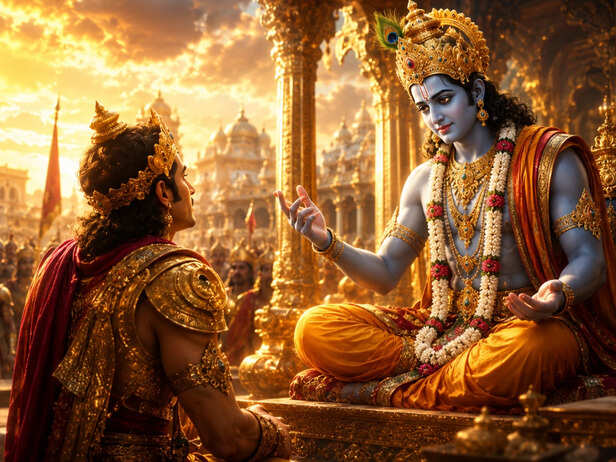
Arjuna is one of the most famous figures of the Mahabharata and the father of Abhimanyu. Traditional genealogies used by Tomar or Tanwar communities connect their lineage to him through the Kuru family. The commonly presented sequence runs from Arjuna to Abhimanyu, then to Parikshit and Janamejaya, followed by later names in the claimed royal genealogy. This creates a fascinating bridge between epic tradition and medieval Indian history. However, the complete sequence should be understood as a traditional lineage claim rather than a genealogy independently verified for every generation.
![Abhimanyu and Young Parikshit]()
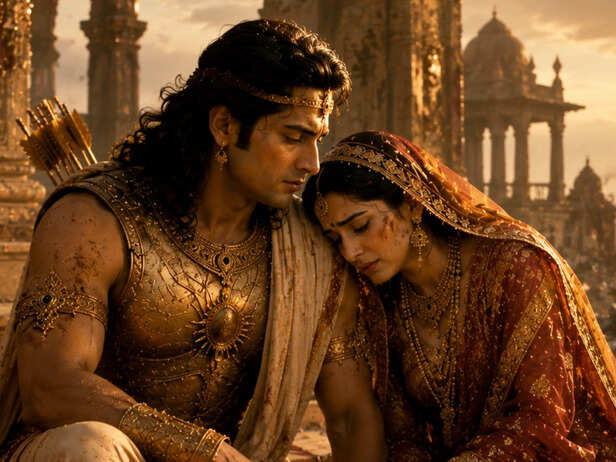
After Abhimanyu’s death in the Kurukshetra war, his son Parikshit became an important figure in the continuation of the Kuru dynasty. Traditional accounts describe him as the successor who preserved the royal line after the devastation of the war. His son was Janamejaya, another major figure in later epic tradition. This part of the story is deeply rooted in the Mahabharata’s genealogical tradition. The intriguing question comes much later, when medieval Rajput lineages began identifying themselves with ancient dynasties and legendary ancestors connected with the Chandravanshi tradition.
The Tomaras were a real medieval ruling lineage, but their claimed connection to Arjuna belongs to a different category of evidence. Historical references to the Tomaras appear centuries after the period traditionally associated with the Mahabharata. The Pehowa inscription, dating to the reign of Gurjara-Pratihara king Mahendrapala I, provides an early historical reference to a Tomara chief named Gogga. Historians therefore distinguish between the historically documented Tomara dynasty and later genealogical traditions connecting the clan to Arjuna.
The name Anangpal Tomar adds another dramatic chapter to the story. Anangpal II is traditionally associated with establishing or repopulating Delhi in the 11th century. A Vikram Samvat 1109 reference, corresponding to 1052 CE, is associated with Anangpal and Delhi. The Government of India’s National Monuments Authority also describes Anang Tal as an 11th-century reservoir associated with Anang Pal Tomar. This gives us something important: while the Arjuna connection remains traditional, Anangpal’s place in Delhi’s medieval history has much stronger historical and archaeological grounding.
This is where the story becomes especially interesting. Tomar, Tanwar and Tuar are names associated with the same broader clan tradition, and communities using these identities still exist today. Traditional genealogies continue to describe a descent from the Chandravanshi and Pandava line. But saying that a modern individual has been scientifically proven to be a direct biological descendant of Arjuna would go beyond the available historical evidence. What survives with greater certainty is the living tradition, clan identity and historical memory associated with the Tomar name.
The Tomaras became an important regional power around Delhi between the early medieval period and the 12th century. Their history is connected with places such as Delhi and Haryana, while Anangpal is particularly associated with Lal Kot and the early development of Delhi. Later, Tomara power declined as the Chauhans became dominant in the region. Historical evidence does not fully support every detail found in later bardic accounts, including the popular story that the last Tomar ruler simply handed Delhi to Prithviraj Chauhan. Historians instead point to a more complicated political transition.
So, are Arjuna’s descendants alive today? The most responsible answer is possibly according to traditional lineage claims, but not historically proven as an unbroken biological line. The Tomar dynasty itself is historically real, and its medieval rulers left inscriptions, coins and monuments connected with Delhi and surrounding regions. The Arjuna connection belongs to a much older genealogical tradition that remains meaningful to the community. And perhaps that is what makes the story so fascinating: centuries after the Mahabharata became part of India’s cultural memory, the name of Arjuna continues to appear in living traditions of lineage, identity and heritage.
Unlock insightful tips and inspiration on personal growth, productivity, and well-being. Stay motivated and updated with the latest at My Life XP.
It sounds almost unbelievable. Yet traditional genealogies associated with the Tomar, Tanwar or Tuar lineage claim a connection to the Pandavas, tracing their ancestry back to Arjuna.
The story is often presented as a continuous line through Arjuna, Abhimanyu, Parikshit, Janamejaya and later Tomar rulers. Medieval Tomara rulers eventually became an important power in the Delhi and Haryana region.
But there is a crucial twist.
The connection to Arjuna belongs to traditional and genealogical claims, while the historically documented Tomara dynasty appears much later. The earliest surviving historical evidence for the Tomaras dates to the early medieval period.
So, are Arjuna’s descendants really alive today? Let us follow the fascinating story carefully.
The Line Begins With Arjuna
Arjuna of the Mahabharata
Image credit : chatgpt(ai)
Arjuna is one of the most famous figures of the Mahabharata and the father of Abhimanyu. Traditional genealogies used by Tomar or Tanwar communities connect their lineage to him through the Kuru family. The commonly presented sequence runs from Arjuna to Abhimanyu, then to Parikshit and Janamejaya, followed by later names in the claimed royal genealogy. This creates a fascinating bridge between epic tradition and medieval Indian history. However, the complete sequence should be understood as a traditional lineage claim rather than a genealogy independently verified for every generation.
Abhimanyu’s Son Was Parikshit
Abhimanyu and Young Parikshit
Image credit : chatgpt(ai)
After Abhimanyu’s death in the Kurukshetra war, his son Parikshit became an important figure in the continuation of the Kuru dynasty. Traditional accounts describe him as the successor who preserved the royal line after the devastation of the war. His son was Janamejaya, another major figure in later epic tradition. This part of the story is deeply rooted in the Mahabharata’s genealogical tradition. The intriguing question comes much later, when medieval Rajput lineages began identifying themselves with ancient dynasties and legendary ancestors connected with the Chandravanshi tradition.
The Tomar Claim Appears Centuries Later
Anangpal Made the Story More Famous
Did the Line Really Continue to Today?
What Happened to the Tomar Rulers?
Legend, History and a Living Legacy
Unlock insightful tips and inspiration on personal growth, productivity, and well-being. Stay motivated and updated with the latest at My Life XP.