Long before the festival became strongly associated with buying gold, Dhanteras was connected with Lord Dhanvantari, the divine physician and a symbol of health and healing. His appearance is traditionally linked to one of Hindu mythology’s most famous stories, the Samudra Manthan, or churning of the cosmic ocean.So, why is a festival associated with wealth also connected with medicine and longevity? And what does Lord Dhanvantari have to do with Dhanteras?
Who Is Lord Dhanvantari?
![Dhanvantari story]()
Dhanvantari story
Image credit : AI
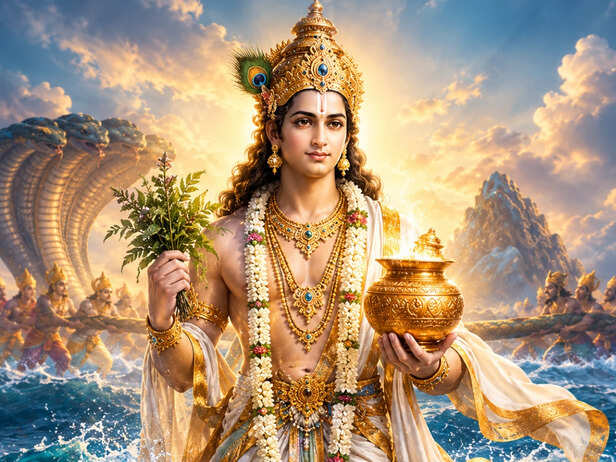
In Hindu tradition, Lord Dhanvantari is regarded as the deity of Ayurveda and divine medicine. He is traditionally depicted holding a pot containing
amrita, the nectar associated with immortality.His story appears in connection with the Samudra Manthan, during which the devas and asuras are said to have churned the cosmic ocean in search of
amrita.
According to the traditional account, many extraordinary things emerged from the ocean during this process. Among them was Lord Dhanvantari, who appeared carrying the pot of amrita.This association gives Dhanteras a deeper meaning: wealth is not the only form of prosperity. Good health and longevity are also considered forms of true wealth.
The Forgotten Connection Between Dhanteras and Dhanvantari
Dhanteras is celebrated on the
Trayodashi, the thirteenth lunar day of Krishna Paksha during the month of Kartika.The day is traditionally associated with several forms of prosperity and protection. Goddess Lakshmi is worshipped for wealth and abundance, while Lord Dhanvantari represents health and healing.
This makes the festival particularly interesting.The word
dhan is commonly understood as wealth, but prosperity in traditional Indian thought has never been limited entirely to money. A person may possess material wealth, but without health, peace and longevity, that wealth cannot provide complete wellbeing.Lord Dhanvantari represents this forgotten side of Dhanteras.
What Happened During the Samudra Manthan?
The story begins with the devas losing their strength and seeking a way to regain their power. They approached Lord Vishnu, who advised them to churn the cosmic ocean with the help of the asuras.Mount Mandara was used as the churning rod, while the serpent Vasuki served as the rope.The churning produced a series of remarkable and sometimes dangerous manifestations.
One of the most famous was
halahala, the deadly poison that threatened creation. Lord Shiva is traditionally said to have consumed the poison to protect the universe.Other treasures and divine beings also emerged from the cosmic ocean.Among the final and most significant appearances was
Lord Dhanvantari, carrying the vessel of amrita.This is why his story is particularly relevant to Dhanteras. The festival is not simply about acquiring material possessions. At its deeper symbolic level, it also reminds devotees of the value of
health, life and wellbeing.
Why Is Dhanvantari Called the Divine Physician?
![Lord Dhanvantari: The Divine Physician and Origin of Ayurveda]()
Lord Dhanvantari: The Divine Physician and Origin of Ayurveda
Image credit : AI
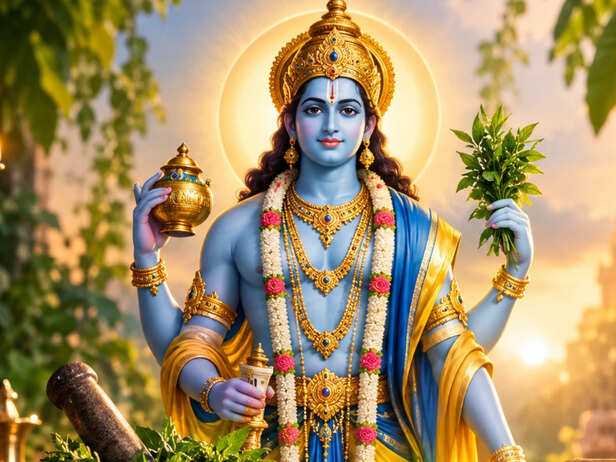
Lord Dhanvantari is traditionally revered as the father or originator of Ayurveda, the ancient Indian system of medicine.In traditional accounts, Ayurveda is associated with maintaining balance in the body and supporting a long and healthy life.The Dhanvantari tradition therefore connects spirituality with the idea that health should be protected and valued rather than taken for granted.This is also why Dhanvantari Jayanti is observed on Dhanteras in many traditions.For practitioners and followers of Ayurveda, the day holds particular significance.
What Does the Pot of Amrita Symbolise?
The pot carried by Dhanvantari is one of the most fascinating elements of the story.
Amrita is traditionally described as the nectar of immortality. While the story is mythological and religious in nature, its symbolism can be interpreted more broadly.
The pot represents the human desire to overcome illness, ageing and death.Lord Dhanvantari appearing with it places health and longevity at the heart of the Dhanteras story.In that sense, the festival can be understood as a reminder that prosperity does not simply mean having more possessions. It can also mean having the health and strength to enjoy life.
So Why Do People Buy Gold on Dhanteras?
The tradition of buying gold, silver, utensils and other valuable items on Dhanteras is now one of the festival's most recognisable customs.Gold is traditionally associated with prosperity, abundance and auspiciousness. Buying something new is seen by many families as a symbolic way of welcoming good fortune before Diwali.
But the presence of Dhanvantari offers another way to understand the festival.What is the value of wealth if there is no health to enjoy it?
This is perhaps the most interesting message hidden within Dhanteras.The festival brings together two ideas that are often treated separately:
material prosperity and physical wellbeing.
Why Is Yama Also Associated With Dhanteras?
There is another surprising aspect of Dhanteras.The festival is also associated with Yama, the deity traditionally connected with death. In many Hindu households, a lamp known as Yama Deepam is lit on the evening of Dhanteras.This tradition is connected with the story of King Hima's son, whose horoscope was believed to predict that he would die from a snakebite.According to the popular legend, his wife attempted to prevent the predicted death. She gathered gold and silver ornaments and other valuables, placed them near the entrance and kept lamps burning throughout the night.
When Yama arrived in the form of a serpent, the dazzling light and the sounds of songs and music prevented him from entering.The prince survived.
The story is a traditional legend rather than a historical account, but it explains why lighting a lamp for Yama became associated with protection from untimely death in certain traditions.It also adds another layer to Dhanteras: wealth, health and longevity are all woven into the festival's traditional symbolism.
What Dhanteras Really Represents
Perhaps the most overlooked message of Dhanteras is that prosperity is not one-dimensional.The festival brings together several ideas:
Lakshmi represents prosperity and abundance.Dhanvantari represents health and healing.Yama Deepam represents prayers for protection and longevity.Together, these traditions create a much broader picture of what people have historically hoped for: a prosperous home, good health and a long life.This is why reducing Dhanteras to a "gold-buying festival" misses an important part of its cultural and spiritual meaning.
Dhanteras in Modern Life
The way people celebrate Dhanteras has naturally changed.For some, it means purchasing gold or silver. For others, it may mean buying utensils, cleaning the home, lighting diyas or simply spending time with family.But the story of Dhanvantari offers an opportunity to look beyond shopping.
Dhanteras can also be a moment to think about something we often overlook while chasing financial success: our health.Perhaps that is the most relevant lesson of this ancient tradition.Wealth can buy many things, but health determines how fully we can experience them.
The Deeper Meaning of Dhanteras
Dhanteras begins the festive period leading into Diwali, but its meaning extends beyond the excitement of shopping.The forgotten story of Lord Dhanvantari reminds us that health itself is a form of wealth.His appearance from the cosmic ocean carrying amrita represents, within Hindu tradition, the hope for healing, longevity and wellbeing.
So this Dhanteras, while families light diyas and welcome prosperity, there is another thought worth remembering:The greatest wealth may not always be what we can buy. Sometimes, it is the health that allows us to enjoy everything we already have.
Unlock insightful tips and inspiration on personal growth, productivity, and well-being. Stay motivated and updated with the latest at
My Life XP.