The moment a man ties the mala, a rudraksha or tulsi bead necklace, around his neck, he is no longer just himself. In the Ayyappa tradition, the mala marks the start of deeksha, a vow of preparation that runs for 41 days before the pilgrimage to Sabarimala. What follows is a period of deliberate austerity: black clothes every day, no footwear anywhere, a strict vegetarian diet, celibacy, and a daily routine built around prayer. Each element has a reason the tradition itself offers, and each one has been carried forward by ordinary men, farmers, office workers, fathers, for generations.
What Deeksha Actually Means
![The word deeksha means initiation]()
The word deeksha means initiation
Image credit : chatgpt(ai)
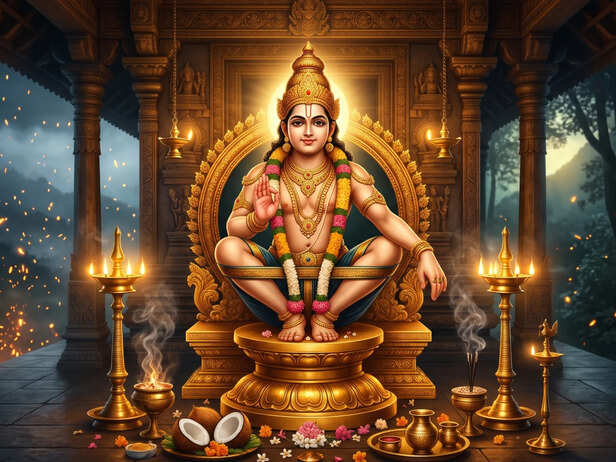
The word deeksha means initiation, but in this context it is closer to a temporary transformation. The vow signals that the person taking it has stepped out of his ordinary identity for the duration. He is called a swami during this period, and other devotees greet him as one: "Swamiye Saranam Ayyappa" is both a greeting and a declaration of solidarity. The tradition holds that during deeksha, the devotee is to be treated as Ayyappa himself, not as a mark of personal elevation, but as a reminder that the self he normally carries is set aside. The discipline is the mechanism by which that setting-aside happens.
The Black Clothes and What They Carry
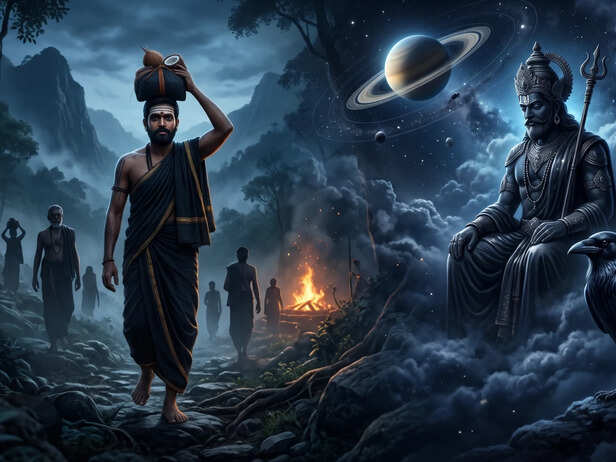
Black is the colour of Saturn in Vedic symbolism, associated with discipline, renunciation, and the stripping away of comfort. In the Ayyappa tradition, black is also understood as the colour that absorbs all others, a visual statement that the devotee is not presenting himself as belonging to any particular status, caste, or station. Every man in black looks the same on the path to Sabarimala. Blue, dark green, and saffron are also worn in some regional traditions, each with its own symbolic reading, but black is the most widely observed. The cloth is plain, unembroidered, and without ornament. The simplicity is the point.
Bare Feet on Every Surface
![Walking without shoes is one of the oldest marks]()
Walking without shoes is one of the oldest marks
Walking without shoes is one of the oldest marks of humility in Indian devotional traditions across faiths. In the Ayyappa deeksha, bare feet serve a specific purpose: the earth is understood as sacred ground, and the devotee's contact with it unmediated. The 18 steps, the sacred Pathinettampadi, at Sabarimala are climbed barefoot, and the discipline of going without shoes throughout the 41 days is preparation for that moment. It also makes the body aware of where it is. A person in shoes moves without noticing the ground. A person barefoot does not.
The Diet, the Silence, and the Cold Bath
The dietary rules during deeksha are strict vegetarianism, no onion, no garlic, no alcohol, and, in the more rigorous observance, only one meal a day, taken after the evening prayer. The tradition's reasoning is straightforward: the body is being asked to carry a vow, and a body fed lightly and cleanly is understood to be better suited to that work. The cold bath before dawn, before the sun has risen, is a daily reset. It is uncomfortable, and that is part of what it does. Comfort is what deeksha is deliberately stepping away from. Many devotees also observe silence for portions of the day, speaking only what is necessary, as a way of turning attention inward.
The Irumudi and the Walk
The irumudi is the cloth bundle a devotee carries on his head for the final approach to Sabarimala. It has two compartments: the front holds offerings for the deity, coconut filled with ghee, camphor, and other items, and the rear holds provisions for the journey. No one may climb the Pathinettampadi without an irumudi on their head. The bundle is not carried in the hands. It rests on the head, which the tradition understands as the seat of the self. Carrying the offering there, rather than in the hands, is a gesture of placing the divine above the personal. The walk itself, through forest and hill, is considered part of the pilgrimage rather than a prelude to it.
What the 41 Days Add Up To
Taken one by one, the practices of deeksha look like a list of restrictions. Taken together, they describe a single intention: to arrive at Sabarimala as someone different from the person who tied the mala 41 days earlier. The black clothes, the bare feet, the cold water, the plain food, the shared greeting, each one removes something ordinary and replaces it with something chosen. The tradition holds that Ayyappa, the deity of Sabarimala, is a celibate ascetic, and the devotee's deeksha is an attempt to approach him in a form the deity would recognise. Whether or not a person holds that belief, the 41 days produce something observable: a sustained act of will, practised daily, in the middle of an ordinary life.
Unlock insightful tips and inspiration on personal growth, productivity, and well-being. Stay motivated and updated with the latest at
My Life XP.