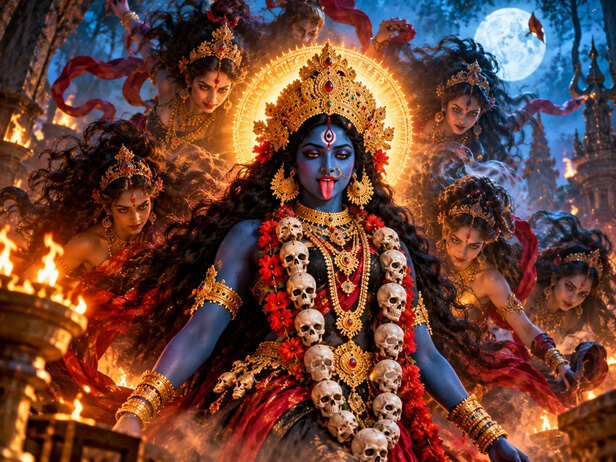
If Maa Durga is the mother of the universe, why do stories of Shakti speak about sacrifice? And what does the goat in this symbolism really represent? The answer may go deeper than a ritual. In this interpretation of the Devi Mahatmya, the fierce battle between Maa Chandi and Nishumbha becomes a picture of the struggle within the human mind. Nishumbha's second form, his relentless attack and his eventual defeat can be understood as symbols of ego, attachment and hatred. The real question is whether the sacrifice is about an animal or the destructive qualities we carry within ourselves.
Why Does Maa Chandi Need a Sacrifice?
![Maa Chandi and the Meaning of Sacrifice]()
Maa Chandi and the Meaning of Sacrifice
Image credit : chatgpt(ai)
The question of sacrifice becomes more meaningful when we look beyond the surface of a religious story. In Hindu traditions, animal sacrifice has been practised in some Shakta communities, while other devotees interpret sacrifice symbolically or offer fruits, flowers and other substitutes. These traditions should not be treated as identical. In a spiritual interpretation of Chandi Path, sacrifice can also mean giving up ego, cruelty, uncontrolled desire and hatred. The central question is not simply what is offered to the goddess, but what a devotee is willing to change within themselves.
Nishumbha's Second Form Holds a Clue
![Divine Assembly Blesses Goddess Durga]()
Divine Assembly Blesses Goddess Durga
Image credit : chatgpt(ai)
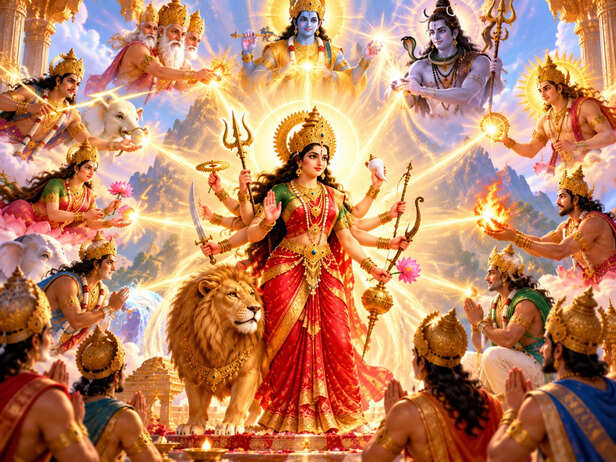
In the Devi Mahatmya, Nishumbha fights Maa Chandi even after the goddess has defeated many of his forces. When she strikes him, another warrior emerges from his body and challenges her again. Maa Chandi defeats this warrior as well as Nishumbha. This dramatic episode is part of the scripture's account of the goddess's battle against the asuras. A symbolic reading sees the second warrior as a reminder that defeating one visible problem does not always end the struggle. Pride, anger or desire may return in another form unless their deeper causes are understood.
The Ego Behind the Battle
The spiritual interpretation connects Nishumbha with asmita, a Sanskrit term associated with the sense of "I" or ego. In the Yoga tradition, asmita is one of the five kleshas, or sources of suffering. Ego becomes harmful when every situation revolves around personal importance, control or recognition. A person may believe they are fighting for a worthy goal when they are actually trying to protect their pride. Nishumbha's refusal to surrender can therefore serve as a metaphor for the mind that keeps resisting change. This is a symbolic interpretation, not a universally accepted scriptural definition of the demon.
How Attachment and Aversion Take Over
Yoga philosophy identifies raga as attachment to what brings pleasure and dvesha as aversion to what brings pain. These tendencies can shape everyday behaviour. We may cling to a relationship because we fear being alone, or resent someone because they challenge our self-image. The interpretation of Nishumbha's two forms as attachment and aversion offers a way to reflect on these patterns. However, the Devi Mahatmya does not explicitly define the two warriors as raga and dvesha. This is a modern spiritual reading that connects the battle with ideas found in Indian philosophy.
What Does the Goat Represent?
A goat does not have one universal meaning across Hindu traditions. In a symbolic interpretation, however, the animal can represent the impulsive side of human nature: uncontrolled anger, possessiveness, vanity or the urge to dominate. The idea is to offer these tendencies at the feet of Shakti rather than allow them to control our lives. This does not mean every tradition views an actual animal sacrifice as merely symbolic. It means that devotees who follow an inward path of worship can understand sacrifice as a personal commitment to change, discipline and compassion.
How to Practise This Teaching
The next time anger or jealousy rises within you, pause before reacting. Ask whether you are responding to a real problem or protecting your ego. Notice what you are unwilling to let go of and whether an old resentment is shaping your actions. You can also use prayer, meditation or reading the Devi Mahatmya to reflect on these questions. The aim is not to suppress every desire or emotion, but to respond with awareness instead of being controlled by impulse. In this sense, inner sacrifice becomes a daily practice rather than a single ritual.
Unlock insightful tips and inspiration on personal growth, productivity, and well-being. Stay motivated and updated with the latest at My Life XP