The Kurukshetra war ended. The armies dissolved. Yudhishthira was crowned. And somewhere on the edge of the field, an old man lay on a bed made of arrows, watching the sun move across the sky, and waiting. He could have left at any moment. That is the part the Mahabharata wants you to hold onto.
Bhishma carried a boon granted by his father Shantanu: he would die only when he chose to. The tradition calls this iccha mrityu, death by one's own will. He had carried it through a life longer than any around him, watching generations rise and fall, watching the kingdom he had sworn to protect tear itself apart. When Arjuna's arrows finally brought him down on the tenth day of the war, he did not die. He fell, and he waited.
What the Boon Actually Meant
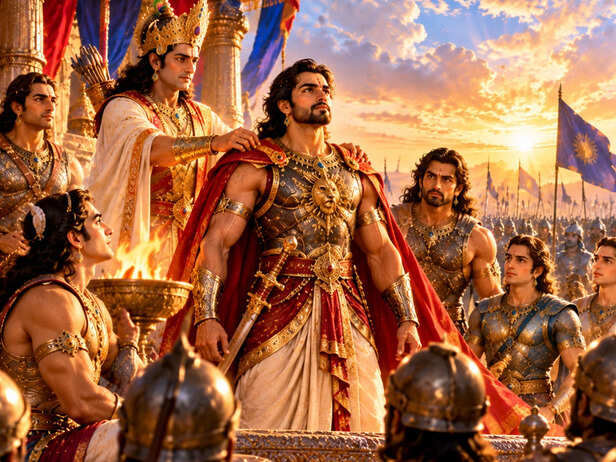
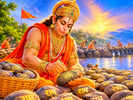
![Iccha mrityu]()
Iccha mrityu
Image credit : CHATGPT(AI)
Iccha mrityu is not simply long life. The tradition is careful about this. It is not immunity from pain or injury. Bhishma lay pierced through, held above the ground by the arrows themselves, in what the text describes without softening. What the boon gave him was sovereignty over the moment of departure, the ability to hold the life-force inside the body until he released it willingly.
In Vedic thought, the moment of death is not incidental. How and when a person dies shapes what follows. A death chosen in full consciousness, at an auspicious moment, with the mind settled, is understood to be a different kind of crossing than one that arrives by surprise or in confusion. Bhishma was not waiting because he could not die. He was waiting because the moment had to be right.
Why He Chose Uttarayana
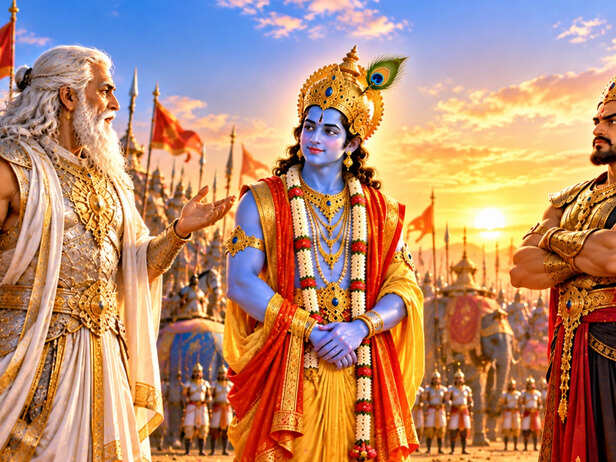
![Bhishma Ask Duryodhana to Stop the War]()
Bhishma Ask Duryodhana to Stop the War
He waited for the sun to turn north. In the tradition, the year divides into two great passages: Dakshinayana, when the sun travels south, and Uttarayana, when it turns back toward the north. Uttarayana carries associations of light, of ascent, of the path the Bhagavad Gita calls the bright path, the one from which, in some interpretations, there is no return to rebirth.
The Gita itself, spoken on that same battlefield before the war began, names both paths. Bhishma knew the teaching. He had heard it across a lifetime of study. His wait on the arrows is sometimes read as the living demonstration of that teaching: a man who had done what the tradition asked of him, now choosing the moment of departure the way a craftsman sets down a tool, deliberately, at the right time, with nothing left undone.
He waited roughly fifty-eight days, by most reckonings in the text. The winter solstice passed. The sun began its northern journey. Then he let go.
What He Did While He Waited
The Shanti Parva and the Anushasana Parva, two of the Mahabharata's longest books, are largely Bhishma speaking from the arrow-bed. Yudhishthira, wrecked by the war and uncertain how to rule, came to him. And Bhishma, lying pierced through, gave him the longest sustained teaching in the epic: on kingship, on dharma, on the duties of different stages of life, on how to govern without cruelty, on what a king owes the people he rules.
The tradition reads this as the point of the wait. Bhishma had knowledge that needed to be passed. He was perhaps the last person alive who had learned directly from the teachers of an earlier age. The arrow-bed becomes, in this reading, not a scene of suffering but a seat of transmission. He stayed because the teaching was not finished. He left when it was.
The Vow That Shaped Everything
To understand why the wait carries the weight it does, the story asks you to remember what Bhishma gave up to receive the boon. As a young man, he renounced the throne of Hastinapura and swore never to marry and never to father children, so that his father could marry the woman he loved. The vow was so absolute that the tradition gave him a new name for it: Bhishma, from the Sanskrit root for terrible or formidable, a name for a vow so severe it reshaped a life entirely.
He kept the vow through everything. He watched rulers he could not support sit on a throne he had protected. He fought on the side of the Kauravas in a war he knew was wrong, because his oath bound him to the throne, not to the men who sat on it. The arrow-bed is where that long tension finally resolves. He is no longer bound by any vow to any living person. The only thing left is the choice of when to go.
Why the Story Is Told This Way
A man dying slowly on a field of arrows could be told as tragedy. The Mahabharata does not tell it that way. It tells it as the most sovereign moment of a sovereign life, the one point at which Bhishma acted entirely for himself, constrained by nothing except his own reading of the right moment.
The tradition returns to this image because it holds something the rest of the epic cannot hold as cleanly: the idea that a life lived under obligation can still end in freedom. Every vow Bhishma made closed a door. The boon left one door open. He walked through it when he was ready, and not a moment before.
The arrow-bed is not where Bhishma was defeated. In the Mahabharata's telling, it is where he finally had nothing left to do except choose, and he chose with the same care he had brought to every other choice in a life that asked more of him than most lives ask. That is why the story is told as a choice, and why it has stayed in the telling for as long as it has.
Unlock insightful tips and inspiration on personal growth, productivity, and well-being. Stay motivated and updated with the latest at
My Life XP.