Was Riddhi Really Ganesha’s Wife? The Truth Revealed
Noopur Kumari | Sept 26, 2026, 15:00 IST
The story of Ganesha and Siddhi Buddhi may look like a simple family tale, but their names reveal a powerful spiritual message. In traditional interpretations, Buddhi represents clear thinking and wisdom, while Siddhi represents accomplishment. Riddhi, meanwhile, is associated in some traditions with prosperity or growth. But the fascinating part is that different Hindu texts and traditions describe Ganesha’s family differently. That is what makes this Sanatan mystery worth exploring.

Ganesha’s Wives
Image credit : ChatGPT(ai)
Lord Ganesha is widely worshipped as the deity of wisdom, intellect and the remover of obstacles. But there is another fascinating layer in traditional stories about Ganesha’s wives, Siddhi and Buddhi. They are not simply names attached to Ganesha’s family. Their names themselves carry a deeper spiritual idea. Buddhi represents wisdom or discernment, while Siddhi is associated with accomplishment or attainment. Some traditions also mention Riddhi, creating another intriguing question: if Siddhi and Buddhi are linked with Ganesha, then who exactly was Riddhi?
![Ganesha’s Head Wasn’t Just a Myth]()
The names associated with Lord Ganesha’s wives carry meanings beyond a family relationship. Siddhi is commonly understood as accomplishment, attainment or spiritual achievement, while Buddhi refers to intellect, wisdom and discernment. In some traditional accounts, Siddhi and Buddhi are described as daughters of Prajapati Vishvarupa. Their association with Ganesha creates a symbolic connection between wisdom and achievement. The idea is simple: before seeking success, a person needs the ability to understand what is right. This is why Siddhi and Buddhi in Hindu tradition are often discussed as qualities connected with Ganesha.
![Ganesha Symbolising Wisdom and Success]()
This is where the deeper Ganesha spiritual meaning appears. Imagine having a goal but making decisions without understanding their consequences. Success alone may not bring the result you actually want. Traditional interpretations of Buddhi and Siddhi suggest a different sequence. Buddhi gives a person the ability to think, judge and choose wisely. Siddhi then represents the accomplishment that can follow the right direction. In this reading, Ganesha is not merely associated with removing obstacles. He represents the wisdom needed to recognise which path is worth taking before chasing its rewards.
The question becomes even more interesting when Riddhi and Ganesha enter the story. Riddhi is commonly associated with prosperity, growth or abundance, but traditions differ in how she is described. Some popular accounts place Riddhi alongside Siddhi and Buddhi in Ganesha’s family, while other traditions give her a different association. The claim that Riddhi was Kubera’s wife belongs to a particular traditional telling and should not be treated as the only version. Hindu mythology contains many regional and textual variations, which is why Riddhi, Siddhi and Buddhi can appear differently across sources.
The
Look beyond the family tree and the story becomes a lesson about life. Buddhi means wisdom, helping a person distinguish between useful and harmful choices. Siddhi represents accomplishment, the result of focused effort and the right direction. Riddhi, where included, is associated with prosperity or growth. Together, these ideas explain why Lord Ganesha symbolism goes far beyond removing obstacles. A person may desire money, success or recognition, but without clarity, those achievements can become difficult to handle. The traditional message places wisdom at the centre of meaningful progress.
This symbolism also connects with the familiar practice of invoking Ganesha before auspicious beginnings. Whether starting a new business, studying for an examination or beginning an important journey, devotees traditionally seek Ganesha’s blessings. The spiritual idea is not simply “give me success.” It is also a request for Buddhi, or the wisdom to make better decisions. Once the direction is clear, Siddhi, or accomplishment, becomes meaningful. This interpretation explains why Ganesha remains such a powerful symbol of intelligence, good judgment and purposeful action in Hindu tradition.
The most memorable lesson from the Ganesha Siddhi Buddhi story is not about who was married to whom. It is about the relationship between thinking and achieving. A person can chase success endlessly, but without wisdom, even achievement may feel empty. The traditional symbolism of Ganesha suggests starting with Buddhi, choosing carefully and then working towards Siddhi. Where Riddhi is included, prosperity becomes another possible outcome of that journey. This makes the story relevant even today: clear thinking should guide ambition, rather than ambition controlling our choices.
The fascinating part of Sanatan mythology is that one story does not always appear in exactly the same form everywhere. Different Puranic texts, regional traditions and later popular retellings can give different details about divine families. So, when discussing Ganesha’s wives, Riddhi, Siddhi and Buddhi, it is important to understand the tradition behind each version. The deeper symbolism, however, remains easy to appreciate. Ganesha represents wisdom and discernment, Siddhi represents accomplishment, and Riddhi is often linked with prosperity or growth. Together, these ideas create a powerful reminder: success becomes meaningful when it is guided by wisdom.
Unlock insightful tips and inspiration on personal growth, productivity, and well-being. Stay motivated and updated with the latest at My Life XP.
Ganesha’s Wives Are More Than Names
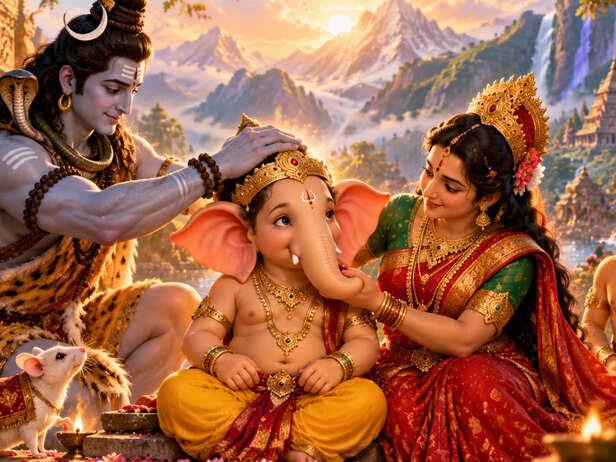
Ganesha’s Head Wasn’t Just a Myth
The names associated with Lord Ganesha’s wives carry meanings beyond a family relationship. Siddhi is commonly understood as accomplishment, attainment or spiritual achievement, while Buddhi refers to intellect, wisdom and discernment. In some traditional accounts, Siddhi and Buddhi are described as daughters of Prajapati Vishvarupa. Their association with Ganesha creates a symbolic connection between wisdom and achievement. The idea is simple: before seeking success, a person needs the ability to understand what is right. This is why Siddhi and Buddhi in Hindu tradition are often discussed as qualities connected with Ganesha.
Buddhi Comes Before Siddhi
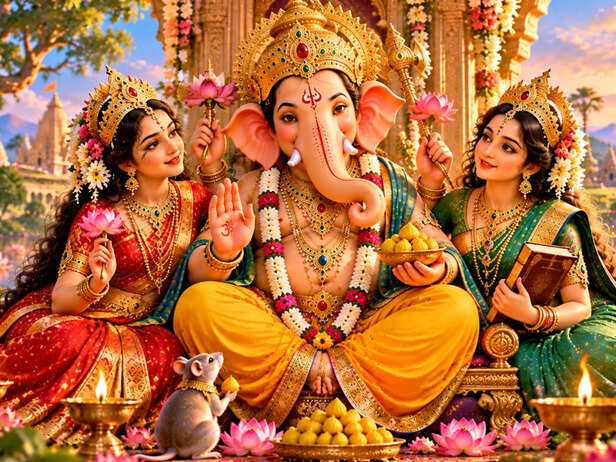
Ganesha Symbolising Wisdom and Success
Image credit : ChatGPT(ai)
This is where the deeper Ganesha spiritual meaning appears. Imagine having a goal but making decisions without understanding their consequences. Success alone may not bring the result you actually want. Traditional interpretations of Buddhi and Siddhi suggest a different sequence. Buddhi gives a person the ability to think, judge and choose wisely. Siddhi then represents the accomplishment that can follow the right direction. In this reading, Ganesha is not merely associated with removing obstacles. He represents the wisdom needed to recognise which path is worth taking before chasing its rewards.
So, Where Does Riddhi Fit In?
The Symbolism Makes the Story Powerful
Why Ganesha Is Worshipped First
The Real Lesson Behind Siddhi and Buddhi
The Mystery Has More Than One Version
Unlock insightful tips and inspiration on personal growth, productivity, and well-being. Stay motivated and updated with the latest at My Life XP.