What “Bajra” and “Dhwaja” Really Mean in Hanuman Chalisa
Noopur Kumari | Sept 19, 2026, 07:00 IST
Why does the Hanuman Chalisa specifically mention a vajra, a flag and a sacred thread? And why does Tulsidas describe Hanuman as both the son of Kesari and the divine “Suvan” of Shankar? These words are short, but each carries a traditional meaning. The vajra represents immense strength, the dhwaja reflects his heroic identity, and the janeu points toward discipline and sacred responsibility.

Hanuman Chalisa specifically mention a vajra, a flag and a sacred thread
Image credit : ChatGPT (ai)
The Hanuman Chalisa is often recited from memory, but some of its most familiar lines carry details that are easy to overlook. The verses “Hath Bajra Aur Dhwaja Biraje, Kandhe Moonj Janeu Saje” describe the divine form and symbols associated with Hanuman, while “Shankar Suvan Kesari Nandan, Tej Pratap Maha Jag Vandan” speaks about his lineage, divine connection and extraordinary glory. Together, these lines are not simply a description of what Hanuman looks like. They bring together symbols of strength, discipline, courage and devotion, giving the verses a deeper meaning for anyone who recites them.
![Hanuman reaching toward the radiant Sun]()
The line “Hath Bajra Aur Dhwaja Biraje” means that a vajra and flag adorn Hanuman’s hands. The vajra is traditionally known as the powerful weapon associated with Indra. In Hanuman’s imagery, it represents immense strength, firmness and the ability to overcome powerful obstacles. The symbolism goes beyond physical power. Hanuman’s greatest strength in the Ramayana is repeatedly shown through his courage, determination and unwavering service to Lord Rama. The vajra therefore fits his character: powerful when action is needed, but guided by devotion and purpose. It reminds devotees that true strength is not merely about force; it also involves knowing where and why that strength should be used.
![Hanuman carrying a sacred flag]()
The word “Dhwaja” means flag or banner. The verse says that a flag also adorns Hanuman. In Indian traditions, a flag can represent identity, honour, victory and the presence of a warrior or divine figure. Hanuman is not remembered only for his physical power. His journey in the Ramayana includes crossing the ocean, finding Sita, confronting Lanka and carrying out Rama’s mission despite enormous challenges. The flag in this verse can therefore be understood alongside Hanuman’s role as a fearless servant and warrior. It represents a spirit that does not retreat when duty becomes difficult. His courage always remains connected to his devotion to Lord Rama.
The next line says, “Kandhe Moonj Janeu Saje.” It describes a janeu, or sacred thread, made of moonj grass resting on Hanuman’s shoulder. The janeu traditionally carries associations with spiritual learning, discipline and responsibility. Mentioning it in Hanuman’s description adds another dimension to his character. He is not simply a mighty warrior. He is also presented as disciplined and spiritually committed. The contrast is striking: the same Hanuman who can perform extraordinary feats is also associated with humility and self-control. This is one reason the verse feels richer when understood rather than simply recited. His power and discipline are shown together.
The words “Shankar Suvan Kesari Nandan” are traditionally understood as describing Hanuman as connected with Shankar, Lord Shiva, while also identifying him as the son of Kesari. Suvan can be understood as son or offspring, and Kesari Nandan means the son of Kesari. In many Hindu traditions, Hanuman is regarded as an incarnation or manifestation of Shiva’s divine energy, while Anjana and Kesari are named as his parents. The verse brings these aspects together in just a few words. It presents Hanuman as a figure with both a divine connection and a family lineage, adding depth to his identity.
The next phrase, “Tej Pratap Maha Jag Vandan,” praises Hanuman’s tej and pratap. Tej refers to radiance, brilliance or spiritual splendour, while pratap can convey power, glory and influence. The final phrase, Maha Jag Vandan, means that the great Hanuman is revered by the world. This is not simply praise for physical strength. Hanuman’s radiance is traditionally connected with his character, devotion and fearless service to Rama. His greatness becomes meaningful because his extraordinary abilities are placed in the service of something higher than himself. That combination of power and humility is central to how devotees remember Hanuman.
Read together, these four lines create a complete picture of Hanuman. The vajra points to strength, the dhwaja to courage and heroic identity, and the moonj janeu to discipline and sacred responsibility. Then “Shankar Suvan Kesari Nandan” connects him with both divine tradition and his earthly lineage. Finally, “Tej Pratap Maha Jag Vandan” celebrates the glory for which he is revered. This is why understanding the Hanuman Chalisa can change the experience of reciting it. A familiar verse suddenly becomes a description of qualities that devotees can reflect on: strength without arrogance, courage with discipline and power guided by devotion.
These lines are more than a physical description of Hanuman. They present an ideal where strength is controlled by discipline and courage is guided by devotion. The message can feel especially relevant when life demands resilience. Being strong does not mean becoming harsh, and being powerful does not mean losing humility. Hanuman’s traditional image brings these qualities together. So the next time you recite “Hath Bajra Aur Dhwaja Biraje”, pause for a moment and remember what the symbols represent. The words become more than a memorised prayer; they become a reminder of the qualities Hanuman is traditionally revered for.
Unlock insightful tips and inspiration on personal growth, productivity, and well-being. Stay motivated and updated with the latest at My Life XP
The Vajra Represents Unbreakable Strength
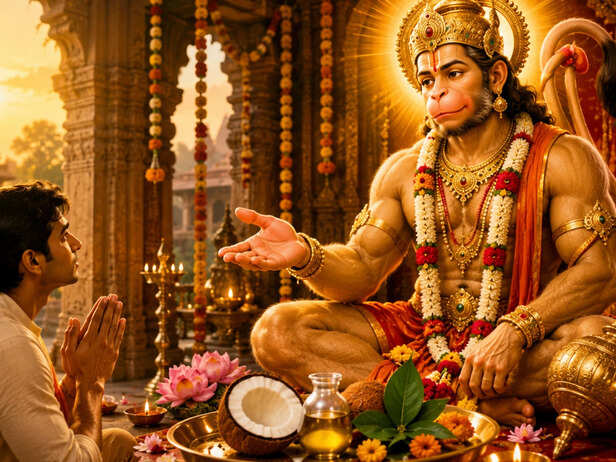
Hanuman reaching toward the radiant Sun
Image credit : chatgpt(ai)
The line “Hath Bajra Aur Dhwaja Biraje” means that a vajra and flag adorn Hanuman’s hands. The vajra is traditionally known as the powerful weapon associated with Indra. In Hanuman’s imagery, it represents immense strength, firmness and the ability to overcome powerful obstacles. The symbolism goes beyond physical power. Hanuman’s greatest strength in the Ramayana is repeatedly shown through his courage, determination and unwavering service to Lord Rama. The vajra therefore fits his character: powerful when action is needed, but guided by devotion and purpose. It reminds devotees that true strength is not merely about force; it also involves knowing where and why that strength should be used.
The Flag Shows Hanuman’s Warrior Spirit
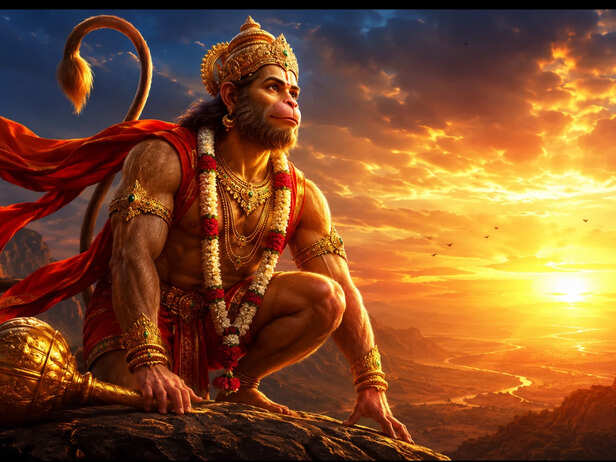
Hanuman carrying a sacred flag
Image credit : chatgpt(ai)
The word “Dhwaja” means flag or banner. The verse says that a flag also adorns Hanuman. In Indian traditions, a flag can represent identity, honour, victory and the presence of a warrior or divine figure. Hanuman is not remembered only for his physical power. His journey in the Ramayana includes crossing the ocean, finding Sita, confronting Lanka and carrying out Rama’s mission despite enormous challenges. The flag in this verse can therefore be understood alongside Hanuman’s role as a fearless servant and warrior. It represents a spirit that does not retreat when duty becomes difficult. His courage always remains connected to his devotion to Lord Rama.
Why Does Hanuman Wear a Janeu?
The next line says, “Kandhe Moonj Janeu Saje.” It describes a janeu, or sacred thread, made of moonj grass resting on Hanuman’s shoulder. The janeu traditionally carries associations with spiritual learning, discipline and responsibility. Mentioning it in Hanuman’s description adds another dimension to his character. He is not simply a mighty warrior. He is also presented as disciplined and spiritually committed. The contrast is striking: the same Hanuman who can perform extraordinary feats is also associated with humility and self-control. This is one reason the verse feels richer when understood rather than simply recited. His power and discipline are shown together.
Shankar Suvan” Has a Deeper Meaning
The words “Shankar Suvan Kesari Nandan” are traditionally understood as describing Hanuman as connected with Shankar, Lord Shiva, while also identifying him as the son of Kesari. Suvan can be understood as son or offspring, and Kesari Nandan means the son of Kesari. In many Hindu traditions, Hanuman is regarded as an incarnation or manifestation of Shiva’s divine energy, while Anjana and Kesari are named as his parents. The verse brings these aspects together in just a few words. It presents Hanuman as a figure with both a divine connection and a family lineage, adding depth to his identity.
Why Is Hanuman Called So Radiant?
The Four Lines Tell One Story
What These Verses Teach Us Today
Unlock insightful tips and inspiration on personal growth, productivity, and well-being. Stay motivated and updated with the latest at My Life XP