What Happens After 100 Hanuman Chalisa Recitations?
Noopur Kumari | Sept 05, 2026, 07:00 IST
Why does the Hanuman Chalisa end by speaking about repeated recitation, freedom from bondage and “maha sukh”? And what deeper meaning do devotees find in the repeated “Jai” associated with Hanuman Ji? The final chaupai is not simply an instruction to chant. It can be understood as a spiritual reminder about overcoming fear, attachment and the limits of the mind.

Hanuman Chalisa end by speaking about repeated recitation, freedom
Image credit : ChatGPT (ai)
The final lines of the Hanuman Chalisa may look simple, but they carry a much deeper message about devotion, freedom and inner peace.
The chaupai says:
“जो सत बार पाठ कर कोई।
छूटहि बंदि महा सुख होई॥”
Its traditional meaning is that one who recites the Hanuman Chalisa with devotion repeatedly can become free from bondage and experience great happiness.
But there is another fascinating layer in the traditional spiritual interpretation. The repeated invocation of “Jai” is connected by some devotional explanations with different levels of existence, including time, worlds and the three gunas.
So what is hidden behind these final words?
![Hanuman Ji in Deep Meditation]()
The closing chaupai of the Hanuman Chalisa carries a powerful promise in the devotional tradition. “जो सत बार पाठ कर कोई” refers to repeatedly reciting the Chalisa, traditionally understood as one hundred recitations. “छूटहि बंदि” is commonly interpreted as becoming free from bondage, while “महा सुख होई” points toward great happiness. This does not have to mean that every worldly problem magically disappears. Devotional traditions often understand such freedom more deeply, as release from fear, mental burdens and attachment. The final message therefore turns the Chalisa from a prayer into a path toward inner strength and spiritual surrender.
![Lord Hanuman and Hanuman Chalisa]()
“Jai” means victory, but in devotional language it carries an emotional meaning beyond simply winning a battle. Saying “Jai Hanuman” is an expression of surrender, respect and recognition of divine strength. Traditional spiritual interpretations sometimes connect the repeated “Jai” with threefold realities such as the past, present and future, the three states of consciousness, and the three gunas. These associations are interpretive rather than a universally agreed literal meaning of the original text. Still, they create a meaningful way of understanding Hanuman Ji as a symbol of strength that helps devotees rise above changing circumstances.
Past, present and future constantly shape the human mind. We regret what happened, worry about what may happen and sometimes fail to experience the present moment. The traditional symbolic interpretation of three “Jai” invocations can be viewed through this lens. Hanuman Ji represents courage that is not trapped by time. Remembering him can become a way for devotees to turn away from regret and fear and return their attention to faith and action. Whether understood symbolically or devotionally, the idea is powerful: yesterday cannot be changed, tomorrow is uncertain, but the strength to act rightly exists in the present.
Indian spiritual thought often discusses three ordinary states of consciousness: waking, dreaming and deep sleep. Some devotional explanations connect the threefold “Jai” with these states and see Hanuman Ji as representing awareness that can rise beyond ordinary mental fluctuations. This interpretation adds another layer to the closing prayer. During the day, our minds move constantly between thoughts, memories, desires and worries. Devotion can provide an anchor. Repeating the Hanuman Chalisa may help a devotee cultivate focus and calm, especially when it becomes a regular contemplative practice. The spiritual goal is not merely repetition, but deeper awareness behind the repetition.
The Bhagavad Gita and other Indian philosophical traditions describe three gunas: sattva, rajas and tamas. They are commonly associated with qualities such as clarity, activity and inertia. Human behaviour can shift between these tendencies throughout the day. Traditional interpretations of Hanuman devotion sometimes present him as an ideal of disciplined strength, devotion and purposeful action. From this perspective, chanting is not about escaping ordinary life. It can remind a person to become more focused, disciplined and courageous. The threefold symbolism therefore becomes a reflection on mastering inner tendencies rather than allowing every emotion or impulse to control our actions.
The words “महा सुख होई” are often translated as experiencing great happiness. But spiritual happiness is not necessarily the same as constant comfort or worldly success. A devotee may understand “maha sukh” as the peace that comes when fear, anxiety and attachment become lighter. Repeated prayer can create a sense of discipline and emotional grounding for some people. The important point is that the verse does not need to be reduced to a promise of instant miracles. Its deeper devotional message can be understood as freedom within the mind. When fear becomes smaller, even difficult circumstances can feel more manageable.
Perhaps the most powerful question is this: what kind of bondage are we trying to escape? Sometimes it is fear. Sometimes it is anger, attachment, guilt or constant worry about the future. The final chaupai can be understood as an invitation to recognise these invisible chains. Regular recitation, when done with faith and understanding, may become a personal practice of reflection and surrender. Hanuman Ji then becomes more than a figure of strength. He becomes a reminder that courage is also an inner quality. The real victory is not controlling everything outside us, but becoming stronger within.
The Hanuman Chalisa does not end with a dramatic story.
It ends with a promise of freedom.
“छूटहि बंदि महा सुख होई” reminds devotees that true happiness can come when the chains holding the mind become lighter.
The traditional interpretations of the threefold “Jai” add another beautiful layer, connecting Hanuman Ji with the conquest of time, consciousness and the three gunas.
But perhaps the simplest lesson is also the most powerful.
We cannot control every event in life. We cannot change the past or completely predict the future.
What we can change is how we face them.
And that is where Hanuman Ji's greatest teaching begins: when devotion gives birth to courage, fear slowly loses its power.
Unlock insightful tips and inspiration on personal growth, productivity, and well-being. Stay motivated and updated with the latest at My Life XP.
The chaupai says:
“जो सत बार पाठ कर कोई।
छूटहि बंदि महा सुख होई॥”
Its traditional meaning is that one who recites the Hanuman Chalisa with devotion repeatedly can become free from bondage and experience great happiness.
But there is another fascinating layer in the traditional spiritual interpretation. The repeated invocation of “Jai” is connected by some devotional explanations with different levels of existence, including time, worlds and the three gunas.
So what is hidden behind these final words?
The Final Chaupai Is a Promise
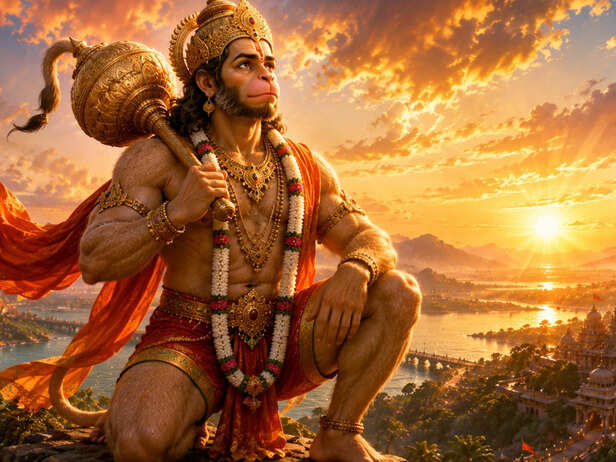
Hanuman Ji in Deep Meditation
Image credit : freepik
The closing chaupai of the Hanuman Chalisa carries a powerful promise in the devotional tradition. “जो सत बार पाठ कर कोई” refers to repeatedly reciting the Chalisa, traditionally understood as one hundred recitations. “छूटहि बंदि” is commonly interpreted as becoming free from bondage, while “महा सुख होई” points toward great happiness. This does not have to mean that every worldly problem magically disappears. Devotional traditions often understand such freedom more deeply, as release from fear, mental burdens and attachment. The final message therefore turns the Chalisa from a prayer into a path toward inner strength and spiritual surrender.
Why “Jai” Matters So Much
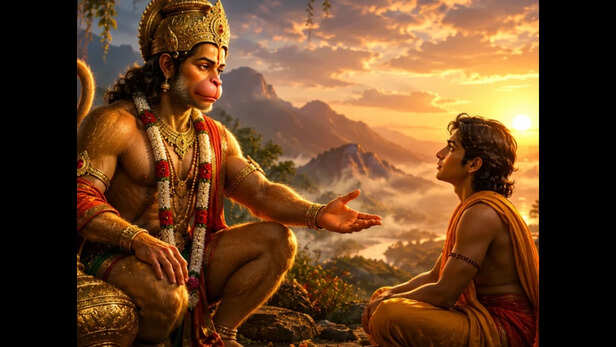
Lord Hanuman and Hanuman Chalisa
Image credit : chatgpt(ai)
“Jai” means victory, but in devotional language it carries an emotional meaning beyond simply winning a battle. Saying “Jai Hanuman” is an expression of surrender, respect and recognition of divine strength. Traditional spiritual interpretations sometimes connect the repeated “Jai” with threefold realities such as the past, present and future, the three states of consciousness, and the three gunas. These associations are interpretive rather than a universally agreed literal meaning of the original text. Still, they create a meaningful way of understanding Hanuman Ji as a symbol of strength that helps devotees rise above changing circumstances.
The Three Times of Life
The Three States of Consciousness
The Three Gunas Shape the Mind
What Does “Maha Sukh” Really Mean?
The Real Bondage Is Within
The Final Message of Hanuman Chalisa
It ends with a promise of freedom.
“छूटहि बंदि महा सुख होई” reminds devotees that true happiness can come when the chains holding the mind become lighter.
The traditional interpretations of the threefold “Jai” add another beautiful layer, connecting Hanuman Ji with the conquest of time, consciousness and the three gunas.
But perhaps the simplest lesson is also the most powerful.
We cannot control every event in life. We cannot change the past or completely predict the future.
What we can change is how we face them.
And that is where Hanuman Ji's greatest teaching begins: when devotion gives birth to courage, fear slowly loses its power.
Unlock insightful tips and inspiration on personal growth, productivity, and well-being. Stay motivated and updated with the latest at My Life XP.