Giving money, food or clothes to someone in need is considered a good deed, but Hindu scriptures also emphasise how and why a donation should be made. According to the teachings attributed to the Garuda Purana, charity is not simply about giving something away. The intention, timing, recipient and manner of giving also matter. There are four traditional types of daan, and one of them is considered especially pure because it is offered without expecting anything in return. There is also a striking teaching about why charity should not be postponed until old age or illness.
The First Rule: Give With Respect
![Divine Almsgiving at the Temple]()
Divine Almsgiving at the Temple
Image credit : chatgpt
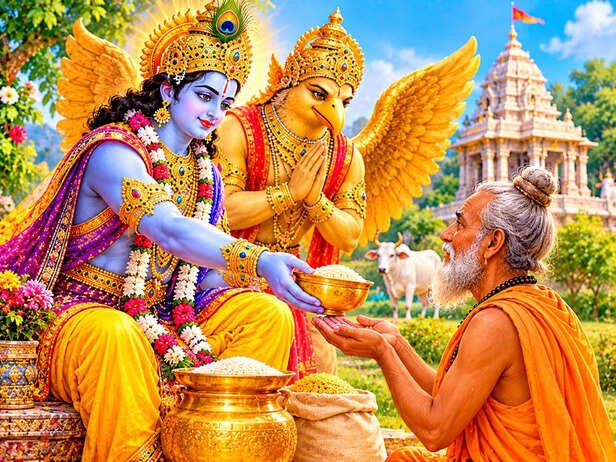
The Garuda Purana explains that charity should be offered with faith and respect to a deserving person. Giving should never become an act of showing off or making someone feel inferior. Traditional teachings particularly mention learned people, those who need support and people suffering from illness. Chapter 51 of the Purva Khanda also discusses giving medicines, food and personal care to the sick. The deeper message is that charity should reach someone who genuinely benefits from it, rather than becoming an act performed only for recognition.
The Four Types of Daan
![Four Acts of Compassion in Divine Light]()
Four Acts of Compassion in Divine Light
Image credit : chatgpt(ai)
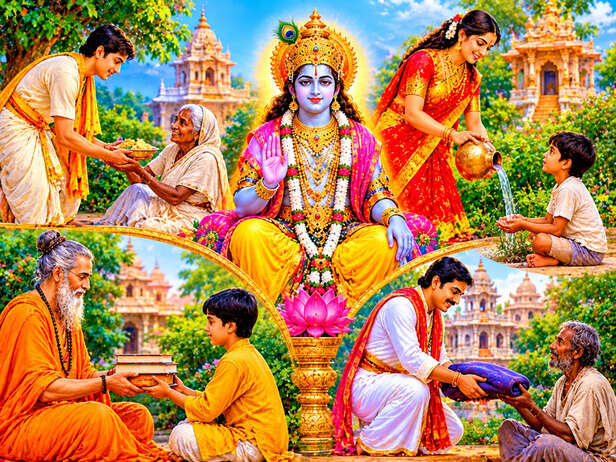
According to Chapter 51 of the Garuda Purana, charity is divided into four types. Nitya Daan means giving regularly without expecting anything in return. Naimittika Daan is offered for a particular religious or spiritual reason, such as atonement. Kamya Daan is performed with a specific wish, such as seeking prosperity or children. Vimala Daan is considered the purest form because it is offered with devotion to please God rather than to gain personal rewards. Each form reflects a different intention behind the act of giving.
Give According to Your Ability
One of the most practical lessons of charity is that you should give according to your financial and personal capacity. You do not need to donate a large amount of money to perform a meaningful good deed. Even sharing a meal, helping someone pay for medicine or supporting a student's education can make a difference. The spiritual value of charity should not become a financial burden. The Garuda Purana's teachings encourage generosity towards deserving recipients, reminding people that the intention behind giving matters greatly.
Why Food Donation Is So Important
Among the different forms of charity, Anna Daan, or donating food, holds a special place in Hindu tradition. Food sustains life, and feeding someone who is hungry meets one of their most immediate needs. The Garuda Purana describes the benefits associated with giving cooked food and grains. This teaching also encourages people to think beyond occasional religious ceremonies. Sharing a meal with someone who cannot afford one is a simple act that can bring immediate comfort and relief.
Water, Lamps and Knowledge Have Their Own Value
The Garuda Purana describes different spiritual benefits associated with different gifts. Offering cool water to a thirsty person is traditionally connected with satisfaction, while donating a lamp is associated with good eyesight. Giving grains supports nourishment, and sharing sacred knowledge is connected with spiritual wisdom. These teachings show that charity does not always have to involve money. Providing drinking water, helping someone learn a skill or giving a child access to education can also become meaningful ways of helping others.
Why You Should Not Postpone Charity
A powerful lesson in traditional Hindu teachings is that people should not keep postponing good deeds. Many wait until a festival, old age or a difficult phase of life to begin donating. But someone may need food, medicine or financial support today. The Garuda Purana also discusses cow donation and charity during one's lifetime, including in connection with the Vaitarani observance. Its broader spiritual message is to perform good deeds while you have the ability and opportunity to help. Charity should be a regular part of life, not merely a last-minute religious obligation.
The Deeper Message of Daan
The Garuda Purana teaches that charity is not measured only by the amount of money or the value of an object given away. Its spiritual meaning comes from the intention, respect and compassion behind the act. You can donate food to someone who is hungry, water to someone who is thirsty, medicine to someone who is ill or knowledge to someone who wants to learn. You do not have to wait for a special occasion to help another person. Sometimes, the smallest act of kindness becomes the most meaningful donation.
Unlock insightful tips and inspiration on personal growth, productivity, and well-being. Stay motivated and updated with the latest at
My Life XP.