But have you ever wondered why devotees chant exactly 108 names instead of a smaller or larger number? Each name describes a different quality, form or divine attribute of Lord Ganesha. Together, they help devotees remember his wisdom, strength, kindness and ability to remove difficulties.The tradition also connects with the spiritual significance of the number 108 in Hinduism. Here is what makes this practice special and why it continues to be followed during Ganesha worship.
What Does 108 Names of Lord Ganesha Mean?
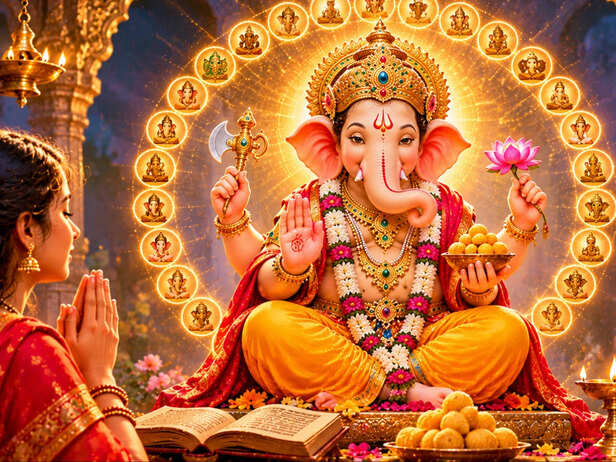
![108 Names of Lord Ganesha]()
108 Names of Lord Ganesha
Image credit : ChatGPT AI
The practice of chanting 108 names is known as
Ashtottara Shatanamavali. The Sanskrit term combines words that refer to 108 and a collection of names.During this prayer, devotees recite different names of Lord Ganesha, often while offering flowers, Akshata (unbroken rice grains) or Durva grass. Each name highlights a particular quality or form of the deity.
Some names describe his physical appearance, while others reflect his wisdom, power and divine role.
For example:
- Gajanan: The one with an elephant face.
- Ekadanta: The one with a single tusk.
- Vighnaharta: The remover of obstacles.
- Lambodara: The one with a large belly.
- Ganapati: The lord of the Ganas.
- Buddhipriya: The one who is associated with wisdom and intellect.
- Siddhivinayaka: The giver of success and accomplishment.
- Heramba: A protective form of Lord Ganesha.
These names allow devotees to remember different aspects of Ganesha rather than worshipping him through only one description.
Why Is the Number 108 Considered Sacred in Hinduism?
The number 108 holds an important place in several Hindu spiritual traditions. It appears in prayers, meditation practices, yoga and religious rituals.One of the most familiar examples is the use of a Japa Mala, a prayer rosary traditionally containing 108 beads. Devotees use it to repeat a mantra 108 times while focusing their thoughts on the deity.
There are different traditional explanations for the importance of this number.In some spiritual interpretations, 108 represents completeness and the connection between the individual, the universe and the divine. It is also associated with sacred texts, including the traditional count of 108 Upanishads.However, there is no single explanation for why 108 became sacred across all Hindu practices. Its importance has developed through different religious and philosophical traditions.When devotees chant the 108 names of Lord Ganesha, the number is therefore understood as a way of expressing complete devotion and focusing the mind on the deity.
Why Does Each Name of Lord Ganesha Have a Different Meaning?
Lord Ganesha has many names because each one reflects a different quality, story or form associated with him.Some names describe his appearance, while others explain his role in the lives of devotees.For instance, the name
Vighnaharta reminds people that Ganesha is worshipped as the remover of obstacles.
Buddhipriya connects him with intelligence and understanding, while
Siddhivinayaka represents success and accomplishment.
The name
Ekadanta also carries a mythological connection. According to a popular story, Lord Ganesha broke one of his tusks to write the Mahabharata as Sage Vyasa narrated the epic.Similarly, the name
Gajanan refers to his elephant face, which is connected with the story of how Goddess Parvati brought him back to life with an elephant's head.By chanting these names, devotees remember the different stories and teachings associated with Lord Ganesha.
How Do Devotees Chant the 108 Names During Ganesha Puja?
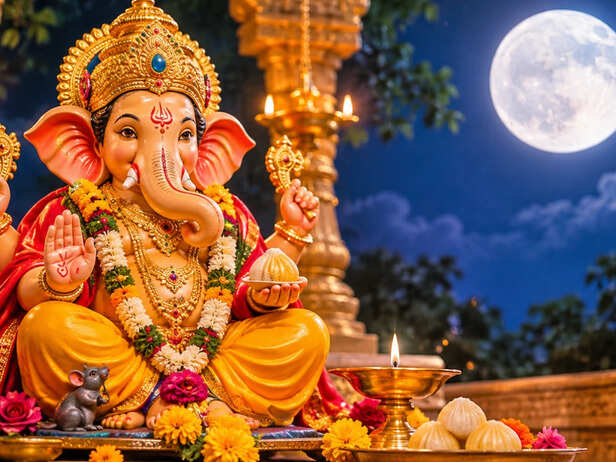
![Lord Ganesh]()
Lord Ganesh
Image credit : ChatGPT AI
The 108 names are commonly recited during special Ganesha worship, including Ganesh Chaturthi, Sankashti Chaturthi and other auspicious occasions.
The ritual may differ from one household or temple to another, but a traditional puja often includes the following steps:
1. Prepare the place of worshipDevotees clean the puja area and place an idol or picture of Lord Ganesha. Flowers, a diya, incense and other offerings are arranged before beginning the prayer.
2. Begin with a prayerThe worship usually starts with a prayer or mantra dedicated to Lord Ganesha. One commonly recited mantra is:
Om Gan Ganapataye Namah.3. Chant the 108 namesDevotees recite each name with concentration and devotion. Some use a Japa Mala to maintain the count, while others follow a printed list of the names.
4. Offer flowers or Durva grassIn some traditions, devotees offer a flower, rice grain or blade of Durva grass with each name. Durva is considered especially dear to Lord Ganesha.
5. Complete the puja with AartiAfter the chanting, devotees perform Ganesha Aarti and offer bhog. Modaks and other sweets are commonly prepared as offerings.
These steps are traditional practices, not compulsory rules. Devotees may follow the customs observed in their families or local temples.
What Are the Spiritual Benefits of Chanting Ganesha's 108 Names?
Many devotees believe that regularly chanting the 108 names brings peace, clarity and spiritual strength. The practice also gives them an opportunity to focus their thoughts and express gratitude.
Some commonly understood benefits include:
- Better concentration: Repeating the names helps devotees focus their attention during prayer.
- A sense of peace: The rhythm of chanting can create a calm and reflective atmosphere.
- Positive thinking: Remembering Ganesha's qualities encourages patience, wisdom and confidence.
- Spiritual connection: Each name gives devotees another way to understand and remember the deity.
- A sense of devotion: The complete recitation becomes an expression of faith and gratitude.
These are spiritual and devotional beliefs rather than scientifically established guarantees. The experience can vary from person to person.
Why This Tradition Continues to Hold Importance
Chanting the 108 names of Lord Ganesha is more than repeating a list of divine names. It is a way of remembering the different qualities associated with the deity, from wisdom and courage to kindness and the removal of obstacles.
The sacred number 108 adds another layer of meaning to this practice, connecting it with a wider tradition of prayer and meditation in Hinduism.Whether devotees chant the names during Ganesh Chaturthi, Sankashti Chaturthi or their daily puja, the central message remains the same: approach life with wisdom, patience and faith. Through each name, they seek Lord Ganesha's blessings for a clearer mind and the strength to face life's challenges.
Unlock insightful tips and inspiration on personal growth, productivity, and well-being. Stay motivated and updated with the latest at
My Life XP.