Lord Vishnu is believed to have taken several avatars to restore dharma whenever evil threatened the world. Yet two forms continue to hold a special place in the hearts of millions: Lord Rama and Lord Krishna. Have you ever wondered why these two avatars are worshipped so widely? One traditional explanation lies in the concept of
16 divine kalas, or qualities of divine completeness. According to this belief, Rama manifested 14 kalas, while Krishna appeared with all 16. But the real difference between their avatars goes beyond these numbers.
The Mystery of the 16 Divine Kalas
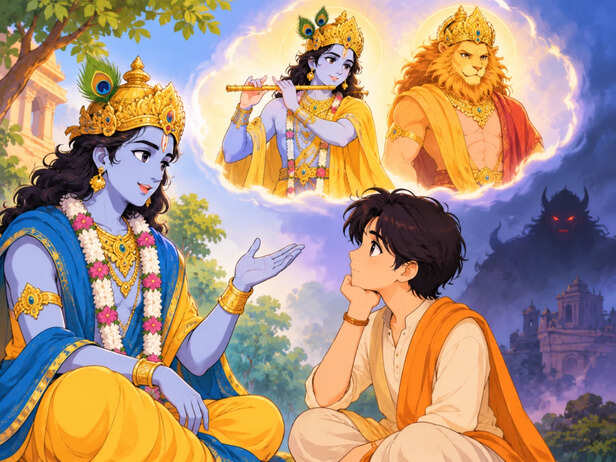
![Vishnu’s Divine Teachings and Avatars]()
Vishnu’s Divine Teachings and Avatars
Image credit : CHATGPT(AI)
In Hindu devotional traditions,
kala refers to a divine quality, power or aspect of perfection. The concept of 16 kalas is often used to describe the complete manifestation of divine qualities. According to one popular interpretation, different avatars of Lord Vishnu manifested different numbers of these qualities according to the purpose of their appearance. This belief offers a way to understand the different forms of Vishnu, although the exact descriptions and numbers vary across religious traditions.
Why Lord Rama Manifested 14 Kalas
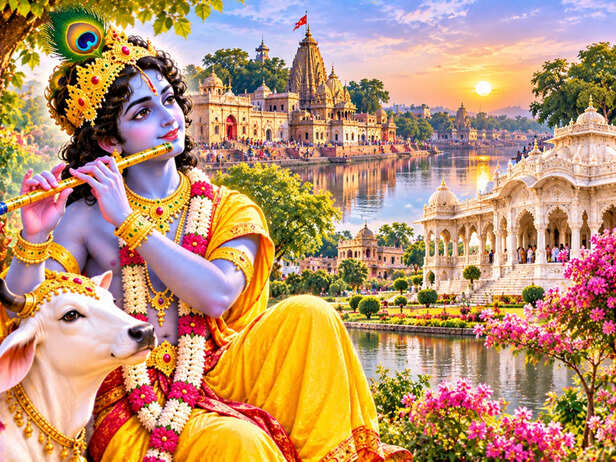
![The Sacred Land of Lord Krishna]()
The Sacred Land of Lord Krishna
Image credit : CHATGPT(AI)
According to a popular devotional explanation, Lord Vishnu appeared as Lord Rama with 14 kalas during the Treta Yuga. His mission was to defeat Ravana and restore dharma. But Rama's role was not limited to defeating evil. He showed how a person could follow truth, honour promises, respect relationships and fulfil responsibilities even during difficult times. This is why he is remembered as
Maryada Purushottam, the ideal of righteous conduct. His life became an example of how to live according to dharma.
Why Krishna Is Called Purna Avatar
In several Vaishnava traditions, Lord Krishna is described as
Purna Avatar, or the complete manifestation of the Divine, associated with all 16 kalas. His mission in the Dwapara Yuga involved more than defeating evil. Through the Mahabharata and the Bhagavad Gita, he guided humanity through questions of duty, truth, attachment and karma. His life also included friendship, love, music, leadership and playful childhood stories. This wide range of roles is one reason devotees describe Krishna as a complete expression of divine qualities.
Rama Taught Through His Actions
Lord Rama's story shows how dharma can guide a person through difficult choices. He accepted exile to honour his father's promise, faced hardships during his search for Sita and fought Ravana to restore justice. His decisions were often difficult, but his character remained rooted in duty and self-control. Through the Ramayana, devotees see a divine figure who lived among people and faced challenges that families and societies could understand. Rama's life continues to inspire those who look for an example of righteous living.
Krishna Taught Through the Bhagavad Gita
Krishna's approach to teaching dharma was different. On the battlefield of Kurukshetra, Arjuna was confused about fighting his own relatives and teachers. Krishna guided him through the Bhagavad Gita, explaining karma, selfless action, devotion and the nature of the soul. Instead of asking Arjuna to escape his responsibilities, Krishna helped him understand how to fulfil them with the right intention. His teachings remain relevant to people facing difficult decisions, inner conflict and questions about their purpose.
Both Avatars Lived Among Ordinary People
One reason devotees feel deeply connected to Rama and Krishna is that their stories place them among ordinary people. Rama experienced family responsibilities, separation, friendship and the challenges of kingship. Krishna grew up among the people of Gokul and Vrindavan, formed close friendships, shared love and later guided kings and warriors. Their stories include joy, conflict, difficult choices and emotional moments. Through these experiences, devotees find familiar human situations alongside divine teachings.
Why Rama and Krishna Remain So Loved
Rama and Krishna are worshipped widely because their stories offer different ways to understand devotion and dharma. Rama inspires people through his commitment to duty, truth and righteous conduct. Krishna draws devotees through his teachings, compassion, divine love and guidance in difficult situations. Their stories have also been carried across generations through scriptures, festivals, music, temples and devotional traditions. The concept of divine kalas offers one explanation for their different manifestations, while their teachings and stories keep their presence alive in everyday life.
Unlock insightful tips and inspiration on personal growth, productivity, and well-being. Stay motivated and updated with the latest at
My Life XP.