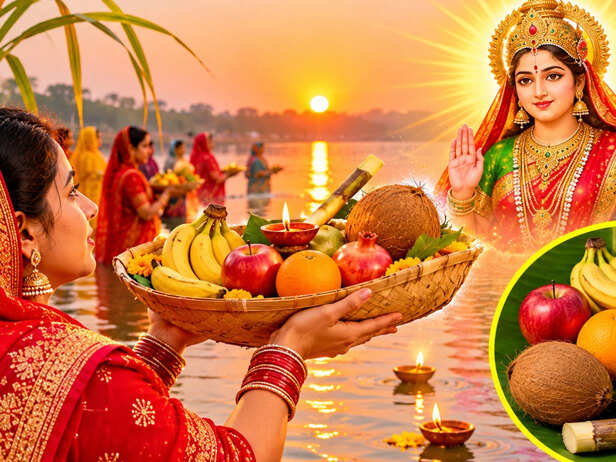
Chhath Puja is dedicated to Surya Dev, the Sun God, and Chhathi Maiya. During the four-day festival, devotees observe strict rituals and offer prayers to the setting and rising Sun.Fruits are an important part of the
soop and
daura, the traditional bamboo trays and baskets used to carry offerings to the riverbank. Unlike elaborate food preparations, many of these offerings come directly from nature and represent gratitude for the harvest and the things that sustain life.
Devotees generally prefer fresh, whole and seasonal produce. However, the exact selection depends on regional customs, local availability and family traditions.Here are seven fruits commonly associated with Chhath Puja.
7 Fruits Commonly Offered to Chhathi Maiya
![The 7 Sacred Fruits Offered to Chhathi Maiya During Chhath Puja]()
The 7 Sacred Fruits Offered to Chhathi Maiya During Chhath Puja
Image credit : ChatGPT AI
1. Banana
Bananas are among the most familiar offerings during Chhath Puja. Devotees often place an entire bunch of bananas in the bamboo basket rather than separating individual fruits.In many households, bananas are considered an important part of the traditional prasad arrangement. Their presence reflects the importance of fresh produce and nature's abundance.
2. Coconut
A whole coconut, often with its husk, is another common offering during Chhath Puja.Coconut holds an important place in several Hindu religious ceremonies. It is traditionally associated with purity, auspiciousness and devotion. Offering it during Chhath is also part of the broader practice of presenting natural produce to the deities.
3. Apple
Apples are commonly included in Chhath Puja baskets, although their availability and use may differ between regions.Like other fresh fruits, apples are offered as part of the seasonal produce presented during the prayers. Their inclusion reflects the importance of offering clean, fresh and uncut food items.
4. Orange
Oranges are another fruit that may be included in the Chhath Puja
soop. They are particularly available during the autumn and winter fruit season in many parts of India.Their presence adds to the variety of seasonal produce offered to Chhathi Maiya. The practice also reflects the festival's close connection with nature and agricultural cycles.
5. Sweet Lime (Mosambi)
Sweet lime is a popular citrus fruit that appears in some regional Chhath offerings.In certain areas, devotees also offer locally available citrus varieties, including large lemons and pomelo. These fruits are valued as part of the traditional seasonal harvest rather than because every household follows one fixed list.
6. Pomegranate
Pomegranate is another fruit that some families include in their Chhath Puja offerings.
Its many seeds make it a distinctive addition to the fruit basket. Like apples and oranges, it is offered as part of the fresh produce presented during the festival.
7. Pear
Pears are also found among the fruits offered during Chhath Puja in some regions.Their inclusion depends on local availability and household customs. The broader tradition encourages devotees to offer fresh seasonal produce as an expression of gratitude and devotion.
Is Sugarcane Also Offered During Chhath Puja?
Yes. Sugarcane is one of the most distinctive offerings associated with Chhath Puja. However, it is technically a grass and not a fruit.Devotees commonly offer whole sugarcane stalks, often with their leaves. In some traditions, sugarcane stalks are also used to create a small structure around the place of worship.
Sugarcane is closely connected with agriculture and the harvest season. Its presence reflects gratitude for the crops and natural resources that support everyday life.Other regional offerings may include water chestnuts (
singhara), pomelo, sweet potato, radish and
suthni. These are not all fruits in the botanical sense, but they form part of the traditional Chhath offering basket in several communities.
What Is the Significance of Offering Seasonal Fruits to Chhathi Maiya?
The tradition of offering fruits during Chhath Puja goes beyond preparing a basket of food. It reflects the festival's deep connection with nature, agriculture and gratitude.
Chhath is unusual in the way it honours both the setting and rising Sun. The offerings acknowledge the natural elements that sustain life, including sunlight, water, soil and the crops that grow from the earth.The use of locally available fruits also highlights the importance of the harvest. Devotees do not need expensive or exotic produce to observe the festival. Freshness, cleanliness and devotion are central to the preparation.It is worth remembering that there is no single compulsory list of seven fruits followed by every Chhath devotee. Traditions differ between Bihar, Jharkhand, eastern Uttar Pradesh and other regions where the festival is celebrated.
A Festival That Celebrates Nature and Gratitude
Chhath Puja brings together devotion, discipline and respect for nature. The fruits placed in the
soop are not simply food offerings; they are part of a tradition that acknowledges the importance of the harvest and the natural elements that support human life.Whether devotees offer bananas, coconuts, citrus fruits or locally grown produce, the central sentiment remains the same: expressing gratitude to Surya Dev and Chhathi Maiya with sincerity and devotion.
Unlock insightful tips and inspiration on personal growth, productivity, and well-being. Stay motivated and updated with the latest at My Life XP.