What if a massive idol of Goddess Kali could not be lifted by 50 strong men, yet became easy to carry after one small change? A fascinating local legend from Shantipur, West Bengal, tells a story just like this. It revolves around Maa Bama Kali, a form of the Goddess worshipped with a distinctive iconography. According to the tale, a sculptor's decision to change the traditional position of the Goddess's feet led to an unexpected problem during immersion. What happened next became a lesson in faith, humility and respect for tradition.
The Mystery of Maa Bama Kali
![Maa Bama Kali of Shantipur]()
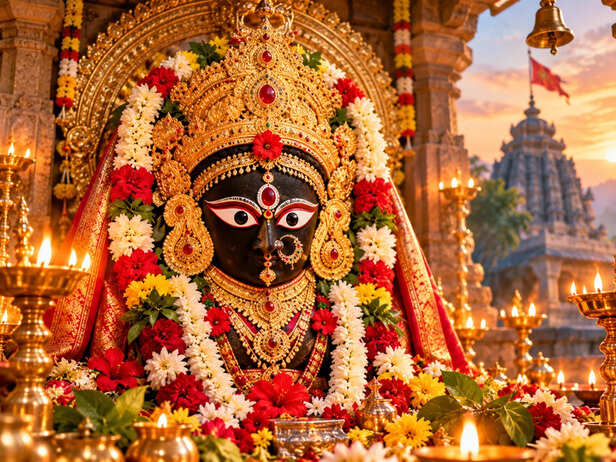
Maa Bama Kali of Shantipur
Image credit : ChatGPT(ai)
Shantipur, a town in West Bengal known for its religious and cultural traditions, is associated with the worship of Maa Bama Kali. A local legend describes an idol that could not be moved despite the efforts of more than 50 men. The story centres on the Goddess's traditional posture and a sculptor who decided to alter it. For devotees, the incident is remembered as a reminder that religious traditions can carry meanings that are not always obvious at first glance. The tale blends devotion, mystery and a powerful lesson about humility.
Why Her Feet Matter
![Mystical Moonlit Goddess and Guardians]()
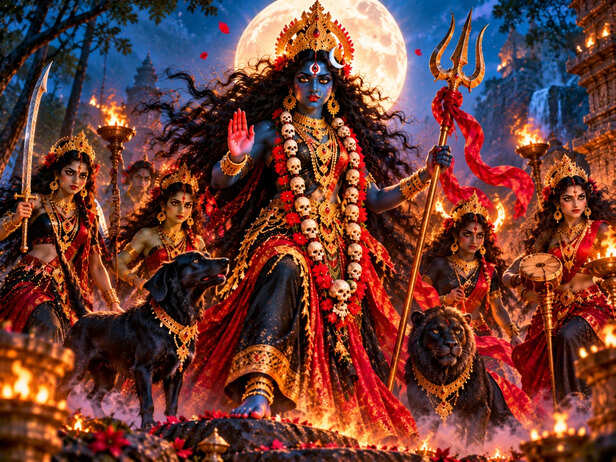
Mystical Moonlit Goddess and Guardians
Image credit : chatgpt(ai)
In the legend, Maa Bama Kali is distinguished from Dakshina Kali by the position of her feet on Lord Shiva's chest. The story describes Bama Kali with her left foot forward, while Dakshina Kali is commonly depicted with her right foot forward. These visual details are part of the iconography through which different forms of the Goddess are recognised. For devotees, the posture is more than an artistic choice; it belongs to a tradition of worship passed down through generations. The story's mystery begins when a sculptor decides that this distinction does not need to be followed.
The Sculptor's Unexpected Mistake
According to the tale, a sculptor named Ashok believed that the distinction between the two forms was unnecessary. While creating the idol, he placed the Goddess's right foot forward instead of her left. He treated the change as a small artistic decision, without considering the tradition behind it. Nothing seemed unusual at first, and the idol was prepared for the festival as planned. But the story takes a dramatic turn on immersion day, when the community gathers to carry the Goddess through the streets and discovers that the idol will not move.
Fifty Men Fail to Lift the Idol
The streets were filled with torchlight, and the sound of dhak drums marked the occasion. More than 50 men tried to lift the idol, but, according to the legend, it remained firmly in place. They tried repeatedly, yet their efforts brought no result. Confusion spread among the gathered devotees as the immersion procession came to a halt. At that moment, an elderly man known as Dadu approached Ashok and reminded him that the idol represented Maa Bama Kali, whose traditional form should not have been altered. His words made the sculptor reconsider his decision.
The Small Change That Changed Everything
Ashok realised that he had ignored a tradition that mattered deeply to the devotees. Under the light of the torches, he corrected the position of the Goddess's feet, restoring the left foot to the forward position described in the legend. What happened next is the story's most striking moment. The idol, which the men had struggled to lift, was suddenly carried with ease. The devotees resumed the immersion procession, and the atmosphere filled with drums, movement and celebration. The legend presents this moment as a turning point in Ashok's understanding of faith.
When the Immersion Became a Dance
As the idol moved through the streets, the sound of the dhak drums grew louder and the torchlight illuminated the gathering. The procession became a powerful expression of collective devotion. According to the story, Ashok watched the scene with new eyes and felt as though the Goddess herself was dancing amid the flames and rhythmic beats. The experience changed his attitude towards the tradition he had dismissed. Rather than treating the Goddess's posture as an insignificant detail, he came to respect its place in the community's worship. The story ends with his transformation from a sceptical sculptor into a devoted worshipper.
The Lesson Behind the Legend
The story of Maa Bama Kali offers more than a mysterious episode about an idol that could not be lifted. Its central message concerns humility and respect for traditions that hold deep meaning for a community. Ashok's mistake, as described in the legend, began when he assumed that a detail he did not understand had no value. His change of heart reminds devotees to approach their beliefs with patience and an open mind. The account is a local religious legend, not a scientifically verified event, but its emotional meaning continues to centre on devotion, humility and respect.
Unlock insightful tips and inspiration on personal growth, productivity, and well-being. Stay motivated and updated with the latest at My Life XP