A broom is usually one of the most ordinary things in a household. We use it every day to clean our floors, remove dust and keep our surroundings tidy. But during Dhanteras, this simple household item holds a special place in certain Hindu traditions. Many families buy a new broom on this occasion, believing it symbolises removing negativity and making space for prosperity. However, buying one is not the only ritual people talk about. There is also a traditional way of offering respect to it.
Why Is a Broom Bought on Dhanteras?
![The Dhanteras Tradition of Buying a New Broom]()
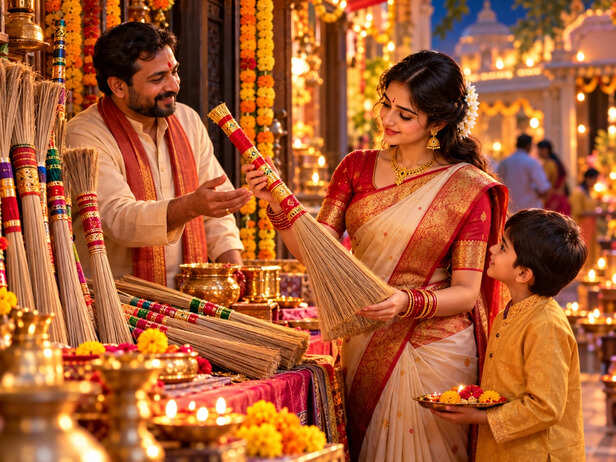
The Dhanteras Tradition of Buying a New Broom
Image credit : chatgpt(ai)
On Dhanteras, people usually purchase gold, silver, utensils and other household essentials. However, a new broom is also included in the shopping list of many families. According to popular Hindu beliefs, a broom represents cleanliness and the removal of unwanted things from the home. Since Goddess Lakshmi is traditionally associated with cleanliness and prosperity, this practice is considered symbolically meaningful. The idea is simple: remove dirt and disorder to welcome positivity and abundance into the household.
Place the Broom Respectfully
![Preparing the Broom for Dhanteras Puja]()
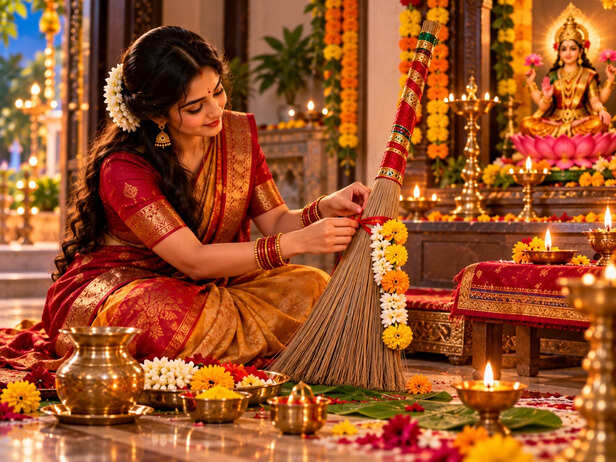
Preparing the Broom for Dhanteras Puja
Image credit : chatgpt(ai)
The traditional ritual begins by choosing a clean and suitable place for the new broom. Instead of leaving it with other cleaning supplies, devotees place it separately and respectfully. This gesture represents treating even an ordinary household object with gratitude. The broom is associated with keeping the home clean, so giving it a special place during the puja reflects the value of cleanliness in everyday life. Families can follow their own customs while performing this simple ritual.
Sprinkle Gangajal for Purification
After placing the broom in a clean spot, devotees traditionally sprinkle a few drops of Gangajal over it. This step is associated with purification and is performed before making other offerings. In Hindu rituals, Gangajal is commonly used to symbolise spiritual cleanliness and purity. The gesture also marks the beginning of the worship. Those who do not have Gangajal can follow their family tradition or simply offer prayers with devotion.
Apply Chandan and Offer Akshat
The next step is to apply a small chandan tilak to the broom. After this, offer akshat, which means unbroken rice grains commonly used in Hindu worship. Chandan is associated with purity and devotion, while akshat represents auspiciousness and completeness. These offerings are traditionally made with respect and a prayer for the well-being of the family. Each step adds a devotional meaning to an otherwise simple household ritual.
Light a Ghee Diya
Once the offerings are complete, devotees light a small ghee diya near the broom. Lighting a lamp is an important part of many Hindu rituals, as it symbolises light, hope and the removal of darkness. On Dhanteras, the diya is also associated with prayers for happiness and prosperity. Place the lamp safely on a stable surface, away from the broom and other flammable materials. The focus of this step is to offer prayers with devotion and gratitude.
Offer Gur and Perform Aarti
After lighting the diya, devotees can offer a small portion of gur (jaggery) as bhog. It is followed by aarti, performed with a prayer for peace and prosperity in the household. According to popular beliefs, worshipping the broom symbolises removing daridrata, or poverty, from the home and welcoming Goddess Lakshmi's blessings. The ritual is rooted in the belief that cleanliness creates a positive environment for the family. The offerings express gratitude and devotion rather than treating the broom as a substitute for Goddess Lakshmi's worship.
Pray for Happiness and Prosperity
The final step is to fold your hands and pray to Goddess Lakshmi for happiness, peace and prosperity. Ask for a home filled with good health, understanding and lasting abundance. The deeper message behind the broom tradition is that prosperity is not only about bringing new things into the house; it is also about maintaining cleanliness, respecting everyday resources and creating a peaceful environment. When followed with faith, this simple ritual becomes a meaningful part of Dhanteras celebrations.
Unlock insightful tips and inspiration on personal growth, productivity, and well-being. Stay motivated and updated with the latest at
My Life XP.