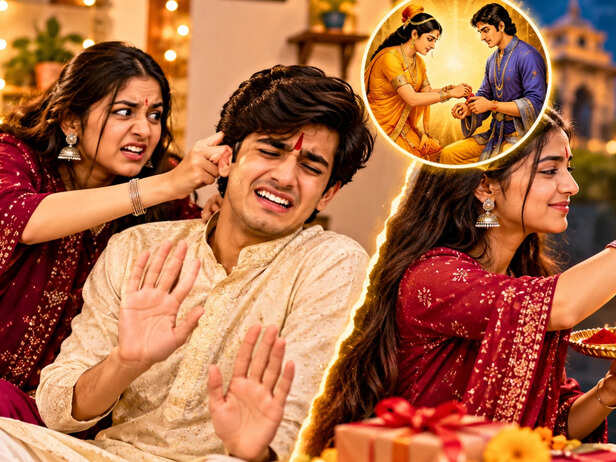
Bhai Dooj is generally celebrated with tilak, aarti, sweets and prayers for a brother's happiness and long life. But some regional traditions follow a rather unusual custom. Instead of beginning the day with affectionate words, sisters deliberately curse their brothers.
Why Did Sisters Curse Their Brothers on Bhai Dooj?
![Festive Sibling Ritual and Playful Teasing]()
Festive Sibling Ritual and Playful Teasing
Image credit : ChatGPT
This practice is particularly associated with parts of Bihar, Jharkhand and eastern Uttar Pradesh. It is also connected with a regional observance known as Godhan or Godhan Kutai.According to a popular folk belief, Yamraj once came looking for a man who had never been cursed by anyone. The belief was that such a person could become vulnerable to death at his hands.
In one version of the story, a sister discovered that her brother was in danger because she had never spoken harshly to him. She loved him deeply and had never wished anything bad for him.Fearing that Yamraj might take her brother away, she began cursing him deliberately. She believed that by doing so, she could protect him from the danger associated with the curse-free condition.This is a regional folk explanation, not a story established as a universal scriptural account. However, it helps explain why some sisters perform this seemingly contradictory ritual on Bhai Dooj.
Why Do Sisters Prick Their Tongues After Cursing Their Brothers?
The ritual does not end after the sisters curse their brothers. In some communities, they also prick their tongues with a thorn from a plant traditionally known as
rengani or
rengni.
This act is performed as a form of repentance for the harsh words spoken against their brothers.The idea is that sisters first utter curses as part of the protective ritual and then seek forgiveness for saying those words. They subsequently pray for their brothers' health, safety and long lives.Although the practice may seem painful or unusual today, it is traditionally understood as a symbolic act of atonement and devotion. The exact details can differ between communities and households.
What Is the Connection Between Godhan Kutai and Bhai Dooj?
In some parts of Bihar and neighbouring regions, the custom is connected with
Godhan Kutai.During this ritual, women make figures using cow dung, sometimes representing Yamraj, Yamuna and symbols associated with danger, such as snakes and scorpions. These figures are then ritually pounded with a pestle.
Sisters may curse their brothers during the observance and later prick their tongues as an act of repentance. The ritual is followed by prayers for their brothers' well-being.Some versions of the custom also include offering food such as gram and millet to the brothers.These practices are not followed by every family celebrating Bhai Dooj. The festival has several regional forms, and the customs in Bihar are different from those observed in Bengal, Maharashtra, Gujarat and other parts of India.
How Is This Ritual Different From the Usual Bhai Dooj Celebration?
Most people associate Bhai Dooj with a sister applying tilak on her brother's forehead and praying for his long life. The brother, in return, blesses his sister and often gives her a gift.The unusual cursing ritual follows a different sequence, but its intention is also connected with the brother's protection.In the traditional observance, sisters may curse their brothers first, perform the act of repentance and then complete the familiar prayers and tilak ceremony.The contrast between the harsh words and the prayers that follow is what makes this regional tradition particularly interesting.
The Unusual Ritual Has a Message of Sisterly Love
At first glance, cursing a brother on a festival dedicated to sibling love may seem contradictory. However, the folk belief behind this custom gives the practice a different meaning.The sisters are not expressing genuine anger or wishing harm upon their brothers. The ritual is traditionally performed with the hope of keeping them safe from untimely death and misfortune.Bhai Dooj reminds us that festivals are not celebrated in exactly the same way across India. Some regional customs may appear unusual, but understanding their stories and beliefs reveals the cultural diversity behind them.
Unlock insightful tips and inspiration on personal growth, productivity, and well-being. Stay motivated and updated with the latest at My Life XP.