If Parashurama could defeat the mighty Sahasrabahu Arjuna, who had once captured Ravana, why didn't he simply kill Ravana himself? At first glance, this seems like a strange question. Parashurama was also an avatar of Lord Vishnu, and his strength was feared by powerful kings. Yet, Ravana was not defeated by him. Instead, Vishnu took another human birth as Lord Rama to end Ravana's rule. The answer lies not just in the strength of these divine warriors, but in the different purposes behind their avatars.
Parashurama Was Already a Powerful Avatar
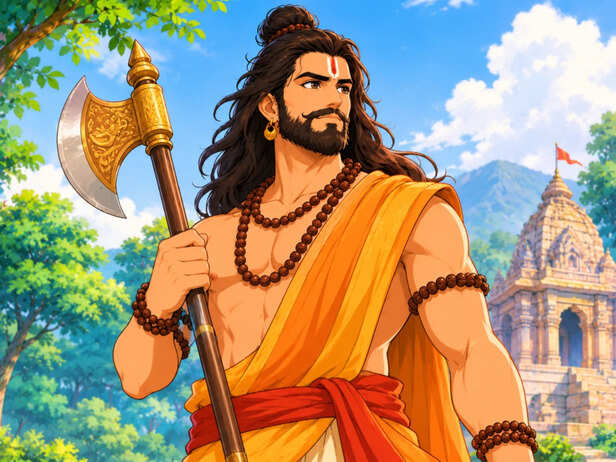
![Parashurama Beneath the Temple Sky]()
Parashurama Beneath the Temple Sky
Image credit : CHATGPT(AI)
Parashurama was the sixth avatar of Lord Vishnu and is traditionally associated with confronting arrogant and oppressive rulers. His most famous battle was against Kartavirya Arjuna, also known as Sahasrabahu, the powerful king who had wronged his father, Sage Jamadagni. Parashurama defeated him and became known for his extraordinary warrior skills. His story establishes that he possessed immense power, but it does not mean that every conflict in every age was meant to be solved by him.
How Did Sahasrabahu Defeat Ravana?
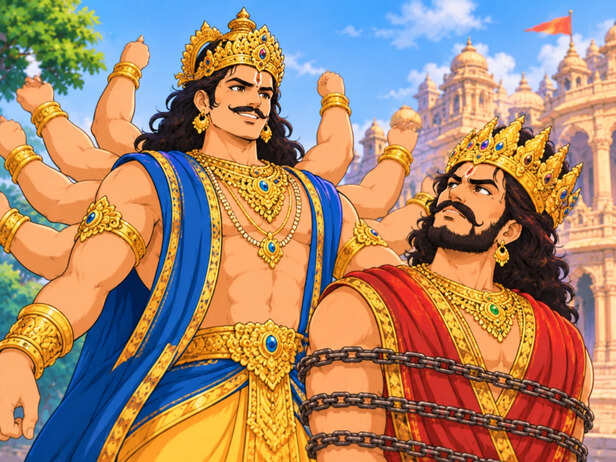
![Sahasrabahu Arjuna Captures Ravana]()
Sahasrabahu Arjuna Captures Ravana
According to a popular account found in Hindu mythological traditions, Ravana once challenged Sahasrabahu Arjuna but was defeated and captured by him. This story is often used to compare the strength of Ravana and Parashurama. However, the two encounters happened in different circumstances, and such stories do not establish a fixed ranking of divine and legendary warriors. What makes the account interesting is that the king who defeated Ravana was later defeated by Parashurama.
Parashurama Defeated Sahasrabahu
Sahasrabahu Arjuna's actions against Sage Jamadagni and his family led to a terrible conflict with Parashurama. In the traditional account, Parashurama defeated and killed the powerful king to avenge his father. This creates an interesting connection: Ravana had once been captured by Sahasrabahu, yet Parashurama was powerful enough to defeat Sahasrabahu. But this comparison alone cannot prove that Parashurama would automatically have defeated Ravana in every possible situation.
Ravana Had a Powerful Divine Boon
Ravana's strength was not based only on his physical abilities. According to the Ramayana tradition, he performed severe penance and received a boon from Lord Brahma that protected him from many classes of divine and supernatural beings. However, he did not consider human beings a serious threat and did not seek protection from them. This detail becomes crucial to understanding Lord Rama's birth. Vishnu's human incarnation allowed the divine purpose to unfold in a form that could defeat Ravana within the conditions of his boon.
Rama's Birth Had a Different Purpose
Parashurama's story is closely connected with confronting oppressive rulers, while Lord Rama's incarnation carries a different purpose. Rama was born as a human prince in the Ikshvaku dynasty and lived according to the values of dharma, duty and self-control. Ravana's defeat was not simply a contest of physical strength. It was part of a larger struggle to restore justice and protect those suffering under his rule. Vishnu's Rama avatar fulfilled this purpose through a human life and human choices.
Why Didn't Parashurama Fight Ravana?
The Ramayana does not present Parashurama as someone who was assigned the task of killing Ravana. In fact, his famous encounter with Lord Rama takes place after Rama breaks Shiva's bow at Sita's swayamvar. Parashurama recognises Rama's divine identity and eventually withdraws from the confrontation. This meeting also shows that the two avatars belong to different stages of Vishnu's divine purpose. Their roles were not interchangeable simply because both possessed extraordinary power.
It Was Never Just a Question of Strength
The real answer is that Vishnu's avatars are understood through their specific purposes, not through a competition to identify the strongest warrior. Parashurama's battles and Rama's victory over Ravana belong to different narratives and divine missions. Rama defeated Ravana while living within the responsibilities and limitations of a human life. His victory showed that dharma could overcome arrogance and misuse of power. The purpose of the Rama avatar was therefore much greater than simply defeating a powerful enemy
Unlock insightful tips and inspiration on personal growth, productivity, and well-being. Stay motivated and updated with the latest at My Life XP.