Imagine standing in a river with a bamboo basket filled with fruits, sugarcane and traditional offerings. As the Sun slowly disappears on the horizon, devotees fold their hands and offer water to Surya Dev. The following morning, they return to the same water body before sunrise to repeat the ritual.
This is one of the most distinctive traditions of Chhath Puja, a festival celebrated with great devotion in Bihar, Jharkhand, eastern Uttar Pradesh and parts of Nepal.
Why Does Chhath Puja Begin With the Setting Sun?
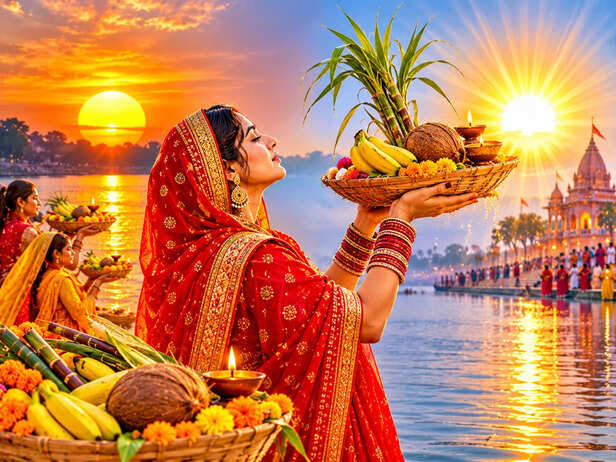
![Chhath Puja at the Golden Ghats]()
Chhath Puja at the Golden Ghats
Image credit : ChatGPT
Unlike many religious celebrations that focus on the rising Sun, Chhath honours both sunset and sunrise. The evening ritual is called Sandhya Arghya, while the morning offering is known as Usha Arghya.But there is a deeper belief behind this practice. Devotees do not worship the Sun only when it rises with brightness and energy. They also express gratitude when it sets, acknowledging its contribution throughout the day.This makes Chhath Puja more than a festival of Sun worship. It is also a reminder to appreciate every phase of life.
1. Why Is the Setting Sun Worshipped First?
One of the most interesting aspects of Chhath Puja is that devotees begin the main Sun offerings by worshipping the setting Sun.On the evening of the sixth day of the lunar fortnight, known as Shashthi, devotees gather near rivers, ponds and other water bodies. They carry bamboo baskets containing fruits, sugarcane, thekua and other traditional offerings.As the Sun approaches the horizon, devotees stand in the water and offer Arghya, a ritual offering of water, to Surya Dev.But why worship something that is about to disappear?
According to the spiritual interpretation of this tradition, the setting Sun deserves the same respect as the rising Sun. People often celebrate beginnings, success and fresh opportunities, but Chhath reminds them not to forget the value of endings, hard work and everything that has supported them along the way.The evening prayer is therefore associated with gratitude, humility and acceptance. It teaches that even when something appears to be ending, it still deserves respect.
2. Why Do Devotees Return Before Sunrise?
After offering prayers to the setting Sun, devotees return to the riverbank before dawn the following morning.This ritual is called Usha Arghya. The word Usha refers to dawn or the first light of the morning.As the first rays appear, devotees offer water to the rising Sun and pray for good health, happiness, prosperity and the well-being of their families.
The rising Sun represents renewal, hope and fresh beginnings. After worshipping the Sun at sunset, devotees welcome it again at sunrise, completing the two-part ritual.Together, these offerings represent the continuous cycle of nature. Night follows day, and every sunset makes way for another sunrise.This is one of the beautiful messages of Chhath Puja: difficult moments do not last forever, and every ending can lead to a new beginning.
3. The Lesser-Known Belief Behind Sandhya and Usha
There is another interesting traditional belief associated with the two Sun offerings.In some devotional traditions, the evening and morning prayers are connected with Pratyusha and Usha, who are associated with the setting and rising phases of sunlight.Usha represents dawn, while Pratyusha is associated in some traditions with the evening light. These associations give another spiritual interpretation to the two offerings.
However, beliefs and explanations can differ across regional traditions and families. The central practice remains the worship of Surya Dev at sunset and sunrise.Chhath also honours Chhathi Maiya, popularly associated with Shashthi Devi, who is revered as a protective mother and is worshipped for the well-being of children and families.The combination of Surya Dev and Chhathi Maiya makes the festival especially meaningful for devotees seeking health, protection and family happiness.
4. Why Does Chhath Puja Last Four Days?
Chhath is not limited to two sunset and sunrise prayers. It is a four-day festival in which every ritual has its own importance.
Here is what happens during these four days:
Day 1: Nahay KhayDevotees take a ritual bath, clean their homes and prepare a simple, pure vegetarian meal. It marks the beginning of the festival and the preparation for the fast.
Day 2: KharnaDevotees observe a day-long fast and break it in the evening after offering prayers. Jaggery-based kheer and roti are commonly prepared and shared as prasad. After this, the stricter fast begins.
Day 3: Sandhya ArghyaDevotees gather near water bodies and offer prayers to the setting Sun. This is one of the most visually striking moments of Chhath Puja.
Day 4: Usha ArghyaBefore sunrise, devotees return to the water bodies to offer Arghya to the rising Sun. After completing the prayers, they break their fast through a ritual known as Parana.
The four-day observance reflects discipline, purity, patience and devotion.
5. Why Is Chhath Puja Closely Connected With Nature?
Another interesting aspect of Chhath is its close relationship with nature.Unlike festivals that centre on elaborate temple ceremonies, Chhath is primarily performed in open spaces near rivers, ponds and other water bodies. Devotees offer seasonal fruits, sugarcane, coconuts and traditional homemade prasad.
Bamboo baskets and winnowing trays, known as soop, are also important parts of the offerings.The Sun provides the light and energy necessary for life, while water supports agriculture and sustains living beings. The traditional offerings reflect this connection between human life and nature.Chhath therefore encourages people to appreciate natural resources rather than take them for granted. Keeping rivers and ghats clean is also an important responsibility during the celebrations.
6. What Is the Deeper Life Lesson Behind Worshipping Both Suns?
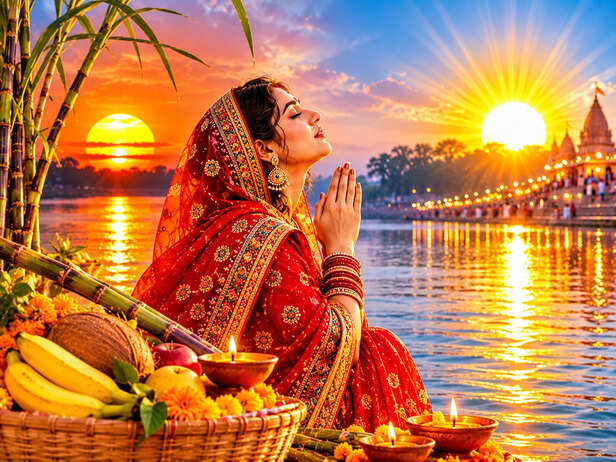
![Surya Dev worship]()
Surya Dev worship
Image credit : ChatGPT
The most beautiful message of Chhath Puja lies in its unusual choice to honour the Sun at both ends of the day.In everyday life, people often celebrate achievements, new opportunities and successful beginnings. However, they may overlook the importance of difficult phases, failures and endings.
Chhath offers a different perspective.
- Respect every phase: Just as devotees worship the setting Sun, we should value every stage of our lives.
- Practise gratitude: The evening offering reminds us to appreciate what we have received.
- Welcome new beginnings: The morning prayer represents hope and the courage to start again.
- Stay connected with nature: The rituals remind us that human life depends on natural resources.
These lessons make Chhath relevant beyond religious beliefs. It encourages gratitude, patience and respect for the natural world.
Chhath Teaches Us to Respect Both Endings and Beginnings
Chhath Puja is not just about offering prayers to the Sun. Its most distinctive tradition, worshipping the setting Sun before welcoming the rising Sun, carries a beautiful message about gratitude and hope.
The evening Arghya reminds devotees to appreciate what they have received, while the morning Arghya encourages them to welcome another day with faith and positivity.
Perhaps that is what makes Chhath so special. It teaches us that the setting Sun is just as worthy of respect as the rising Sun because every phase has its own importance.
Unlock insightful tips and inspiration on personal growth, productivity, and well-being. Stay motivated and updated with the latest at
My Life XP.