Every year during the Hindu month of Kartik, devotees celebrate Tulsi Vivah by performing a symbolic wedding between the sacred Tulsi plant and Lord Vishnu. Instead of a traditional idol, many families use a black Shaligram stone to represent the deity.
Why Is Lord Vishnu Worshipped as Shaligram During Tulsi Vivah?
![Lord Vishnu as Shaligram: The Sacred Wedding of Tulsi Vivah]()
Lord Vishnu as Shaligram: The Sacred Wedding of Tulsi Vivah
Image credit : Gemini
This stone is not considered an ordinary object. In Hindu tradition, Shaligram is regarded as a sacred form of Lord Vishnu. Its connection with Tulsi Vivah comes from a fascinating legend involving Vrinda and the demon king Jalandhar.However, different Puranic accounts tell related but distinct versions of this story. The popular Tulsi Vivah narrative brings together elements of these traditions.
Who Was Vrinda and Why Was Her Devotion So Powerful?
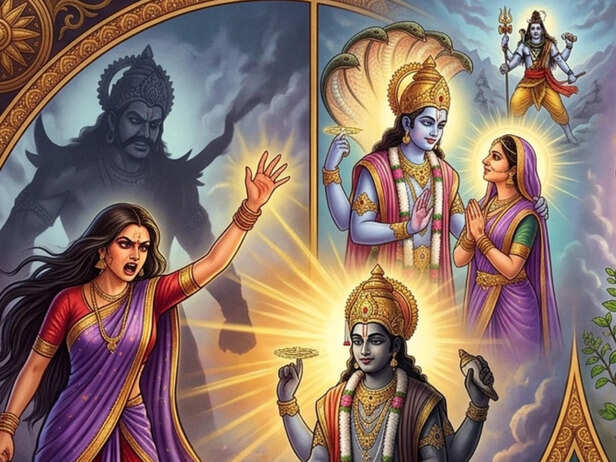
According to a popular version of the legend, Vrinda was the devoted wife of Jalandhar, a powerful demon king. Her unwavering faithfulness and devotion were believed to protect her husband, making him extremely difficult to defeat.Jalandhar became so powerful that he challenged the gods and created trouble in the heavenly worlds. Even the Devas struggled to stop him.As his strength continued to grow, the gods realised that defeating him would not be easy as long as Vrinda's protective devotion remained intact.They eventually approached Lord Vishnu for help.
How Did Lord Vishnu Become Connected With Vrinda's Curse?
To help the gods defeat Jalandhar, Lord Vishnu took a form resembling the demon king and approached Vrinda.Believing that the person before her was her husband, Vrinda's protective vow was broken. This weakened Jalandhar, allowing Lord Shiva to defeat him in battle.When Vrinda discovered what had happened, she was heartbroken and furious. She realised that Lord Vishnu had deceived her and cursed him to become stone.
In the popular Tulsi Vivah story, Vishnu accepted the curse. This is believed to explain why he is worshipped in the form of the Shaligram stone.Vrinda later gave up her mortal life, and the sacred Tulsi plant became associated with her devotion. Lord Vishnu promised that Tulsi would always remain dear to him and that his worship would be considered incomplete without her leaves.This is one of the stories traditionally connected with the annual wedding of Tulsi and Shaligram.
What Is the Shaligram Stone and Where Does It Come From?
Shaligram stones are sacred black stones traditionally associated with the Gandaki River in Nepal. They are especially important in Vaishnavism, the tradition devoted to Lord Vishnu.These stones often have natural patterns, circular markings and spiral-like formations. Devotees traditionally associate these markings with the Sudarshan Chakra, the divine discus carried by Vishnu.Interestingly, Shaligrams are naturally occurring fossils, commonly identified by geologists as ammonites, which are ancient marine organisms.
However, their religious importance goes beyond their physical appearance. Devotees believe that Lord Vishnu resides in these stones, making them suitable for worship without the need for a separately installed idol in many traditions.During Tulsi Vivah, the Shaligram represents Vishnu as the groom, while the Tulsi plant represents the bride.
Why Are Tulsi Leaves Considered So Dear to Lord Vishnu?
Tulsi holds a special position in Hindu worship, particularly in Vaishnava traditions. Devotees offer its leaves to Lord Vishnu, Krishna and several of their forms during daily prayers and religious ceremonies.The association is closely connected with the legend of Vrinda and Tulsi. Her devotion is remembered through the sacred plant, which is believed to remain eternally close to Vishnu.Tulsi leaves are also offered as
prasad and placed on food offerings before they are presented to the deity.For devotees, offering Tulsi is not simply a ritual. It represents purity, devotion and surrender to the divine.
Why Is Tulsi Vivah Celebrated Like a Traditional Wedding?
Tulsi Vivah is performed with several customs that resemble a Hindu wedding. Families decorate the Tulsi plant with a red or colourful cloth, flowers, jewellery and other bridal decorations.A Shaligram stone or an image of Lord Vishnu is placed beside the plant. A small mandap is prepared, and devotees perform wedding rituals, offer prayers and sing traditional songs.
Some families also use sugarcane to prepare the mandap and offer seasonal fruits, sweets and flowers.The ceremony is commonly observed around Dev Uthani Ekadashi or Kartik Shukla Dwadashi, although the exact day can differ according to regional and family traditions.The festival also marks the beginning of the traditional Hindu wedding season in many communities. It follows the period of Chaturmas, during which many communities avoid conducting auspicious ceremonies such as weddings.
What Does the Marriage of Tulsi and Shaligram Symbolise?
The wedding of Tulsi and Shaligram represents the eternal connection between devotion and the divine.
For devotees, the story carries several meanings:
- The importance of devotion: Vrinda's unwavering faith is remembered through the Tulsi plant.
- Divine acceptance: Vishnu's association with Shaligram represents his promise to remain connected with Tulsi.
- The value of nature: Tulsi is treated with respect and is considered sacred in Hindu households.
- A fresh beginning: Tulsi Vivah marks an auspicious period for weddings and other ceremonies in many Hindu traditions.
The story also reminds devotees that even a small offering made with sincere devotion holds spiritual significance.
The Sacred Bond That Lives On
The reason Lord Vishnu is worshipped as Shaligram during Tulsi Vivah is connected with the legend of Tulsi's origin and her eternal bond with the deity. While different Puranic traditions describe the events in different ways, the central belief remains the same: Tulsi is especially dear to Lord Vishnu.
Every year, when devotees perform Tulsi Vivah, they remember this sacred connection through a symbolic wedding. The ritual is not just about celebrating a divine marriage; it is also about honouring devotion, faith and the special place of Tulsi in Hindu worship.
Unlock insightful tips and inspiration on personal growth, productivity, and well-being. Stay motivated and updated with the latest at
My Life XP.