A lion’s face, blazing eyes and a form that appears more powerful than fear itself. Maa Pratyangira is one of the most striking forms of the Divine Mother in certain Hindu traditions. But the mystery surrounding her goes beyond her fierce appearance. Some traditions connect her to the cosmic conflict between Lord Narasimha and Lord Shiva’s fierce form, Sharabha. Her story raises a fascinating question: why would the Divine Mother take such a terrifying form, and what does it represent?
The Goddess With a Lion’s Face
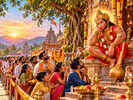
![Divine Assembly Blesses Goddess Durga]()
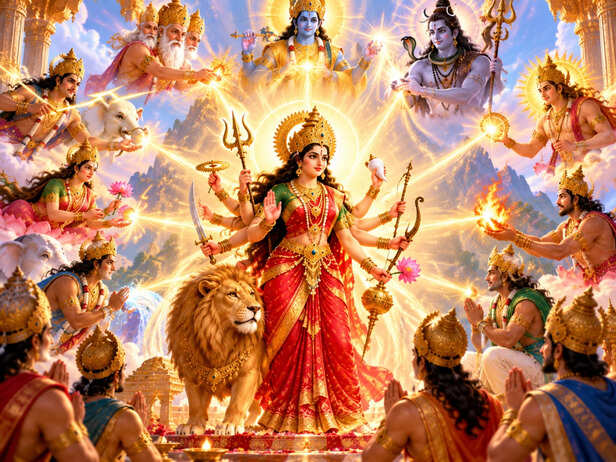
Divine Assembly Blesses Goddess Durga
Image credit : chatgpt(ai)
Maa Pratyangira stands out among Hindu goddesses because of her distinctive lion-faced appearance. Her fierce eyes, powerful posture and traditional weapons convey strength rather than helplessness in the face of danger. She is worshipped in particular Shakta and tantric traditions, where devotees associate her with protection and the power to overcome harmful influences. Her iconography may vary across temples and depictions, but her central image remains unforgettable: a divine feminine force that confronts darkness without fear.
The Legend of Narasimha’s Fury
![Maa Kalaratri in Her Powerful Divine Form]()
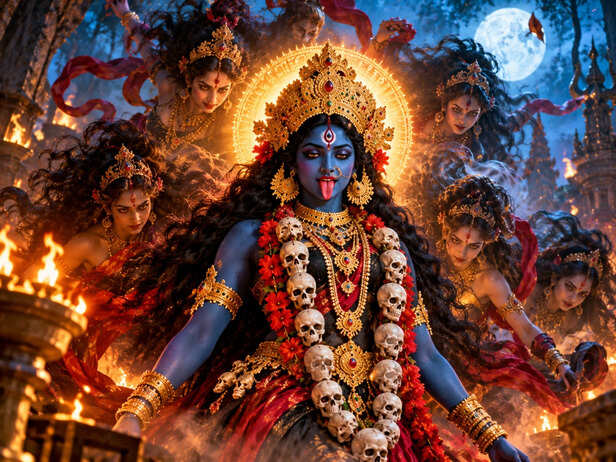
Maa Kalaratri in Her Powerful Divine Form
According to the well-known story of Lord Narasimha, Vishnu took a half-man, half-lion form to defeat Hiranyakashipu and protect his devotee Prahlada. Some later Puranic and regional traditions describe Narasimha’s fury continuing even after the battle. In these accounts, Lord Shiva appears in the powerful form of Sharabha to calm him. The story then develops differently across traditions, with some accounts introducing a fierce feminine divine power associated with Pratyangira. These variations are important because Hindu mythology contains multiple tellings rather than one universally accepted version.
How Maa Pratyangira Appears in the Legend
Some devotional accounts connect Maa Pratyangira with the confrontation between Narasimha and Sharabha. In these tellings, the Divine Mother manifests in a formidable form to bring the conflict to an end. Her appearance is not simply meant to inspire fear; it represents a power that can confront even the most overwhelming force. However, the details differ among religious texts and regional traditions, so this account should not be treated as the only accepted explanation of her origin. The lasting idea is the restoration of balance through divine power.
Why Her Fierce Form Symbolises Protection
A fierce-looking deity can have a protective role in Hindu worship. Maa Pratyangira’s lion-like face and intense appearance are understood by devotees as signs of power that refuses to surrender to harmful forces. In certain tantric traditions, she is invoked for protection against negative influences and spiritual obstacles. These are matters of religious belief, not scientifically established effects. Her symbolism can also carry a practical message: courage does not mean living without fear; it means facing difficult situations with strength, clarity and a sense of purpose.
Maa Pratyangira and Tantric Worship
Maa Pratyangira holds a special place in some tantric traditions, where she is associated with protection and the power to turn back harmful influences. Her worship may involve particular mantras, rituals and rules followed under the guidance of a knowledgeable tradition or teacher. Popular accounts sometimes connect her with protection from black magic or negative energy, but such claims should be understood as matters of faith rather than proven guarantees. Her fierce form reflects the belief that divine protection can stand against forces that seem difficult to overcome.
The Connection With Meghnad and Nikumbhila
In the Ramayana, Meghnad, the son of Ravana, performs a ritual at Nikumbhila before facing Lakshmana. The ritual becomes a crucial part of the events leading to his defeat. Some modern devotional narratives connect Nikumbhila with Maa Pratyangira, but this identification should be treated cautiously. The claim that the Valmiki Ramayana explicitly identifies Nikumbhila as Pratyangira is not something that can be assumed across versions. The connection nevertheless shows how regional worship traditions sometimes bring the stories of powerful goddesses into the wider Ramayana narrative.
The Deeper Meaning of Maa Pratyangira
Maa Pratyangira’s fierce appearance invites devotees to look beyond outward form. In her worship, strength is not simply about defeating an enemy; it is also about standing firm when life feels uncertain. Her image can remind people to face challenges with courage, seek wisdom before acting and avoid allowing anger to control their decisions. For believers, she represents divine protection. For others, her symbolism offers a powerful reflection on resilience: difficult moments do not have to define the future, and even overwhelming forces can be met with courage and discipline.
Unlock insightful tips and inspiration on personal growth, productivity, and well-being. Stay motivated and updated with the latest at
My Life XP.