Why Dushala Placed Her Grandson at Arjuna’s Feet
Noopur Kumari | Aug 26, 2026, 15:00 IST
Imagine a sister standing before her brother after years of tragedy. There is no celebration. No Rakhi. No festive music. Instead, there is grief, an orphaned child and a family broken by war. Yet one emotional moment changes everything. The story associated with Arjuna and Dushala reminds us that the meaning of a brother-sister bond can sometimes be much bigger than a thread tied around the wrist. Sometimes, protection means choosing to stop an old cycle of hatred.

No Rakhi, Yet This Mahabharata Bond
Image credit : ChatGPT (ai)
What if a brother and sister had lost almost everything between them, yet one final meeting gave their relationship a new beginning?
The Mahabharata is filled with stories of war, revenge and broken families. But hidden among those stories is an emotional relationship involving Arjuna and Dushala, the only daughter of Dhritarashtra and Gandhari.
There is an important clarification, though. The Mahabharata does not describe this episode as the festival of Raksha Bandhan, nor does the epic present Arjuna and Dushala as cousins in the usual sense. Dushala was Arjuna's paternal cousin, as the daughter of Dhritarashtra, while Arjuna was the son of Pandu.
The emotional connection with Raksha Bandhan comes from the theme of their relationship, not from a literal Rakhi ceremony.
And that is exactly what makes this story so powerful.
![Arjuna and Dushala after the Mahabharata war]()
Dushala belonged to the Kuru family, while Arjuna fought on the Pandava side during the Kurukshetra war. The conflict destroyed relationships that had once connected the two branches of the same family. Dushala had also been married to Jayadratha, the Sindhu ruler whose role in the war became closely connected with the death of Abhimanyu. For Arjuna, the war was not simply about defeating an enemy. Every victory carried a personal cost. For Dushala, the consequences were equally devastating. This is where the emotional weight of their relationship becomes important. They were family members living on opposite sides of a terrible conflict.
Dushala's story is often overlooked because the Mahabharata gives greater attention to its famous warriors.
But she was also living through the consequences of the war.
Her husband Jayadratha was killed by Arjuna, and the destruction of the Kuru family changed the lives of countless survivors.
In later retellings of the Ashvamedhika Parva, the relationship between Arjuna and Dushala is presented through the pain of this fractured family.
The emotional message is striking.
War may end on the battlefield, but its consequences continue inside homes.
And sometimes, the people left behind carry wounds that no weapon can repair.
Then Comes the Most Emotional Moment
According to the popular retelling of this episode, Dushala eventually comes before Arjuna carrying her young grandson. She does not arrive demanding revenge. She does not come with anger. Instead, she presents the child before her brother and makes an emotional appeal: if this cycle of hatred must continue, then let it end here. The scene carries a powerful symbolic meaning. Dushala has already lost too much.She does not want another generation to inherit the same hatred. Whether every detail of this retelling is found in the oldest textual tradition is a separate question. But its central message resonates strongly with the broader themes of the Mahabharata: violence can destroy generations unless someone chooses to end the cycle.
![Dushala mourning after the war]()
For Arjuna, Dushala was not simply the sister of an enemy. She was family. That distinction becomes crucial. The battlefield had divided people into Pandavas and Kauravas. But outside the battlefield, those labels could not erase blood relationships. Dushala's suffering forces Arjuna to look beyond victory and defeat. The warrior who had spent years fighting suddenly faces a different kind of responsibility. What should happen to the innocent child who remains? Should another generation pay for the sins of the previous one? The emotional answer is clear. A child should not inherit a family's hatred simply because of the actions of those who came before him.
The child in this story represents something much bigger than family inheritance. He represents the next generation. After so much destruction, the choice before Arjuna becomes symbolic: continue the conflict or protect the future. This idea echoes another important post-war development in the Mahabharata tradition. The Pandavas eventually place great importance on the continuation of the next generation through Parikshit, Abhimanyu's son. The message is powerful. A new age cannot begin if every generation continues fighting over the wounds of the previous one. Sometimes protecting the future means refusing to pass old hatred forward.
This is where the story connects beautifully with Raksha Bandhan. The Mahabharata does not present this meeting as a Rakhi ceremony.
There is no need to change that fact to appreciate its meaning. Raksha Bandhan is often understood through the ideas of affection, protection and family responsibility. The Arjuna-Dushala story can be viewed symbolically through those same values. There is no thread around the wrist.
Instead, there is an emotional thread that survives war, loss and resentment. And perhaps that is why this story feels so relevant during Raksha Bandhan. Because sometimes the relationship needs protection more than the wrist does.
Families do not always break because of enormous tragedies. Sometimes it begins with something that appears small. A disagreement over property. A misunderstanding at a wedding. A forgotten invitation. A harsh sentence. Months become years, and suddenly two people who once grew up together stop speaking. That is why the emotional lesson of Arjuna and Dushala can still matter today. If someone you love is angry with you, asking for peace does not make you weak. Sometimes, the strongest person in a family is the one willing to make the first move.
Unlock insightful tips and inspiration on personal growth, productivity, and well-being. Stay motivated and updated with the latest at My Life XP.
The Mahabharata is filled with stories of war, revenge and broken families. But hidden among those stories is an emotional relationship involving Arjuna and Dushala, the only daughter of Dhritarashtra and Gandhari.
There is an important clarification, though. The Mahabharata does not describe this episode as the festival of Raksha Bandhan, nor does the epic present Arjuna and Dushala as cousins in the usual sense. Dushala was Arjuna's paternal cousin, as the daughter of Dhritarashtra, while Arjuna was the son of Pandu.
The emotional connection with Raksha Bandhan comes from the theme of their relationship, not from a literal Rakhi ceremony.
And that is exactly what makes this story so powerful.
A Family Torn Apart by War
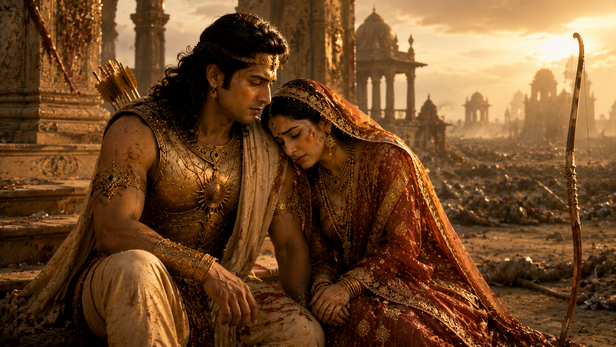
Arjuna and Dushala after the Mahabharata war
Image credit : ChatGPT(ai)
Dushala belonged to the Kuru family, while Arjuna fought on the Pandava side during the Kurukshetra war. The conflict destroyed relationships that had once connected the two branches of the same family. Dushala had also been married to Jayadratha, the Sindhu ruler whose role in the war became closely connected with the death of Abhimanyu. For Arjuna, the war was not simply about defeating an enemy. Every victory carried a personal cost. For Dushala, the consequences were equally devastating. This is where the emotional weight of their relationship becomes important. They were family members living on opposite sides of a terrible conflict.
Dushala Was Left With Deep Loss
But she was also living through the consequences of the war.
Her husband Jayadratha was killed by Arjuna, and the destruction of the Kuru family changed the lives of countless survivors.
In later retellings of the Ashvamedhika Parva, the relationship between Arjuna and Dushala is presented through the pain of this fractured family.
The emotional message is striking.
War may end on the battlefield, but its consequences continue inside homes.
And sometimes, the people left behind carry wounds that no weapon can repair.
Then Comes the Most Emotional Moment
According to the popular retelling of this episode, Dushala eventually comes before Arjuna carrying her young grandson. She does not arrive demanding revenge. She does not come with anger. Instead, she presents the child before her brother and makes an emotional appeal: if this cycle of hatred must continue, then let it end here. The scene carries a powerful symbolic meaning. Dushala has already lost too much.She does not want another generation to inherit the same hatred. Whether every detail of this retelling is found in the oldest textual tradition is a separate question. But its central message resonates strongly with the broader themes of the Mahabharata: violence can destroy generations unless someone chooses to end the cycle.
Arjuna Sees His Sister Differently
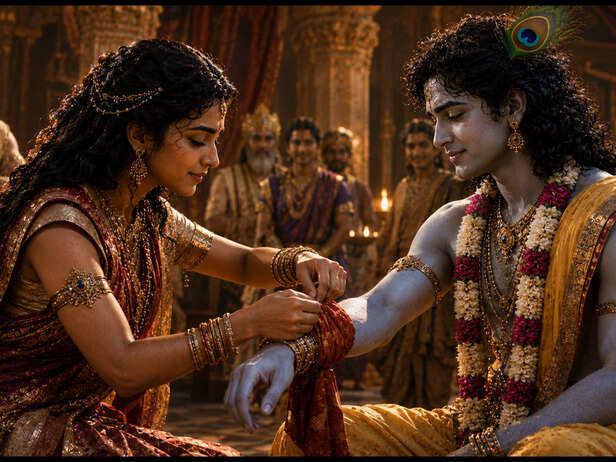
Dushala mourning after the war
Image credit : ChatGPT(ai)
For Arjuna, Dushala was not simply the sister of an enemy. She was family. That distinction becomes crucial. The battlefield had divided people into Pandavas and Kauravas. But outside the battlefield, those labels could not erase blood relationships. Dushala's suffering forces Arjuna to look beyond victory and defeat. The warrior who had spent years fighting suddenly faces a different kind of responsibility. What should happen to the innocent child who remains? Should another generation pay for the sins of the previous one? The emotional answer is clear. A child should not inherit a family's hatred simply because of the actions of those who came before him.
The Child Becomes a Symbol of Hope
The Rakhi Connection Is Symbolic
There is no need to change that fact to appreciate its meaning. Raksha Bandhan is often understood through the ideas of affection, protection and family responsibility. The Arjuna-Dushala story can be viewed symbolically through those same values. There is no thread around the wrist.
Instead, there is an emotional thread that survives war, loss and resentment. And perhaps that is why this story feels so relevant during Raksha Bandhan. Because sometimes the relationship needs protection more than the wrist does.
Sometimes the First Step Must Come From You
Unlock insightful tips and inspiration on personal growth, productivity, and well-being. Stay motivated and updated with the latest at My Life XP.