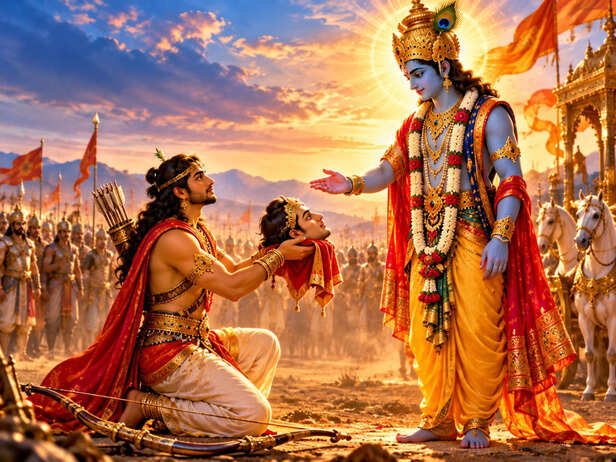
What if the warrior who could have changed the entire Mahabharata war chose to sacrifice his own head instead? According to a popular legend, Barbarik, later worshipped as Khatu Shyam Ji, watched the eighteen-day battle after offering his head at Lord Krishna's request. When the war ended, the Pandavas argued over who deserved the credit for their victory. The answer they received changed the meaning of the battle. Krishna then granted Barbarik a boon that explains why devotees remember him as Haare Ka Sahara, the support of those who have lost hope.
The Warrior Who Offered His Head
![Barbarik’s Unforgettable Sacrifice]()
Barbarik’s Unforgettable Sacrifice
Image credit : chatgpt(ai)
According to the popular legend, Barbarik was the grandson of Bhima and the son of Ghatotkacha. He possessed extraordinary fighting skills and had received three powerful arrows that could decide the outcome of a battle. Before the Mahabharata war began, Lord Krishna asked him whom he would support. Barbarik promised to stand with whichever side was weaker. Krishna realised that this vow could make the battle endless, as the balance of power would keep shifting. To honour the greater purpose of the war, Barbarik offered his head after Krishna asked for his sacrifice.
Why Did Krishna Let Him Watch the War?
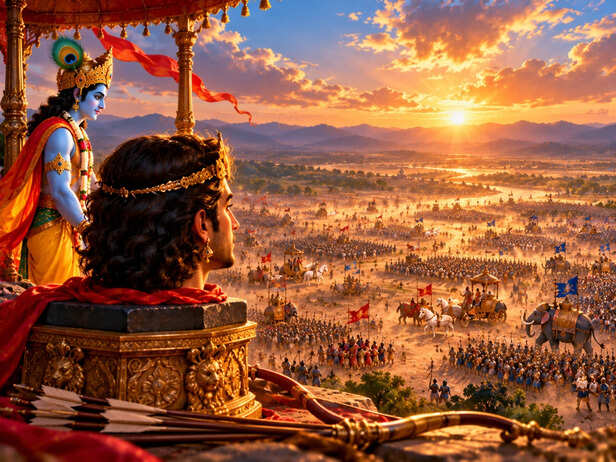
![Barbarik Witnesses the Mahabharata War]()
Barbarik Witnesses the Mahabharata War
Image credit : chhatgpt(ai)
Barbarik made one final request before his sacrifice: he wanted to witness the great Mahabharata war. Krishna granted his wish, and his head was placed on a hill overlooking the battlefield. According to the legend, Barbarik watched all eighteen days of fighting without taking part. He saw warriors display extraordinary courage, powerful weapons strike the battlefield and mighty fighters fall. Yet the greatest revelation came after the war ended. The Pandavas, despite fighting together, began arguing about who had contributed most to their victory. They decided to ask the one witness who had seen the entire battle.
The Answer That Silenced the Pandavas
Bhima believed his strength had won the war, while Arjuna trusted the power of his arrows. But when Barbarik was asked what he had witnessed, his answer surprised everyone. According to the popular telling, he said he had seen a divine force moving across the battlefield, destroying the opposing army, with Lord Krishna at the centre of it all. The Pandavas were left humbled. The story reminds devotees that human strength and skill matter, but pride can make people forget the forces, guidance and support that helped them succeed.
Krishna’s Promise to Barbarik
Pleased with Barbarik's sacrifice and devotion, Lord Krishna granted him a special boon. According to the legend, Barbarik would be worshipped by Krishna's name in Kaliyug as Shyam, and people who felt defeated or helpless would find hope in him. This promise explains the heartfelt name Haare Ka Sahara, meaning the support of those who have lost. For devotees, Khatu Shyam Ji represents the belief that defeat does not have to be the end of a person's journey. Even when life seems unfair, faith can offer the courage to begin again.
How Barbarik Became Khatu Shyam Ji
According to the popular tradition, centuries after the Mahabharata, a cow repeatedly released its milk at one particular spot in the village of Khatu. Curious villagers investigated and discovered a sacred head beneath the ground. The discovery was associated with Barbarik, and a shrine was established at the site. Today, the Shri Shyam Ji Temple in Khatu, Rajasthan, draws devotees who come to pray for strength, hope and support during difficult times. The account of the discovery belongs to religious tradition and is central to the faith surrounding the temple.
Why Devotees Call Him Haare Ka Sahara
People often turn to Khatu Shyam Ji when they feel they have exhausted every option. Some pray during financial struggles, others during family problems, personal setbacks or periods of uncertainty. The title Haare Ka Sahara reflects the belief that those who feel defeated can still find hope through devotion. The story also offers a practical lesson: accept setbacks without letting them define your entire life. Ask for help when you need it, learn from mistakes and take the next step with courage. Faith can provide comfort, while patient effort helps you move forward.
Unlock insightful tips and inspiration on personal growth, productivity, and well-being. Stay motivated and updated with the latest at My Life XP