During Diwali, many Hindu families decorate their main entrances with flowers, diyas, rangoli and traditional symbols. Among these decorations, two words often catch the eye:
Shubh and Labh.
You may have seen them written on opposite sides of a doorway or on the first page of a new account book. But have you ever wondered why people write Shubh before Labh? Why not place wealth and profit first?
The answer lies in a beautiful spiritual idea. According to the traditional interpretation,
goodness and auspiciousness should come before material gain. The belief reminds people that earning money is important, but how they earn it matters just as much.
What Do Shubh and Labh Actually Mean?
![Festive Ganesha Entrance with Kalash]()
Festive Ganesha Entrance with Kalash
Image credit : ChatGPT
The two words have simple meanings but carry a deeper message in Hindu tradition.
- Shubh: It means auspiciousness, goodness, positivity and favourable beginnings.
- Labh: It means gain, benefit, profit or something valuable that a person receives.
Together, Shubh Labh expresses the wish that every new beginning should bring positive results and meaningful gains.
However, the spiritual interpretation goes beyond financial prosperity. Labh can also represent good health, happiness, peace, knowledge and success in life.
This is why the two words are commonly written during Diwali, when families pray for a prosperous and auspicious year ahead.
Why Is Shubh Written Before Labh?
The traditional order carries an important lesson: goodness should come before the desire for profit.Imagine someone earning a great deal of money through dishonesty or by causing harm to others. Although that person may experience financial gain, such wealth cannot necessarily bring peace or happiness.The idea behind writing Shubh before Labh is that success should come through honest efforts, good intentions and righteous actions.
It is a reminder that people should first focus on doing what is right. Material benefits should follow those actions rather than become the only purpose of life.This interpretation also reflects a broader Hindu spiritual principle:
Dharma (righteous conduct) should guide one's actions and decisions.There is no single universally prescribed scriptural explanation for the order of these two words. However, this moral interpretation is widely associated with the tradition.
What Is the Connection Between Shubh Labh and Lord Ganesha?
There is also a popular mythological connection between these words and Lord Ganesha.In certain Hindu traditions, Shubh and Labh are regarded as the sons of Lord Ganesha. His consorts are popularly identified as Riddhi and Siddhi, who symbolise prosperity and spiritual accomplishment.
The names of his sons are also associated with auspiciousness and gain.This belief gives the words a special connection with Ganesha, who is worshipped before new beginnings and important undertakings.People seek his blessings because he is known as
Vighnaharta, the remover of obstacles. Writing Shubh Labh alongside his image is therefore considered a way of expressing the wish for favourable beginnings, fewer obstacles and prosperity.It is worth noting that accounts of Ganesha's family differ across Hindu traditions and texts. The association of Shubh and Labh as his sons is a popular belief rather than a description shared in exactly the same form by every scripture.
Why Are Shubh and Labh Written During Diwali?
Diwali is closely associated with the worship of Goddess Lakshmi and Lord Ganesha.Goddess Lakshmi represents wealth, abundance and prosperity, while Lord Ganesha is worshipped for wisdom and the removal of obstacles.Together, their worship reflects the desire for prosperity guided by good judgement and auspicious beginnings.
During Diwali, families may write Shubh Labh on their main doors, walls, account books and places of business. Some also write the words beside a Swastika symbol, which is traditionally associated with auspiciousness and well-being in Hinduism.The practice is not limited to home entrances. Business communities also follow a similar tradition during
Chopda Pujan, the ceremonial worship of new account books.
Why Do Businessmen Write Shubh Labh in Their Account Books?
The tradition becomes particularly interesting during Chopda Pujan, which is widely observed among Gujarati business communities during Diwali.During this ritual, traders worship their new account books and seek blessings from Goddess Lakshmi and Lord Ganesha before beginning a new business year.The first pages of these books often carry the words Shubh and Labh, sometimes accompanied by a Swastika and other auspicious symbols.
The intention is to pray for honest earnings, successful business decisions and prosperity in the coming year.The custom also reflects an important belief: business success should not be measured only by the amount of money earned. Fair dealings, responsibility and the well-being of others matter too.
Is Writing Shubh Labh on the Main Door Considered Auspicious?
![Festive Ganesha Entrance with Kalash]()
Festive Ganesha Entrance with Kalash
Image credit : ChatGPT
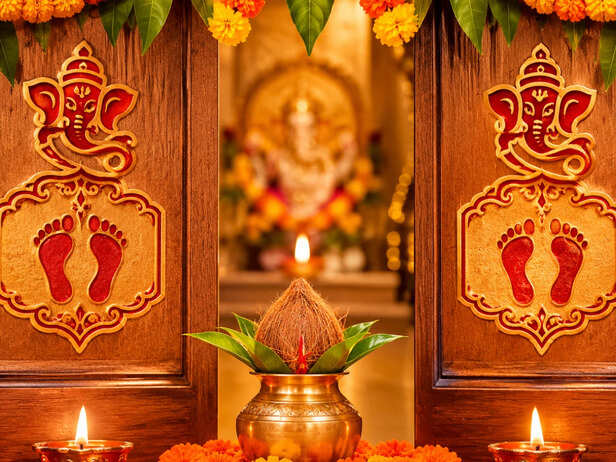
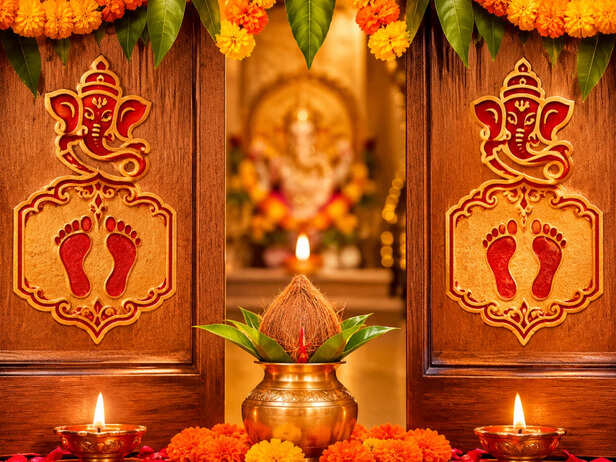
In many Hindu households, the main entrance is treated as an important part of the home during religious rituals.People decorate it with torans, flowers, rangoli and auspicious symbols, especially during Diwali. Writing Shubh Labh is another way of expressing the hope that good fortune, happiness and prosperity enter the household.
Some families also place images of Lord Ganesha or Goddess Lakshmi near the entrance.According to traditional beliefs, these practices are associated with welcoming divine blessings. However, they are expressions of faith and cultural tradition, not a guarantee of financial success or protection from difficulties.
The Deeper Lesson Behind Shubh Labh
The tradition of writing Shubh before Labh carries a message that remains relevant beyond festivals and religious rituals.It reminds people that wealth is valuable, but it should not come at the cost of honesty, kindness or peace of mind.
A successful life is not defined only by financial achievements. Good health, meaningful relationships, contentment and the ability to help others are also forms of prosperity.So, the next time you see Shubh Labh written on a doorway or account book, remember the thought behind these two words: first choose what is good and right, and then seek the gains that follow.
Unlock insightful tips and inspiration on personal growth, productivity, and well-being. Stay motivated and updated with the latest at My Life XP.