Why Only Mana Village Girls Can Make Badrinath’s Sacred Blanket
Noopur Kumari | Sept 03, 2026, 12:00 IST
Every year, when the doors of Badrinath Temple are closed for the winter, a remarkable ritual takes place. Lord Badrinath is covered with a blanket soaked in pure ghee, known as Ghrit Kambal. The temple tradition gives this ritual a special place during the closing ceremony. But what makes this simple-looking blanket so sacred, and what is believed to happen when the temple opens again after winter?

Badrinath Ghrit Kambal
Image credit : chatgpt(ai)
High in the Himalayas, the sacred town of Badrinath follows traditions that have continued across generations.
One of the most fascinating is the Ghrit Kambal, a blanket soaked in ghee that is used during the closing of the temple for the winter season. The official Shri Badrinath Kedarnath Temple Committee lists Ghrit Kambal as a closing-day offering and describes the deity as being covered with blankets soaked in ghee.
For devotees, however, this is much more than a winter covering.
The ritual carries a deep sense of devotion, protection and hope, making it one of the lesser-known traditions associated with Badrinath Dham.
![Sacred Ghrit Kambal at Badrinath]()
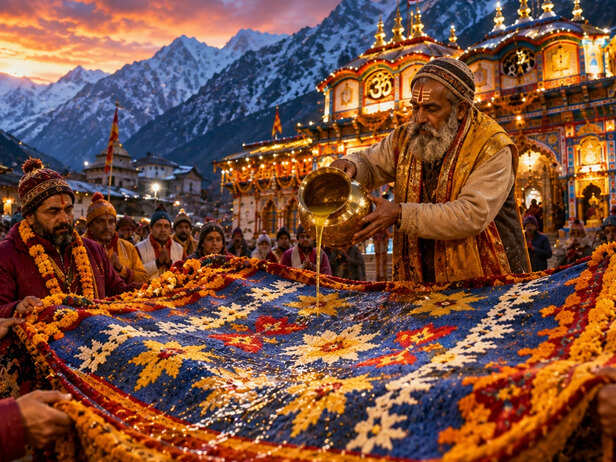
Ghrit Kambal literally refers to a blanket associated with ghrit, or clarified butter. According to the Shri Badrinath Kedarnath Temple Committee, the closing-day ritual includes covering Shri Badrinath Ji with blankets soaked in ghee. The ritual takes place as the temple prepares to remain closed during the harsh Himalayan winter. What makes it fascinating is the combination of a practical winter covering with a deeply devotional ritual. For devotees, the blanket is not viewed as an ordinary piece of cloth. It becomes part of the sacred farewell before the temple enters its winter period.
![Pure Ghee Used in Badrinath Ritual]()
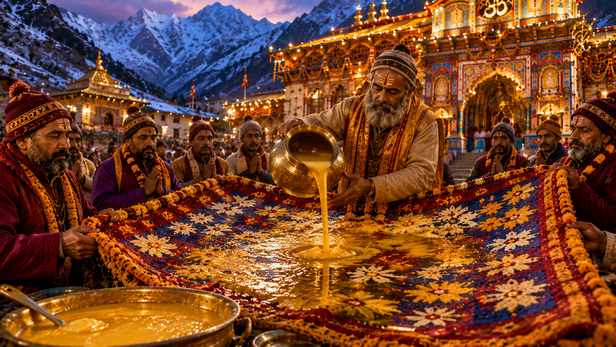
Ghee has long held an important place in Hindu religious practices, particularly in offerings, lamps and sacred rituals. At Badrinath, the use of ghee in the closing-day Ghrit Kambal ritual gives the blanket its distinctive religious significance. The temple committee itself officially lists Ghrit Kambal Ghee on Closing Day among the temple’s offerings. Devotees traditionally associate ghee with purity, auspiciousness and sacred offering. The meaning of the ritual therefore goes beyond warmth. It becomes a symbolic act of reverence as devotees prepare to leave the shrine in its winter state.
Mana village is located only a few kilometres from Badrinath and is recognised by Uttarakhand Tourism as the last village on the Uttarakhand border. The village has a strong cultural connection with the Badrinath region and several traditions associated with the shrine. Local accounts about the Ghrit Kambal tradition particularly highlight the participation of unmarried girls from Mana. This detail gives the ritual a deeply personal community connection. It shows how pilgrimage traditions are not limited to the temple itself. They can also involve the people and communities who have lived around these sacred Himalayan sites for generations.
The closing of Badrinath Temple marks the beginning of a long winter period in the high Himalayas. During this ceremony, the Ghrit Kambal is offered and the deity is covered with ghee-soaked blankets. The official temple committee specifically records this as a closing-day practice. The moment carries a powerful emotional meaning for pilgrims. After months of worship and darshan, the temple doors close until the next pilgrimage season. The Ghrit Kambal becomes part of this sacred transition, symbolising the devotees’ continued connection with Lord Badrinath even when the shrine is inaccessible.
Winter transforms the Badrinath region dramatically. Heavy snowfall makes the high-altitude shrine difficult to access, which is why the temple remains closed for the winter season. The official temple tradition states that when the temple doors are closed, the Akhand Jyoti is believed to continue burning, while worship and offerings are traditionally associated with Narada during this period. This creates one of Badrinath’s most fascinating spiritual beliefs: although devotees cannot visit the shrine during winter, worship is believed to continue in another form.
A popular religious belief surrounding Ghrit Kambal is connected with the temple’s reopening. Devotees traditionally pay attention to the condition of the ghee on the blanket after the winter closure. In devotional belief, the presence or condition of the ghee is viewed as an auspicious sign. It is important to understand this as a religious belief rather than a scientifically established prediction. The tradition remains meaningful because devotees see it as a symbolic indication of divine grace and a positive beginning for the new pilgrimage season.
The deepest meaning of Ghrit Kambal may not lie in the blanket itself. It lies in what the ritual represents. The temple closes, the mountains become covered with snow and pilgrims must wait for the next season. Yet faith continues. The Badrinath-Kedarnath Temple Committee also notes the tradition of the Akhand Jyoti continuing through the winter and devotees gathering when the temple reopens. In this way, Ghrit Kambal becomes a powerful symbol of patience. The doors may close for a season, but devotion does not have to end.
Unlock insightful tips and inspiration on personal growth, productivity, and well-being. Stay motivated and updated with the latest at My Life XP
One of the most fascinating is the Ghrit Kambal, a blanket soaked in ghee that is used during the closing of the temple for the winter season. The official Shri Badrinath Kedarnath Temple Committee lists Ghrit Kambal as a closing-day offering and describes the deity as being covered with blankets soaked in ghee.
For devotees, however, this is much more than a winter covering.
The ritual carries a deep sense of devotion, protection and hope, making it one of the lesser-known traditions associated with Badrinath Dham.
What Is Ghrit Kambal?
Sacred Ghrit Kambal at Badrinath
Image credit : CHATGPT(AI)
Ghrit Kambal literally refers to a blanket associated with ghrit, or clarified butter. According to the Shri Badrinath Kedarnath Temple Committee, the closing-day ritual includes covering Shri Badrinath Ji with blankets soaked in ghee. The ritual takes place as the temple prepares to remain closed during the harsh Himalayan winter. What makes it fascinating is the combination of a practical winter covering with a deeply devotional ritual. For devotees, the blanket is not viewed as an ordinary piece of cloth. It becomes part of the sacred farewell before the temple enters its winter period.
Why Is Ghee Used?
Pure Ghee Used in Badrinath Ritual
Image credit : CHATGPT(AI)
Ghee has long held an important place in Hindu religious practices, particularly in offerings, lamps and sacred rituals. At Badrinath, the use of ghee in the closing-day Ghrit Kambal ritual gives the blanket its distinctive religious significance. The temple committee itself officially lists Ghrit Kambal Ghee on Closing Day among the temple’s offerings. Devotees traditionally associate ghee with purity, auspiciousness and sacred offering. The meaning of the ritual therefore goes beyond warmth. It becomes a symbolic act of reverence as devotees prepare to leave the shrine in its winter state.
Mana Village Has a Special Connection
The Blanket Is Offered at Closing
What Happens During Winter?
Why Devotees Watch the Blanket
The Meaning Goes Beyond the Blanket
Unlock insightful tips and inspiration on personal growth, productivity, and well-being. Stay motivated and updated with the latest at My Life XP