Why Raksha Bandhan Is Also Called Janeu Purnima Here
Noopur Kumari | Aug 26, 2026, 18:00 IST
The same full moon unites families during Raksha Bandhan, it holds a different spiritual importance in the Himalayan hills. Starting from re-threading the sacred thread after taking a bath to worshipping in a temple which remains closed to the devotees for most of the year, rituals in Uttarakhand showcase another facet of the festival. This is how this festival is different from others.

Raksha Bandhan Is Also Called Janeu Purnima
Image credit : ChatGPT (ai)
What if Raksha Bandhan is not just about tying a thread to the wrist of your brother?
In Uttarakhand, this festival is marked with one more ritual which is firmly established in this part of India. In Uttarakhand, Raksha Bandhan is associated with the day of Janeu Purnima when there are numerous rituals performed in the Himalayan part of the state, related to purification, worship, and changing the sacred thread.
However, there is an even more interesting fact.
In Chamoli district, the Bansi Narayan Temple opens its gates for the worshippers once a year – on Shravan Purnima. On this day, worshiping is held in the temple, and women are usually connected with tying a rakhi to Lord Vishnu.
Thus, in Uttarakhand, this festival is associated with many more rituals than just with the rakhi one.
![Janeu Purnima Tradition in Uttarakhand]()
But in some parts of Uttarakhand, there is also a festival observed along with Raksha Bandhan, which falls on the full moon day of Shravan month. Janeu/Yajnopavita, which is considered to be the holy thread, is an important aspect in Hinduism. At this time, people observing the custom would conduct rituals and exchange their old holy threads for the new ones. This creates another meaning to the celebration that deviates from the traditional scenario of brothers and sisters tying rakhis to each other.
![Sacred Bath on Janeu Purnima]()
The morning of Janeu Purnima is especially significant for traditional rituals. People might choose to immerse themselves in the water of holy rivers, streams, or kunds prior to conducting religious activities. It is linked to cleansing and getting ready for the religious rituals of the day. Following the cleansing, people who adhere to the janeu customs get rid of the old sacred thread and wear a new one on. In the hilly areas of Uttarakhand, where the rivers and natural water sources play an important role in culture, the religious customs become connected with the landscape itself.
Changing the janeu is not simply a process of replacing the old thread with a new one. The janeu itself is a spiritual symbol in the religion that signifies the wearer’s commitment to spiritual responsibilities and obligations. Changing the janeu thus acquires a ritualistic aspect as opposed to the simple act of changing one’s clothes and ornaments.In Uttarakhand, this is done as part of Janeu Punyo or Janeu Purnima. While Raksha Bandhan is very much a celebration of sibling relationships, this is another ritual observed on Shravan Purnima.
Among the many interesting customs associated with this day, one such can be seen at Bansi Narayan Temple in Chamoli district. According to the practice, the temple opens to its devotees only during the day of Shravan Purnima, making it an important day for the pilgrims who are coming to visit the temple. According to the tradition, the temple remains closed for most part of the year to common devotees, but can be accessed by them only during this holy day. For the devotees visiting the temple, it is not just an act of pilgrimage, but also a rare annual ritual.
There is yet another interesting aspect of Bansi Narayan. On the auspicious day of the temple inauguration, Lord Vishnu is prayed to, and it is believed that it is the local women who first tie rakhi on the god. It goes contrary to the popular Raksha Bandhan tradition when sisters tie rakhi to their brothers. In this instance, the tradition becomes an offering made to God. It is indicative of the deeper spiritual significance that is attributed to Raksha Bandhan, when rakhi symbolizes protection and dedication.
For most people, Raksha Bandhan conjures up images of brothers, sweets, and colorful rakhis. However, in the case of Uttarakhand, there is a completely new angle that this festival holds for them. The same festival that involves celebrating Raksha Bandhan is known for other activities like holy bath, changing of janeu, prayers and pilgrimage. This indicates how festivals in India may be practiced differently by different regions while being spiritually linked to each other. Something that seems to be a single festival may have many layers of local tradition and faith behind it.
Raksha Bandhan tale of Uttarakhand illustrates to us that a festival does not confine itself to one specific form. It gains significance with the help of traditions, holy sites and communal practices over many years. Janeu Purnima introduces a ritual of renewal, whereas Bansi Narayan marks an unusual pilgrimage tradition on a yearly basis. All these traditions help us understand a very different aspect of Raksha Bandhan, which has remained obscure from many parts of the country. Behind the well-known rakhi tradition lies a much broader cultural tale, which is connected to faith and culture.
Unlock insightful tips and inspiration on personal growth, productivity, and well-being. Stay motivated and updated with the latest at My Life XP.
To whom does one offer prayers in Bansi Narayan temple?
The Bansi Narayan temple is a place of worship of Lord Vishnu, which holds an important prayer ceremony on Shravan Purnima.
What makes the Raksha Bandhan festival distinct in Uttarakhand?
In addition to the regular brother-sister bond ceremony, there are certain rituals related to Janeu Purnima, such as bathing and replacement of janeu.
What is Janeu Punyo?
Janeu Punyo is the local name for the ritual of renewing the holy thread celebrated on Shravan Purnima in Uttarakhand.
In Uttarakhand, this festival is marked with one more ritual which is firmly established in this part of India. In Uttarakhand, Raksha Bandhan is associated with the day of Janeu Purnima when there are numerous rituals performed in the Himalayan part of the state, related to purification, worship, and changing the sacred thread.
However, there is an even more interesting fact.
In Chamoli district, the Bansi Narayan Temple opens its gates for the worshippers once a year – on Shravan Purnima. On this day, worshiping is held in the temple, and women are usually connected with tying a rakhi to Lord Vishnu.
Thus, in Uttarakhand, this festival is associated with many more rituals than just with the rakhi one.
A Different Name for Raksha Bandhan
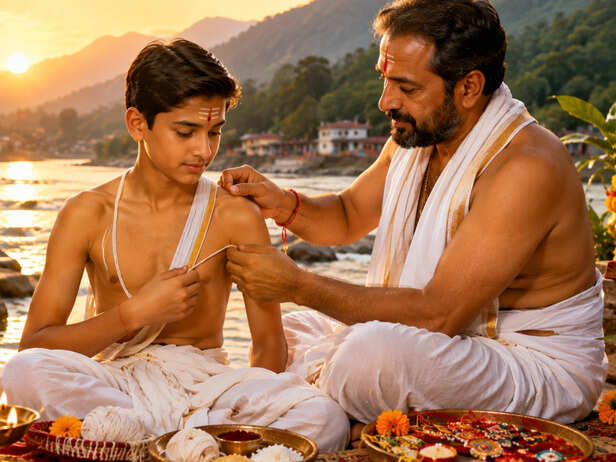
Janeu Purnima Tradition in Uttarakhand
Image credit : ChatGPT(ai)
But in some parts of Uttarakhand, there is also a festival observed along with Raksha Bandhan, which falls on the full moon day of Shravan month. Janeu/Yajnopavita, which is considered to be the holy thread, is an important aspect in Hinduism. At this time, people observing the custom would conduct rituals and exchange their old holy threads for the new ones. This creates another meaning to the celebration that deviates from the traditional scenario of brothers and sisters tying rakhis to each other.
A Sacred Bath Starts Off the Day
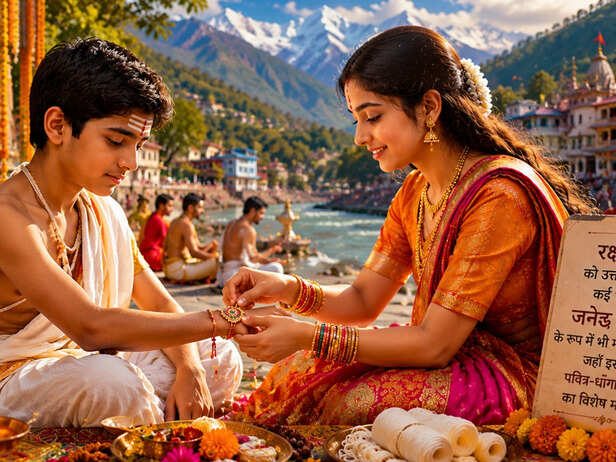
Sacred Bath on Janeu Purnima
Image credit : ChatGPT (ai)
The morning of Janeu Purnima is especially significant for traditional rituals. People might choose to immerse themselves in the water of holy rivers, streams, or kunds prior to conducting religious activities. It is linked to cleansing and getting ready for the religious rituals of the day. Following the cleansing, people who adhere to the janeu customs get rid of the old sacred thread and wear a new one on. In the hilly areas of Uttarakhand, where the rivers and natural water sources play an important role in culture, the religious customs become connected with the landscape itself.
The Most Holy Thread Is Reborn
Bansi Narayan is Available for Just One Day
The First Rakhi Is Given to Lord Vishnu
A Ceremony Apart from Family Customs
The Himalayan Ritual Is Still Respected
Unlock insightful tips and inspiration on personal growth, productivity, and well-being. Stay motivated and updated with the latest at My Life XP.
Frequently Asked Questions (FAQs)
The Bansi Narayan temple is a place of worship of Lord Vishnu, which holds an important prayer ceremony on Shravan Purnima.
What makes the Raksha Bandhan festival distinct in Uttarakhand?
In addition to the regular brother-sister bond ceremony, there are certain rituals related to Janeu Purnima, such as bathing and replacement of janeu.
What is Janeu Punyo?
Janeu Punyo is the local name for the ritual of renewing the holy thread celebrated on Shravan Purnima in Uttarakhand.