Why Was Bhishma Forced to Take Human Birth?
Noopur Kumari | Oct 02, 2026, 12:00 IST
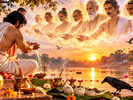
What could make a celestial being lose his heavenly existence and take birth as a human? The answer lies in the story of Prabhasa, one of the eight Vasus, Sage Vashishtha and his extraordinary cow Nandini. A desire to please his wife led Prabhasa into an act that the Vasus should never have committed. Vashishtha discovered the theft and pronounced a curse. But this was only the beginning. The curse eventually became connected to the birth of Bhishma, one of the greatest warriors of the Mahabharata.

Bhishma is remembered as one of the most powerful and respected
Image credit : ChatGPT(ai)
Bhishma is remembered as one of the most powerful and respected figures of the Mahabharata. But according to the epic’s tradition, his story did not begin with his birth as Devavrata. Before becoming the son of King Shantanu and Goddess Ganga, he was one of the eight Vasus, known as Prabhasa. A single mistake involving Sage Vashishtha’s divine cow Nandini changed his destiny forever. What makes the story even more striking is that the curse did not affect all the Vasus in the same way. For Prabhasa, it meant a much longer human life and a destiny that would eventually make him Bhishma.
![Prabhasa Among the Eight Vasus]()
The Mahabharata describes eight Vasus: Dhara, Dhruva, Soma, Aha, Anila, Anala, Pratyusha and Prabhasa. Prabhasa was the eighth Vasu, and his story later became connected with the birth of Bhishma. The Vasus were celestial beings, so their existence was very different from that of ordinary humans. Yet one incident brought them directly into the consequences of human life. The turning point came when the Vasus visited the hermitage of Sage Vashishtha and encountered Nandini, the extraordinary cow associated with the sage.
![Sage Vashishtha and Nandini]()
According to the traditional account, Prabhasa’s wife became fascinated by Nandini, the cow belonging to Sage Vashishtha. She wanted the extraordinary cow and urged Prabhasa to obtain her. The desire eventually became stronger than the Vasus’ better judgment. The Mahabharata describes the Vasus taking Nandini, despite knowing that she belonged to Vashishtha. This is the crucial mistake in the story. What began as a desire to fulfil a personal wish soon became an act of taking something that did not belong to them, bringing the wrath of one of the great sages upon them.
When Sage Vashishtha discovered that Nandini had disappeared, the truth did not remain hidden for long. In the Mahabharata tradition, Vashishtha used his spiritual insight to identify the Vasus responsible for the act. He was angered that celestial visitors had taken something belonging to him after receiving the respect traditionally offered to guests. The incident was not treated as an ordinary disagreement. Vashishtha pronounced a curse on the Vasus, declaring that they would have to take birth among human beings. Their heavenly existence was about to end because of one serious mistake.
The Vasus did not want to remain trapped in human existence. They approached Ganga and asked her to become their mother so they could quickly return to the celestial realm. Ganga agreed. The traditional Mahabharata account says the Vasus arranged for their human births to be ended soon after birth, allowing them to escape the curse quickly. But one Vasu had a different fate. The eighth child would remain alive. This distinction became crucial because that surviving child would grow into the man remembered as Bhishma.
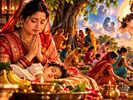
The eighth child was born to King Shantanu and Ganga. When Ganga attempted to carry out the arrangement made with the Vasus, Shantanu finally stopped her after the birth of the eighth child. Ganga then revealed that she was fulfilling the agreement made with the cursed Vasus. The surviving child was left to live as a human and became Devavrata, later known as Bhishma. Thus, the story connects Prabhasa’s curse with the extraordinary human life of Bhishma, whose vows and sacrifices became central to the Mahabharata.
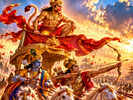
The most fascinating part of the Bhishma previous birth story is that the curse did not simply end with his birth. Devavrata went on to make the terrible vow that earned him the name Bhishma. He gave up his claim to the throne and vowed lifelong celibacy so that his father could marry Satyavati. His extraordinary sacrifice shaped the future of the Kuru dynasty. The celestial being who once became involved in the theft of Nandini now lived as a man remembered for duty, sacrifice and an unbreakable promise.
The story of Prabhasa and Nandini carries a powerful lesson beyond the supernatural elements. A single decision made to satisfy a personal desire changed the destiny of an entire celestial group. Prabhasa eventually became Bhishma, but his human life was filled with difficult choices, sacrifice and duty. The Mahabharata presents his journey as part of a much larger chain of events shaped by actions and consequences. His story reminds readers that even a small decision can create consequences far beyond what we imagine. And sometimes, what begins as a curse can become part of a much greater destiny.
Unlock insightful tips and inspiration on personal growth, productivity, and well-being. Stay motivated and updated with the latest at My Life XP.
Prabhasa Was One of the Eight Vasus
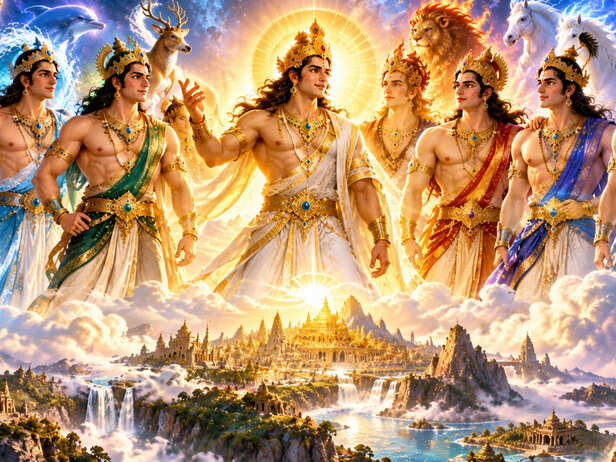
Prabhasa Among the Eight Vasus
Image credit : ChatGPT(ai)
The Mahabharata describes eight Vasus: Dhara, Dhruva, Soma, Aha, Anila, Anala, Pratyusha and Prabhasa. Prabhasa was the eighth Vasu, and his story later became connected with the birth of Bhishma. The Vasus were celestial beings, so their existence was very different from that of ordinary humans. Yet one incident brought them directly into the consequences of human life. The turning point came when the Vasus visited the hermitage of Sage Vashishtha and encountered Nandini, the extraordinary cow associated with the sage.
Nandini Became the Reason for the Mistake
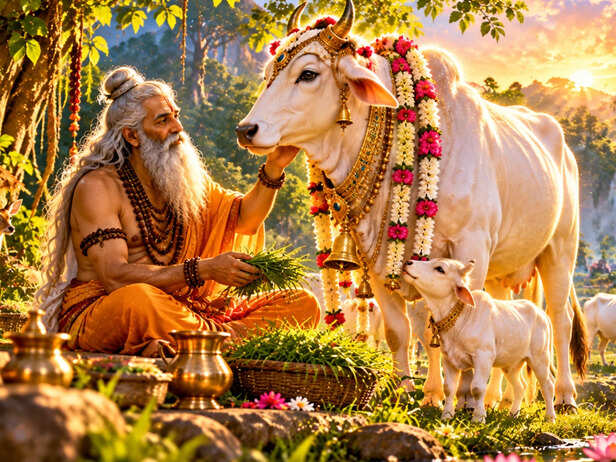
Sage Vashishtha and Nandini
Image credit : ChatGPT (ai)
According to the traditional account, Prabhasa’s wife became fascinated by Nandini, the cow belonging to Sage Vashishtha. She wanted the extraordinary cow and urged Prabhasa to obtain her. The desire eventually became stronger than the Vasus’ better judgment. The Mahabharata describes the Vasus taking Nandini, despite knowing that she belonged to Vashishtha. This is the crucial mistake in the story. What began as a desire to fulfil a personal wish soon became an act of taking something that did not belong to them, bringing the wrath of one of the great sages upon them.
Vashishtha Discovered the Theft
The Curse Changed Their Destiny
Why Prabhasa Became Bhishma
Bhishma’s Human Life Was the Real Test
The Hidden Lesson Behind Prabhasa’s Curse
Unlock insightful tips and inspiration on personal growth, productivity, and well-being. Stay motivated and updated with the latest at My Life XP.