5 Times Krishna Used Strategy Instead of Morality
Noopur Kumari | Wed, 29 Apr 2026
Why did Lord Krishna sometimes step beyond traditional morality during the Mahabharata? Were those choices wrong or carefully designed strategies to achieve a larger purpose? These moments challenge how we define right and wrong in complex situations. In real life too, strict rules don’t always solve every problem. Sometimes, timing, awareness, and smart decisions matter more. The deeper question is can strategy be more important than morality in certain moments? And what practical lessons can we take from this when facing difficult choices today?

5 Times Krishna Proved Strategy
Image credit : ChatGPT(ai)
What if doing the “right thing” wasn’t always the wisest choice? In the chaos of the Mahabharata, Lord Krishna faced moments where simple morality fell short. War didn’t follow clean rules, and truth alone couldn’t secure victory. So Krishna chose something different strategy shaped by timing, intent, and consequence. These decisions still feel uncomfortable, even today. Were they wrong, or were they necessary to restore balance? Maybe the real lesson isn’t about choosing right or wrong, but understanding when wisdom must go beyond rules to protect a greater purpose.
![Bhishma on the Battlefield]()
Bhishma was nearly invincible. No warrior could defeat him directly. Krishna advised using Shikhandi as a shield, knowing Bhishma would not fight back due to his personal vow. This wasn’t a fair fight it was a strategic move. It showed that when facing an unbeatable force, direct morality may fail. Sometimes, understanding the opponent matters more than strength. It wasn’t about breaking rules it was about ending a war that couldn’t be won otherwise.
![Drona’s Final Moment]()
To defeat Dronacharya, Krishna suggested a half-truth“Ashwatthama is dead.” While technically true (an elephant named Ashwatthama was killed), it misled Drona emotionally. This moment is uncomfortable. It challenges the idea of honesty. But Krishna knew Drona’s strength came from his focus. Breaking that focus was the only way. It shows that truth, when used strategically, can change outcomes but also raises deep moral questions.
When Karna struggled to lift his chariot wheel, he was vulnerable. According to war rules, attacking then was unfair. But Krishna urged Arjuna to strike. Why? Because Karna had earlier supported unfair acts himself. Krishna saw this not as injustice, but as balance. This moment shows that strict morality can sometimes ignore larger consequences. Strategy here meant ending a cycle of harm, even if the method felt uncomfortable.
Jayadratha could only be killed before sunset. As time ran out, Krishna created an illusion of sunset. Believing he was safe, Jayadratha stepped out and was defeated. This was pure strategy. No direct force, just timing and perception. It shows how controlling the moment can be more powerful than strength. In real life too, timing often decides success more than effort alone.
In the final battle, Duryodhana could not be defeated easily. His body was nearly indestructible except for one spot. Krishna signaled Bhima to strike there, even though it broke traditional rules. This ended the war. It shows that knowing the right point of action matters more than following every rule blindly. Strategy here wasn’t about cheating it was about finishing what had to be done.
Unlock insightful tips and inspiration on personal growth, productivity, and well-being. Stay motivated and updated with the latest at My Life XP.
1. Why did Lord Krishna use strategy instead of pure morality?
Because the situations in the Mahabharata were complex. Simple right-or-wrong choices were not enough to restore balance and end injustice.
2. Were Krishna’s actions wrong?
They may seem morally questionable on the surface, but they were aimed at achieving a larger purpose—ending adharma (injustice).
3. What is the main lesson from these events?
That wisdom is not just about following rules, but understanding when flexibility is needed in difficult situations.
4. Does this mean rules don’t matter?
No, rules matter—but blindly following them without understanding context can sometimes lead to failure.
5. Can strategy be more important than morality?
In certain situations, especially complex ones, strategy helps achieve outcomes that rigid morality alone cannot.
Bhishma’s Fall Was Not Simple
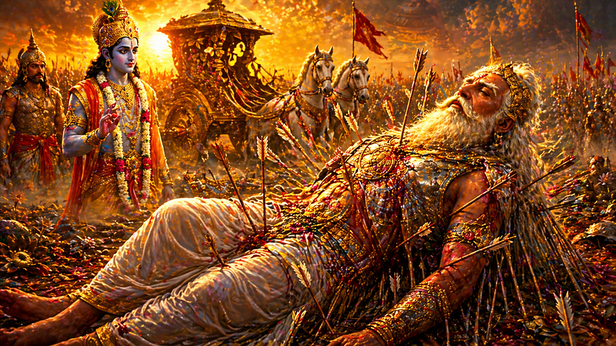
Bhishma on the Battlefield
Image credit : ChatGPT(ai)
Bhishma was nearly invincible. No warrior could defeat him directly. Krishna advised using Shikhandi as a shield, knowing Bhishma would not fight back due to his personal vow. This wasn’t a fair fight it was a strategic move. It showed that when facing an unbeatable force, direct morality may fail. Sometimes, understanding the opponent matters more than strength. It wasn’t about breaking rules it was about ending a war that couldn’t be won otherwise.
Drona and the Half Truth

Drona’s Final Moment
Image credit : ChatGPT(ai)
To defeat Dronacharya, Krishna suggested a half-truth“Ashwatthama is dead.” While technically true (an elephant named Ashwatthama was killed), it misled Drona emotionally. This moment is uncomfortable. It challenges the idea of honesty. But Krishna knew Drona’s strength came from his focus. Breaking that focus was the only way. It shows that truth, when used strategically, can change outcomes but also raises deep moral questions.
Karna’s Vulnerable Moment
The Sunset Illusion for Jayadratha
Gada Yudh and Duryodhana’s Weakness
Unlock insightful tips and inspiration on personal growth, productivity, and well-being. Stay motivated and updated with the latest at My Life XP.
Frequently Asked Questions (FAQs)
Because the situations in the Mahabharata were complex. Simple right-or-wrong choices were not enough to restore balance and end injustice.
2. Were Krishna’s actions wrong?
They may seem morally questionable on the surface, but they were aimed at achieving a larger purpose—ending adharma (injustice).
3. What is the main lesson from these events?
That wisdom is not just about following rules, but understanding when flexibility is needed in difficult situations.
4. Does this mean rules don’t matter?
No, rules matter—but blindly following them without understanding context can sometimes lead to failure.
5. Can strategy be more important than morality?
In certain situations, especially complex ones, strategy helps achieve outcomes that rigid morality alone cannot.