How Krishna Confronted Drona’s Blind Love for Ashwatthama
Noopur Kumari | Thu, 12 Mar 2026
Many know Drona as a powerful warrior and a strict teacher. Few realize that Krishna’s wisdom exposed Drona’s Moh (delusion/attachment) how personal love and blind loyalty can cloud judgment and make even a righteous man support the unrighteous. Through the simple act of addressing attachment rather than debating morality, Krishna led Drona to a profound realization: true Dharma requires letting go of personal obsession. The story shows that wisdom often comes subtly, through insight, not confrontation.

Lesson Krishna Taught Drona
Image credit : ChatGPT (AI)
In the epic Mahabharata, some of the most profound lessons come not from war, but from the quiet moments of realization. One such moment involves Guru Dronacharya, the revered teacher of the Pandavas and Kauravas. When Drona hears false news of his son Ashwatthama’s death, he lays down his weapons, ready to embrace death in Yoga. It wasn’t Krishna’s questioning that changed Drona it was the masterful revelation of his own attachment and error. This story is not just history; it’s a lesson in duty, love, and the perils of blind attachment.
![Dronacharya’s Moh Revealed]()
Dronacharya’s attachment to his son clouded his judgment on the battlefield. Krishna revealed that this intense love was not true devotion it was Moh, a delusion that caused Drona to fight for the Kauravas, even when it meant supporting adharma. By highlighting this attachment, Krishna guided Drona to recognize that his personal desires were interfering with duty. Letting go of this emotional blind spot became the first step toward spiritual and moral clarity.
![The Conflict of Dharma]()
Dronacharya, a Brahmana and revered teacher, was bound by Dharma to uphold righteousness and guide his disciples justly. Yet his intense love and attachment to his son Ashwatthama clouded his judgment, compelling him to protect the Kauravas even when their actions were clearly adharma. Krishna, with subtle wisdom, guided Drona to see the conflict between his personal duty to his son and his moral duty to uphold Dharma. This pivotal moment highlights a profound truth: even the strongest, wisest, and most disciplined individuals can falter when personal attachments overpower ethical judgment, showing the delicate balance between love and righteousness.
In many depictions of the Mahabharata, Dronacharya ties his hair with a thread, symbolizing his deep attachment to his son, Ashwatthama. This thread represents his Moh, or emotional delusion, which clouds his judgment and causes him to support unrighteous actions. When Krishna helps Drona realize the consequences of his attachment, he unties the thread a powerful symbolic act of letting go. This gesture signifies the end of personal obsession and the release from emotional blindness. It teaches that true clarity, wisdom, and alignment with Dharma can only be achieved when one overcomes attachment and acts with insight rather than desire.
![Krishna’s Wisdom]()
Krishna never directly scolded or confronted Dronacharya, understanding that harsh criticism would not lead to true realization. Instead, he guided Drona to perceive the truth on his own, revealing how his attachment to his son Ashwatthama was clouding his judgment and leading him toward unrighteous actions. By allowing Drona to arrive at this insight himself, Krishna demonstrated the power of subtle guidance over forceful instruction. This approach offers a timeless leadership lesson: true wisdom and lasting understanding are often cultivated through gentle insight, reflection, and self-realization rather than through direct orders, criticism, or coercion.
Dronacharya’s story shows how even the most honorable and wise individuals can have their judgment clouded by blind attachment. His intense love for his son Ashwatthama led him to support actions that were against Dharma, highlighting how personal desires can override moral duty. Krishna’s intervention was subtle yet profound, guiding Drona to recognize his own biases and the consequences of his attachment. By letting go of this obsession, Drona gained clarity and understanding. The Mahabharata teaches that true power and wisdom do not come from strength, skill, or status alone, but from detachment, insight, and the ability to act in alignment with righteousness.
Unlock insightful tips and inspiration on personal growth, productivity, and well-being. Stay motivated and updated with the latest at My Life XP.
1. Why did Dronacharya lay down his weapons?
Drona laid down his weapons upon hearing false news of his son Ashwatthama’s death, intending to embrace death through Yoga.
2. What did Krishna teach Dronacharya?
Krishna revealed Drona’s blind attachment (Moh) to his son, helping him realize how personal obsession was clouding his judgment and guiding him away from Dharma.
3. What is the symbolism of Drona’s hair thread?
The thread tied in Drona’s hair represents his attachment to Ashwatthama. Untying it symbolizes letting go of obsession and embracing clarity and Dharma.
4. Is this story only symbolic or historical?
While the Mahabharata is an epic, this story conveys moral and spiritual lessons about attachment, duty, and insight, transcending literal history.
5. What is the key lesson from Dronacharya’s realization?
The story teaches that true wisdom comes from detachment, recognizing personal biases, and aligning actions with Dharma rather than desire
The Realization of Attachment
Dronacharya’s Moh Revealed
Image credit : CHATGPT(AI)
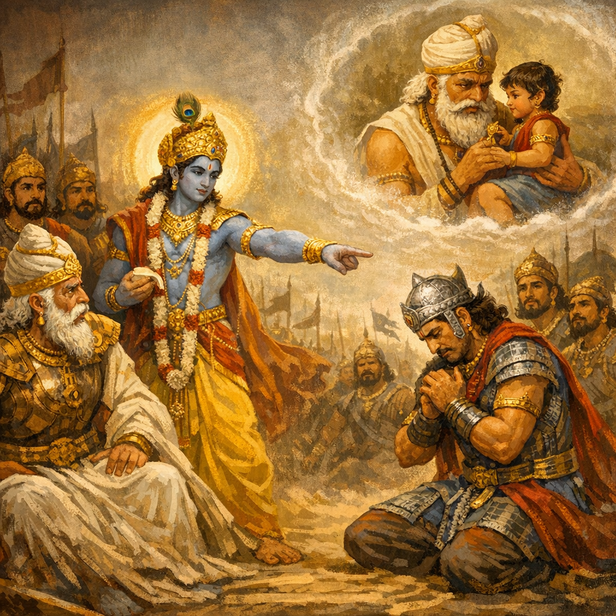
Dronacharya’s attachment to his son clouded his judgment on the battlefield. Krishna revealed that this intense love was not true devotion it was Moh, a delusion that caused Drona to fight for the Kauravas, even when it meant supporting adharma. By highlighting this attachment, Krishna guided Drona to recognize that his personal desires were interfering with duty. Letting go of this emotional blind spot became the first step toward spiritual and moral clarity.
Duty vs. Righteousness
The Conflict of Dharma
Image credit : CHATGPT(AI)
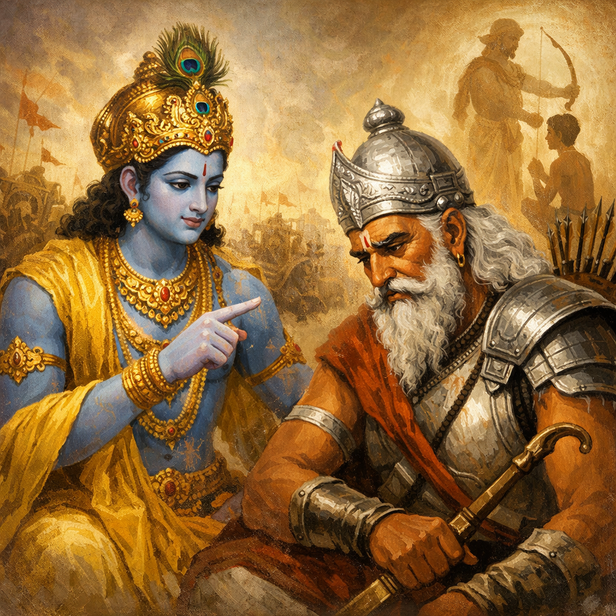
Dronacharya, a Brahmana and revered teacher, was bound by Dharma to uphold righteousness and guide his disciples justly. Yet his intense love and attachment to his son Ashwatthama clouded his judgment, compelling him to protect the Kauravas even when their actions were clearly adharma. Krishna, with subtle wisdom, guided Drona to see the conflict between his personal duty to his son and his moral duty to uphold Dharma. This pivotal moment highlights a profound truth: even the strongest, wisest, and most disciplined individuals can falter when personal attachments overpower ethical judgment, showing the delicate balance between love and righteousness.
The Thread Symbolism
Krishna’s Subtle Teaching Method
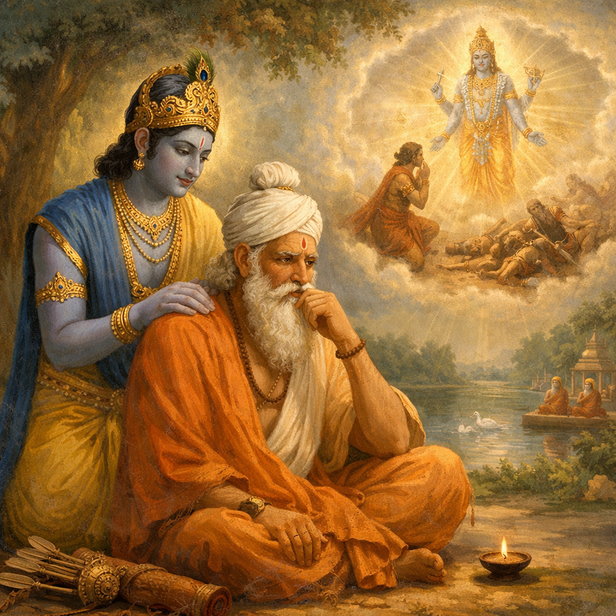
Krishna’s Wisdom
Image credit : CHATGPT(AI)
Krishna never directly scolded or confronted Dronacharya, understanding that harsh criticism would not lead to true realization. Instead, he guided Drona to perceive the truth on his own, revealing how his attachment to his son Ashwatthama was clouding his judgment and leading him toward unrighteous actions. By allowing Drona to arrive at this insight himself, Krishna demonstrated the power of subtle guidance over forceful instruction. This approach offers a timeless leadership lesson: true wisdom and lasting understanding are often cultivated through gentle insight, reflection, and self-realization rather than through direct orders, criticism, or coercion.
The Final Lesson
Unlock insightful tips and inspiration on personal growth, productivity, and well-being. Stay motivated and updated with the latest at My Life XP.
Frequently Asked Questions (FAQs)
Drona laid down his weapons upon hearing false news of his son Ashwatthama’s death, intending to embrace death through Yoga.
2. What did Krishna teach Dronacharya?
Krishna revealed Drona’s blind attachment (Moh) to his son, helping him realize how personal obsession was clouding his judgment and guiding him away from Dharma.
3. What is the symbolism of Drona’s hair thread?
The thread tied in Drona’s hair represents his attachment to Ashwatthama. Untying it symbolizes letting go of obsession and embracing clarity and Dharma.
4. Is this story only symbolic or historical?
While the Mahabharata is an epic, this story conveys moral and spiritual lessons about attachment, duty, and insight, transcending literal history.
5. What is the key lesson from Dronacharya’s realization?
The story teaches that true wisdom comes from detachment, recognizing personal biases, and aligning actions with Dharma rather than desire