How Rabindranath Tagore Secretly Changed Bengali Literature
Noopur Kumari | Sat, 09 May 2026
Brajabuli was a unique literary language inspired heavily by Maithili but developed and popularized in Bengal through devotional poetry and Krishna bhakti traditions. The connection began when Bengali scholars traveled to Mithila for Sanskrit learning and became deeply influenced by Maithili poet Vidyapati. Over time, Bengali writers started creating poetry in a Maithili-inspired style mixed with Bengali linguistic patterns. The language later became closely associated with Chaitanya Mahaprabhu’s devotional movement and even attracted Rabindranath Tagore, who secretly wrote Brajabuli poetry under the pseudonym “Bhanusingha.” Brajabuli became more than a language. It became a cultural bridge between Mithila and Bengal.

Maithili and Bengali Had a Child
Image credit : ChatGPT (AI)
What if two beautiful Indian languages slowly merged through poetry, devotion, and culture? One was born in the spiritual land of Mithila. The other grew in the artistic heart of Bengal. Over centuries, their words, emotions, and musical traditions blended so deeply that an entirely new literary language emerged Brajabuli At first, many believed it was just another regional dialect. But the real twist shocked literary circles later. One of India’s greatest poets, Rabindranath Tagore, secretly wrote in Brajabuli using the fake name Bhanusimha. Inspired by the legendary poet Vidyapati, Brajabuli became a bridge between devotion, romance, and classical Indian literature a forgotten cultural love story many people still do not know today.
![Ancient Cultural Exchange Between Mithila and Bengal]()
Long before modern borders and linguistic divisions became strong, Mithila and Bengal shared deep intellectual and spiritual exchanges. During periods when Bengal was undergoing political and social transformation, many Bengali Sanskrit scholars traveled to Mithila for advanced education and recognition. There they encountered the emotionally rich devotional poetry of Vidyapati, one of Maithili literature’s greatest poets. His Krishna bhakti compositions deeply moved Bengali literary minds. The beauty of Maithili’s emotional rhythm and devotional style slowly entered Bengali literary culture. What started as admiration eventually evolved into experimentation, inspiration, and the birth of something entirely new and culturally extraordinary.
![Poet Vidyapati Writing Devotional Poetry]()
Vidyapati’s influence on Bengal became far deeper than most people realize today. His Maithili poems carried emotional intimacy, devotion, longing, and lyrical beauty that perfectly matched the growing Krishna bhakti movement in Bengal. Bengali poets became so inspired that many attempted writing in Maithili style themselves. But since Maithili was not their native language, their versions naturally blended local Bengali vocabulary and pronunciation patterns. This mixture slowly created a literary form that sounded familiar yet distinct. Over time, this evolving hybrid style became known as Brajabuli a poetic language emotionally rooted in Maithili but culturally nurtured within Bengal’s devotional traditions.
![Krishna Bhakti Poetry Gathering]()
The rise of Chaitanya Mahaprabhu’s Krishna bhakti movement gave Brajabuli even greater cultural importance. Devotional poets and followers began using the language to write songs and lyrical poetry dedicated to Radha and Krishna. Brajabuli carried emotional softness that perfectly suited themes of divine love, longing, separation, and devotion. The language itself felt musical and spiritually expressive. Many listeners believed it carried the emotional sweetness of Maithili along with the familiarity of Bengali expression. Over time, Brajabuli became more than literary experimentation. It became a sacred emotional language associated deeply with bhakti, music, and spiritual storytelling across Bengal’s devotional communities.
One of the most fascinating twists in Brajabuli’s history arrived in 1895. A poet named Bhanusingha suddenly gained attention for extraordinary Brajabuli compositions. Literary communities were shocked by the emotional depth and authenticity of the work. Later, people discovered that “Bhanusingha” was actually Rabindranath Tagore writing under a fake name. Even Tagore became fascinated by Brajabuli’s poetic beauty and Vidyapati-inspired emotional style. His writings revived curiosity around the language again. Through words like “mohe,” “tohe,” and devotional imagery rooted in Mithila traditions, Tagore helped preserve a literary bridge that many people had already begun forgetting slowly over time.
Brajabuli represents something rare in literary history a language created not through political force, but through admiration, devotion, and artistic love. It showed how cultures naturally influence each other when scholars, poets, and spiritual movements connect emotionally. Rather than replacing Maithili or Bengali, Brajabuli celebrated both together. It became proof that language can evolve beautifully through cultural friendship instead of conflict. Today, many people know little about Brajabuli despite its extraordinary literary importance. Yet its story quietly reminds India that some of the most beautiful cultural creations are born not from division, but from centuries of shared inspiration and emotional exchange.
Unlock insightful tips and inspiration on personal growth, productivity, and well-being. Stay motivated and updated with the latest at My Life XP.
What is Brajabuli language?
Brajabuli is a literary language created through the blend of Maithili poetry and Bengali expression. It was mainly used for devotional and Krishna-bhakti literature.
Is Brajabuli a real spoken language?
No. Brajabuli was mostly a literary and poetic language, not a commonly spoken everyday language. It was specially used in songs, poetry, and devotional writings.
How was Brajabuli created?
Brajabuli evolved when Bengali poets became deeply inspired by Maithili literature, especially the works of Vidyapati. Over time, Bengali writers adapted Maithili-style vocabulary and expressions into their own literary tradition.
Why is Brajabuli connected to Krishna devotion?
Many Vaishnav poets and followers of Chaitanya Mahaprabhu used Brajabuli to write emotional poems and songs about Radha and Krishna devotion.
Did Rabindranath Tagore really write in Brajabuli?
Yes. Rabindranath Tagore secretly wrote Brajabuli poetry under the pen name “Bhanusimha,” surprising the literary community later.
Mithila and Bengal Shared More Than Geography
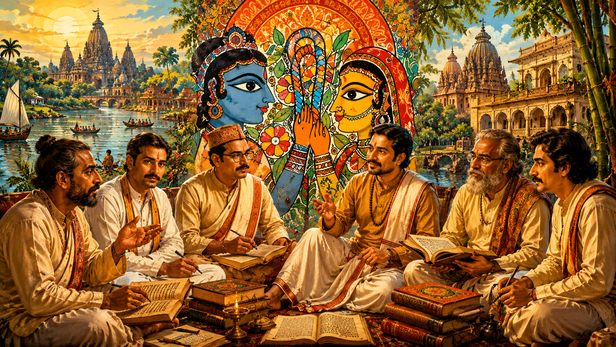
Ancient Cultural Exchange Between Mithila and Bengal
Image credit : ChatGPT (AI)
Long before modern borders and linguistic divisions became strong, Mithila and Bengal shared deep intellectual and spiritual exchanges. During periods when Bengal was undergoing political and social transformation, many Bengali Sanskrit scholars traveled to Mithila for advanced education and recognition. There they encountered the emotionally rich devotional poetry of Vidyapati, one of Maithili literature’s greatest poets. His Krishna bhakti compositions deeply moved Bengali literary minds. The beauty of Maithili’s emotional rhythm and devotional style slowly entered Bengali literary culture. What started as admiration eventually evolved into experimentation, inspiration, and the birth of something entirely new and culturally extraordinary.
Vidyapati Quietly Changed Bengali Literature
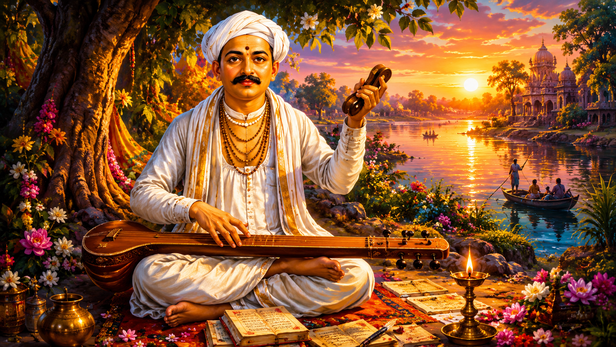
Poet Vidyapati Writing Devotional Poetry
Image credit : ChatGPT
Vidyapati’s influence on Bengal became far deeper than most people realize today. His Maithili poems carried emotional intimacy, devotion, longing, and lyrical beauty that perfectly matched the growing Krishna bhakti movement in Bengal. Bengali poets became so inspired that many attempted writing in Maithili style themselves. But since Maithili was not their native language, their versions naturally blended local Bengali vocabulary and pronunciation patterns. This mixture slowly created a literary form that sounded familiar yet distinct. Over time, this evolving hybrid style became known as Brajabuli a poetic language emotionally rooted in Maithili but culturally nurtured within Bengal’s devotional traditions.
Brajabuli Became the Language of Devotion
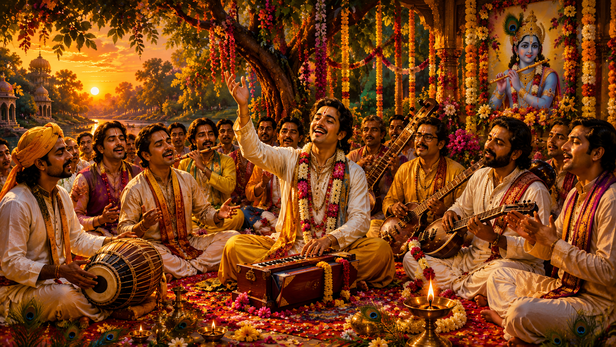
Krishna Bhakti Poetry Gathering
Image credit : ChatGPT(AI)
The rise of Chaitanya Mahaprabhu’s Krishna bhakti movement gave Brajabuli even greater cultural importance. Devotional poets and followers began using the language to write songs and lyrical poetry dedicated to Radha and Krishna. Brajabuli carried emotional softness that perfectly suited themes of divine love, longing, separation, and devotion. The language itself felt musical and spiritually expressive. Many listeners believed it carried the emotional sweetness of Maithili along with the familiarity of Bengali expression. Over time, Brajabuli became more than literary experimentation. It became a sacred emotional language associated deeply with bhakti, music, and spiritual storytelling across Bengal’s devotional communities.
Tagore Secretly Revived the Forgotten Language
Brajabuli Was More Than Just a Language
Unlock insightful tips and inspiration on personal growth, productivity, and well-being. Stay motivated and updated with the latest at My Life XP.
Frequently Asked Questions (FAQs)
Brajabuli is a literary language created through the blend of Maithili poetry and Bengali expression. It was mainly used for devotional and Krishna-bhakti literature.
Is Brajabuli a real spoken language?
No. Brajabuli was mostly a literary and poetic language, not a commonly spoken everyday language. It was specially used in songs, poetry, and devotional writings.
How was Brajabuli created?
Brajabuli evolved when Bengali poets became deeply inspired by Maithili literature, especially the works of Vidyapati. Over time, Bengali writers adapted Maithili-style vocabulary and expressions into their own literary tradition.
Why is Brajabuli connected to Krishna devotion?
Many Vaishnav poets and followers of Chaitanya Mahaprabhu used Brajabuli to write emotional poems and songs about Radha and Krishna devotion.
Did Rabindranath Tagore really write in Brajabuli?
Yes. Rabindranath Tagore secretly wrote Brajabuli poetry under the pen name “Bhanusimha,” surprising the literary community later.