If There Were No Demons, Would God Still Take Avatars?
Noopur Kumari | Sun, 15 Mar 2026
Across ancient Hindu scriptures, divine incarnations appear during moments of deep crisis when chaos spreads, righteousness weakens, and humanity begins to lose its path. From Lord Rama defeating Ravana to Lord Krishna confronting Kansa, these stories often revolve around conflict. Yet Hindu philosophy reveals a deeper truth. Demons are not always the real reason for divine avatars. Sometimes they are only the trigger. The true purpose of an avatar is far greater to restore cosmic balance, protect Dharma, and guide humanity back toward righteousness and spiritual harmony.

Lord Vishnu
Image credit : ChatGPT(Ai)
Many people believe divine avatars appear only to destroy demons. Stories of Lord Vishnu taking different forms often focus on defeating powerful asuras. But what if demons never existed? Would God still descend to Earth? This question reveals a deeper truth hidden in Hindu philosophy. Avatars are not created only to fight evil. Their purpose is much larger to restore balance in the universe, guide humanity, and protect Dharma. Sometimes the real reason for a divine incarnation is far more mysterious, reminding humanity of truth, wisdom, and the path of righteousness when the world begins to lose its way.
![Vishnu Maintaining Cosmic Balance]()
Stories often show Lord Vishnu taking avatars to defeat demons. But scriptures like the Bhagavad Gita reveal a deeper truth. Lord Krishna explains that the divine appears whenever Dharma declines and chaos spreads. Demons are only one form of imbalance. Greed, injustice, arrogance, and moral decay can also disturb the cosmic order. Even without asuras, humanity can create darkness through its actions. Divine avatars appear not only to destroy evil but to restore harmony, remind people of truth, and guide society back toward righteousness and spiritual balance.
![Krishna Guiding Humanity]()
In many ancient stories, the greatest problems are not demons but humans themselves. During the Mahabharata, the central conflict was between families, not asuras. Yet Lord Krishna appeared to guide humanity toward truth and righteousness. This reveals a profound lesson. Evil does not always appear as a demon in mythology. Sometimes it hides within human emotions ego, jealousy, anger, and greed. When these forces grow strong, they disturb harmony in society. Divine avatars appear not only to fight visible enemies but also to awaken wisdom, restore Dharma, and remind humanity of its true path.
![Rama Confronting Ravana]()
Demons in Hindu stories often act as catalysts for divine action. Figures like Ravana and Hiranyakashipu symbolize extreme arrogance, power, and pride. Their actions create situations where divine intervention becomes necessary. Yet the deeper purpose of these stories is not simply their destruction. It is about protecting truth, devotion, and righteousness. When divine forces defeat such figures, it sends a powerful message that injustice and ego cannot last forever. In the end, Dharma always rises again, reminding humanity that righteousness ultimately prevails over arrogance and oppression.
The concept of Dashavatara shows that divine appearances occur across different ages to guide the world. Some avatars defeat powerful demons, while others appear to guide civilizations and restore wisdom. For example, Lord Rama upheld righteousness, while Lord Krishna taught spiritual wisdom through the Bhagavad Gita. These stories reveal a powerful truth: divine presence is not limited to battles against evil. It appears whenever humanity needs guidance, protection, balance, or transformation to move forward on the path of Dharma.
Unlock insightful tips and inspiration on personal growth, productivity, and well-being. Stay motivated and updated with the latest at My Life XP.
1. Why do gods take avatars in Hinduism?
In Hindu belief, divine incarnations appear to protect Dharma and restore balance in the universe. When injustice, chaos, or moral decline increases, the divine takes form to guide humanity and re-establish righteousness.
2. Are demons the only reason avatars appear?
No. While many stories involve defeating demons, avatars also appear to guide society, protect devotees, and teach spiritual wisdom. Scriptures show that restoring balance and guiding humanity are equally important purposes.
3. What is the concept of Dashavatara?
The Dashavatara refers to the ten major incarnations of Lord Vishnu, including forms like Lord Rama and Lord Krishna, who appeared in different ages to restore balance.
4. Would God still take avatars if demons did not exist?
According to Hindu philosophy, divine avatars may still appear. Their purpose is not only to destroy evil but also to guide humanity, restore harmony, and protect dharma when society loses its moral path.
5. What lesson do these stories teach?
They remind us that righteousness eventually triumphs over arrogance and injustice. The stories encourage people to live with truth, humility, and devotion while following the path of dharma.
Avatars Restore Balance, Not Just Destroy Evil
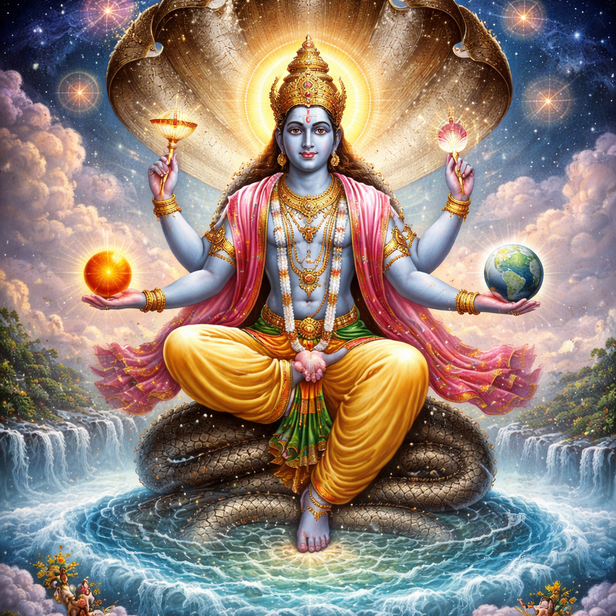
Vishnu Maintaining Cosmic Balance
Image credit : CHATGPT(AI)
Stories often show Lord Vishnu taking avatars to defeat demons. But scriptures like the Bhagavad Gita reveal a deeper truth. Lord Krishna explains that the divine appears whenever Dharma declines and chaos spreads. Demons are only one form of imbalance. Greed, injustice, arrogance, and moral decay can also disturb the cosmic order. Even without asuras, humanity can create darkness through its actions. Divine avatars appear not only to destroy evil but to restore harmony, remind people of truth, and guide society back toward righteousness and spiritual balance.
Sometimes Humans Create Greater Chaos Than Demons
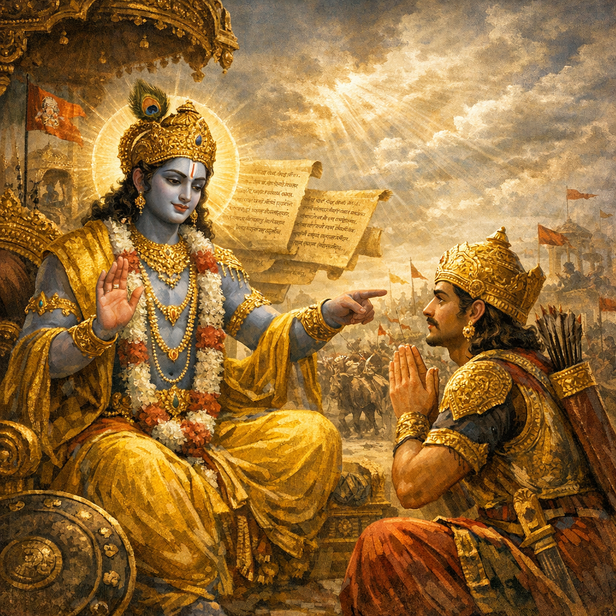
Krishna Guiding Humanity
Image credit : CHATGPT(AI)
In many ancient stories, the greatest problems are not demons but humans themselves. During the Mahabharata, the central conflict was between families, not asuras. Yet Lord Krishna appeared to guide humanity toward truth and righteousness. This reveals a profound lesson. Evil does not always appear as a demon in mythology. Sometimes it hides within human emotions ego, jealousy, anger, and greed. When these forces grow strong, they disturb harmony in society. Divine avatars appear not only to fight visible enemies but also to awaken wisdom, restore Dharma, and remind humanity of its true path.
The Hidden Role of Demons in Divine Stories
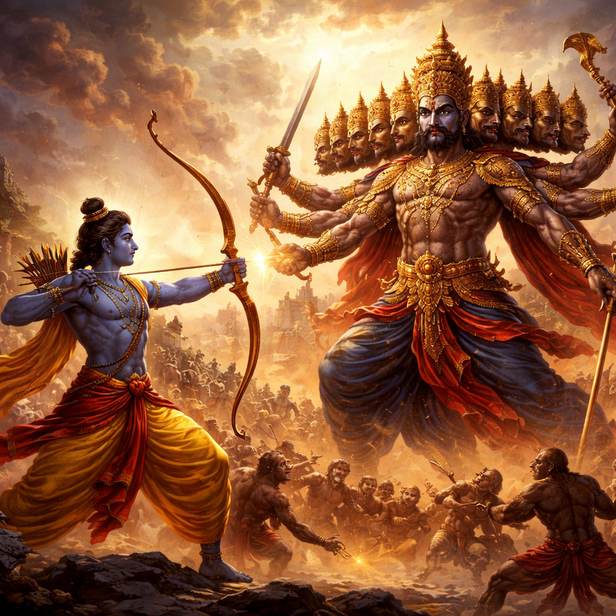
Rama Confronting Ravana
Image credit : CHATGPT(AI)
Demons in Hindu stories often act as catalysts for divine action. Figures like Ravana and Hiranyakashipu symbolize extreme arrogance, power, and pride. Their actions create situations where divine intervention becomes necessary. Yet the deeper purpose of these stories is not simply their destruction. It is about protecting truth, devotion, and righteousness. When divine forces defeat such figures, it sends a powerful message that injustice and ego cannot last forever. In the end, Dharma always rises again, reminding humanity that righteousness ultimately prevails over arrogance and oppression.
The Real Message Behind Divine Avatars
Unlock insightful tips and inspiration on personal growth, productivity, and well-being. Stay motivated and updated with the latest at My Life XP.
Frequently Asked Questions (FAQs)
In Hindu belief, divine incarnations appear to protect Dharma and restore balance in the universe. When injustice, chaos, or moral decline increases, the divine takes form to guide humanity and re-establish righteousness.
2. Are demons the only reason avatars appear?
No. While many stories involve defeating demons, avatars also appear to guide society, protect devotees, and teach spiritual wisdom. Scriptures show that restoring balance and guiding humanity are equally important purposes.
3. What is the concept of Dashavatara?
The Dashavatara refers to the ten major incarnations of Lord Vishnu, including forms like Lord Rama and Lord Krishna, who appeared in different ages to restore balance.
4. Would God still take avatars if demons did not exist?
According to Hindu philosophy, divine avatars may still appear. Their purpose is not only to destroy evil but also to guide humanity, restore harmony, and protect dharma when society loses its moral path.
5. What lesson do these stories teach?
They remind us that righteousness eventually triumphs over arrogance and injustice. The stories encourage people to live with truth, humility, and devotion while following the path of dharma.