The Real Reason Krishna Breaks Rules While Rama Follows Them
Deepak Rajeev | Fri, 01 May 2026
Why does Krishna bend rules while Rama follows them strictly? This article explores their roles as Vishnu’s avatars, revealing how changing yugas shaped their actions. It explains dharma as both discipline and adaptability, showing that their contrasting paths reflect deeper truths about life, morality, and divine purpose.

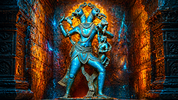
Lord Krishna & Lord Rama (Image Credit: AI)
There are moments in Hindu philosophy where two truths seem to stand side by side, equally powerful yet seemingly opposite, and nowhere is this contrast more striking than in the lives of Krishna and Rama. Both are revered as incarnations of Vishnu, both descend to restore balance, and both uphold dharma. Yet when you look closely, one follows rules with unwavering discipline, while the other bends them with precision. This is not contradiction. It is design. And the reason behind it goes much deeper than most people realise.
![Lord Rama, Sita Devi and Lakshmana (Image Credit: AI)]()
In the epic Ramayana, Rama is not just a king or a hero. He is often described as Maryada Purushottama, the ideal human being who lives within the boundaries of dharma at all times. His life is defined by discipline, sacrifice, and unwavering commitment to duty. Rama accepts exile without resistance, honors his father’s word even at great personal cost, and makes decisions that prioritise societal order over personal happiness. This is not accidental. His role was to demonstrate how a human being should live when dharma is clear and structured.
Rama does not bend rules because his purpose is to set them. He becomes a living example of righteousness, showing that even in suffering, adherence to truth and duty must remain intact.
![Lord Krishna During Mahabharata War (Image Credit: AI)]()
In contrast, Mahabharata presents Krishna as a strategist, a guide, and a force that operates beyond rigid definitions of right and wrong. He does not always follow conventional rules, but every action he takes is directed toward restoring balance. Krishna advises strategies in the Kurukshetra war that appear morally complex, even controversial. He encourages actions that may seem like rule-breaking, but these decisions are rooted in a deeper understanding of dharma as something dynamic rather than fixed.
His teachings in the Bhagavad Gita further reinforce this idea, suggesting that true righteousness is not always about following rules, but about understanding purpose and intention.
One of the most important reasons behind this contrast lies in the difference between the eras in which they appeared. Rama lived in the Treta Yuga, a time when moral structures were still relatively stable and society largely understood the principles of dharma. In such a world, the need was not for reinterpretation, but for perfect demonstration. Krishna, however, appeared in the Dwapara Yuga, when confusion, moral decline, and internal conflict had become widespread. In such a setting, rigid rule-following was no longer enough. Dharma needed to be interpreted, protected, and sometimes defended using unconventional means.
This shift explains why Krishna’s actions often appear flexible. He was not breaking dharma. He was adapting it to a world where clarity had already been lost.
Another way to understand this difference is through two key concepts in Hindu philosophy. Rama represents maryada, which means discipline, boundaries, and ideal conduct. His life teaches structure, responsibility, and the importance of living within defined principles. Krishna represents leela, which refers to divine play, spontaneity, and the deeper flow of existence. His life reveals that reality is not always rigid, and that wisdom sometimes requires fluidity and intuition. Both paths are valid. Both are necessary. Together, they show that dharma is not a single fixed rulebook, but a spectrum that includes both discipline and awareness.
The real reason Krishna appears to break rules while Rama follows them is not because one is more righteous than the other. It is because they are solving different problems. Rama shows how to live when the path is clear. Krishna shows how to act when the path is unclear. Rama teaches obedience to dharma. Krishna teaches understanding of dharma. Rama represents stability. Krishna represents adaptability. And perhaps most importantly, Rama gives humanity a model to follow, while Krishna gives humanity a wisdom to interpret.
When seen together, the lives of Krishna and Rama do not contradict each other. They complete each other. They reveal that righteousness is not one-dimensional, and that truth can take different forms depending on time, context, and necessity. In a world that often searches for simple answers, their stories offer something far more profound. Sometimes, the right path is to follow the rule without question. And sometimes, the right path is to understand why the rule exists in the first place. And in that balance between discipline and wisdom lies the deeper meaning of dharma itself.
Unlock insightful tips and inspiration on personal growth, productivity, and well-being. Stay motivated and updated with the latest at My Life XP.
Rama: The Embodiment of Perfect Dharma
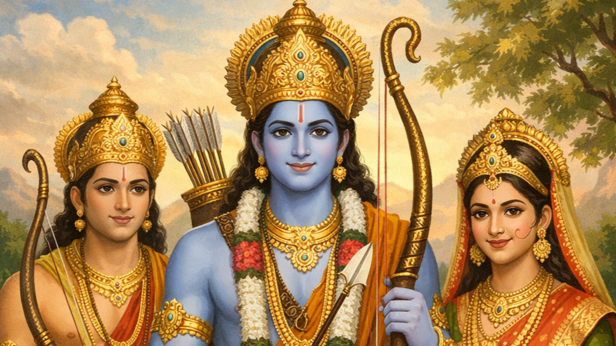
Lord Rama, Sita Devi and Lakshmana (Image Credit: AI)
In the epic Ramayana, Rama is not just a king or a hero. He is often described as Maryada Purushottama, the ideal human being who lives within the boundaries of dharma at all times. His life is defined by discipline, sacrifice, and unwavering commitment to duty. Rama accepts exile without resistance, honors his father’s word even at great personal cost, and makes decisions that prioritise societal order over personal happiness. This is not accidental. His role was to demonstrate how a human being should live when dharma is clear and structured.
Rama does not bend rules because his purpose is to set them. He becomes a living example of righteousness, showing that even in suffering, adherence to truth and duty must remain intact.
Krishna: The Master of Living Dharma
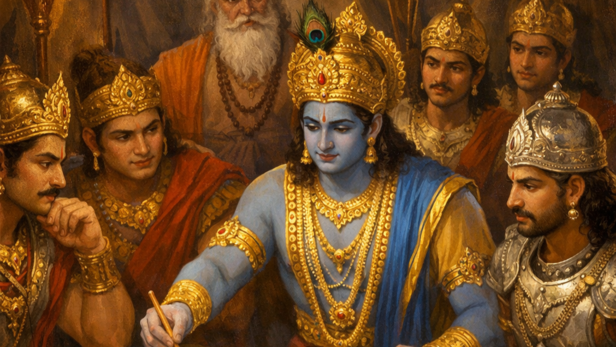
Lord Krishna During Mahabharata War (Image Credit: AI)
In contrast, Mahabharata presents Krishna as a strategist, a guide, and a force that operates beyond rigid definitions of right and wrong. He does not always follow conventional rules, but every action he takes is directed toward restoring balance. Krishna advises strategies in the Kurukshetra war that appear morally complex, even controversial. He encourages actions that may seem like rule-breaking, but these decisions are rooted in a deeper understanding of dharma as something dynamic rather than fixed.
His teachings in the Bhagavad Gita further reinforce this idea, suggesting that true righteousness is not always about following rules, but about understanding purpose and intention.
Different Ages, Different Needs of Dharma
One of the most important reasons behind this contrast lies in the difference between the eras in which they appeared. Rama lived in the Treta Yuga, a time when moral structures were still relatively stable and society largely understood the principles of dharma. In such a world, the need was not for reinterpretation, but for perfect demonstration. Krishna, however, appeared in the Dwapara Yuga, when confusion, moral decline, and internal conflict had become widespread. In such a setting, rigid rule-following was no longer enough. Dharma needed to be interpreted, protected, and sometimes defended using unconventional means.
This shift explains why Krishna’s actions often appear flexible. He was not breaking dharma. He was adapting it to a world where clarity had already been lost.
Maryada vs Leela: Two Paths, One Truth
Another way to understand this difference is through two key concepts in Hindu philosophy. Rama represents maryada, which means discipline, boundaries, and ideal conduct. His life teaches structure, responsibility, and the importance of living within defined principles. Krishna represents leela, which refers to divine play, spontaneity, and the deeper flow of existence. His life reveals that reality is not always rigid, and that wisdom sometimes requires fluidity and intuition. Both paths are valid. Both are necessary. Together, they show that dharma is not a single fixed rulebook, but a spectrum that includes both discipline and awareness.
The Truth Most People Miss
The real reason Krishna appears to break rules while Rama follows them is not because one is more righteous than the other. It is because they are solving different problems. Rama shows how to live when the path is clear. Krishna shows how to act when the path is unclear. Rama teaches obedience to dharma. Krishna teaches understanding of dharma. Rama represents stability. Krishna represents adaptability. And perhaps most importantly, Rama gives humanity a model to follow, while Krishna gives humanity a wisdom to interpret.
Conclusion: Not Opposites, But Completion
When seen together, the lives of Krishna and Rama do not contradict each other. They complete each other. They reveal that righteousness is not one-dimensional, and that truth can take different forms depending on time, context, and necessity. In a world that often searches for simple answers, their stories offer something far more profound. Sometimes, the right path is to follow the rule without question. And sometimes, the right path is to understand why the rule exists in the first place. And in that balance between discipline and wisdom lies the deeper meaning of dharma itself.
Unlock insightful tips and inspiration on personal growth, productivity, and well-being. Stay motivated and updated with the latest at My Life XP.