The Untold Story of Eklavya: Talent, Sacrifice, and Injustice
Deepak Rajeev | Tue, 07 Apr 2026
Eklavya, a talented archer who was denied training by Dronacharya due to his birth, taught himself through sheer dedication. Surpassing even royal students, he was asked for his thumb as guru dakshina, sacrificing his future. His story reveals not just devotion, but deep injustice- raising timeless questions about merit, inequality and the cost of greatness in society.

Eklavya’s Story: The Talent That Was Silenced by Injustice (Image Credit: AI)
There are heroes in the Mahabharata who win wars and then there are those who lose everything- and yet leave behind a far deeper mark. Eklavya belongs to the second kind. His story does not end with glory, victory or recognition. It ends with silence. And perhaps that is what makes it one of the most haunting stories ever told. Because it forces us to confront a question that still feels uncomfortable even today: What happens when talent is not enough?
![The Solitary Archer (Image Credit: AI)]() Eklavya was born not in a royal palace, but among the Nishadas- a forest-dwelling community often pushed to the margins of society. Yet from a very young age, he carried within him an extraordinary desire: to master archery, the most revered art of warriors.
Eklavya was born not in a royal palace, but among the Nishadas- a forest-dwelling community often pushed to the margins of society. Yet from a very young age, he carried within him an extraordinary desire: to master archery, the most revered art of warriors.
Like any determined student, he went to the greatest teacher of that time- Dronacharya. But before his talent could even be seen, it was dismissed. Drona refused to teach him, not because Eklavya lacked ability, but because of who he was. His birth, his identity, his place in society- these became the barriers that talent alone could not break. And in that moment, something silent and irreversible happened. A door closed- not just on a student, but on possibility itself.
![The Untold Story of Eklavya (Image Credit: AI)]() Most stories would end here. But for Eklavya’s this was not the end. Instead of giving up, he did something that feels almost impossible even today- he created his own path. Deep in the forest, away from recognition, he built a clay statue of Dronacharya and accepted it as his guru. Every day, in front of that silent figure, he practiced relentlessly, refining his skill through discipline and devotion. There were no instructions, no corrections, no applause. Only effort. And slowly, quietly, something extraordinary began to emerge. Eklavya became one of the greatest archers of his time- so skilled that even the finest students of Drona could not match him.
Most stories would end here. But for Eklavya’s this was not the end. Instead of giving up, he did something that feels almost impossible even today- he created his own path. Deep in the forest, away from recognition, he built a clay statue of Dronacharya and accepted it as his guru. Every day, in front of that silent figure, he practiced relentlessly, refining his skill through discipline and devotion. There were no instructions, no corrections, no applause. Only effort. And slowly, quietly, something extraordinary began to emerge. Eklavya became one of the greatest archers of his time- so skilled that even the finest students of Drona could not match him.
There is a moment often described in the epic: a barking dog silenced not by violence, but by precision- its mouth filled with arrows, placed so perfectly that not a single wound was inflicted. It was not just skill. It was mastery.
When Dronacharya and Arjuna discovered this unknown archer, the truth became impossible to ignore. Eklavya- an unrecognised student- had surpassed the very system that rejected him. But instead of celebration, what followed was something far more complex. Drona had once promised Arjuna that he would make him the greatest archer in the world. And now, standing before him, was a contradiction to that promise.
So Drona asked for something. It was not praise, recognition or price. He demanded Eklavya’s right thumb as guru dakshina- a teacher’s fee. And in that moment, the story shifts from inspiration to something far more unsettling.
Eklavya did not hesitate. There was no anger, protest or argument. With quiet devotion, he cut off his thumb and placed it at the feet of the man who had never truly taught him. In doing so, he destroyed his own future. Because for an archer, the thumb is not just a finger- it is everything.
That one act turned excellence into limitation, potential into memory. And yet, it is often described as loyalty. But was it only loyalty or something more complicated?
Eklavya’s story is often told as an example of devotion to one’s guru. But beneath that narrative lies a deeper discomfort that refuses to disappear. Why was he denied in the first place? Why was his talent seen as a threat instead of a triumph? Why was his sacrifice necessary for someone else’s greatness? Even today, scholars and readers continue to debate this moment- not because it lacks meaning, but because it contains too much of it. Some see it as a reflection of social hierarchy. Others see it as a teacher protecting his promise. And many see it simply as injustice. Perhaps the truth lies somewhere in between.
What Happened After the Sacrifice?
What makes Eklavya’s story even more haunting is what comes after- because the Mahabharata does not end with his sacrifice. In some traditions, Eklavya continues to live, to fight, to exist within the world that once denied him. But something has changed. The boy who once gave everything out of devotion becomes a figure shaped by the consequences of that moment. As one Mahabharata scholar suggests:
“the boy whose devotion was exploited… whose talent was feared”
This transformation is rarely discussed. But it matters. Because it reminds us that actions do not end when they are performed. They continue.
In many ways, Eklavya’s story feels more modern than ancient. It speaks of talent that goes unrecognised. Of systems that decide worth before effort is even seen. Of people who are forced to prove themselves twice as much- and still pay a price. But it also speaks of something else. Resilience. Because even after rejection, even without guidance, Eklavya became extraordinary. And that truth remains powerful.
Eklavya did not win a kingdom. He did not become the central hero of the Mahabharata. But his story has endured in a different way. Not as a tale of victory- but as a question. A question about fairness, merit and the cost of greatness. Because long after the battles of the Mahabharata ended, one image still remains- ayoung archer, standing in the forest, offering his own future in silence. And somewhere within that silence lies a truth that is difficult to ignore: Talent can rise on its own. But whether it is allowed to flourish… is a choice made by the world.
Unlock insightful tips and inspiration on personal growth, productivity, and well-being. Stay motivated and updated with the latest at My Life XP.
The Boy Who Was Never Meant to Learn
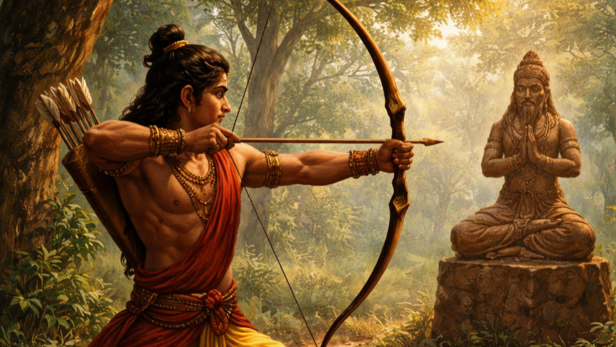
The Solitary Archer (Image Credit: AI)
Like any determined student, he went to the greatest teacher of that time- Dronacharya. But before his talent could even be seen, it was dismissed. Drona refused to teach him, not because Eklavya lacked ability, but because of who he was. His birth, his identity, his place in society- these became the barriers that talent alone could not break. And in that moment, something silent and irreversible happened. A door closed- not just on a student, but on possibility itself.
The Student Who Taught Himself
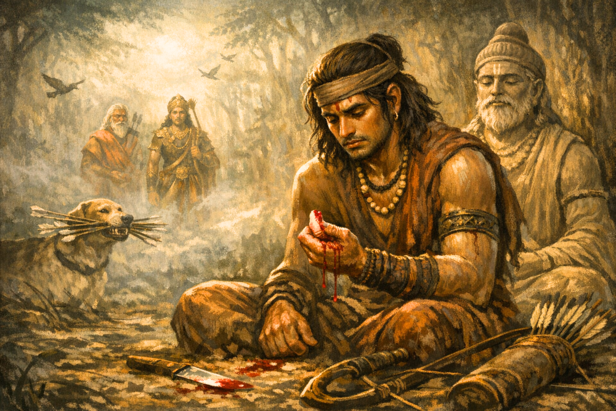
The Untold Story of Eklavya (Image Credit: AI)
There is a moment often described in the epic: a barking dog silenced not by violence, but by precision- its mouth filled with arrows, placed so perfectly that not a single wound was inflicted. It was not just skill. It was mastery.
The Moment That Changed Everything
When Dronacharya and Arjuna discovered this unknown archer, the truth became impossible to ignore. Eklavya- an unrecognised student- had surpassed the very system that rejected him. But instead of celebration, what followed was something far more complex. Drona had once promised Arjuna that he would make him the greatest archer in the world. And now, standing before him, was a contradiction to that promise.
So Drona asked for something. It was not praise, recognition or price. He demanded Eklavya’s right thumb as guru dakshina- a teacher’s fee. And in that moment, the story shifts from inspiration to something far more unsettling.
The Sacrifice That Still Hurts to Read
Eklavya did not hesitate. There was no anger, protest or argument. With quiet devotion, he cut off his thumb and placed it at the feet of the man who had never truly taught him. In doing so, he destroyed his own future. Because for an archer, the thumb is not just a finger- it is everything.
That one act turned excellence into limitation, potential into memory. And yet, it is often described as loyalty. But was it only loyalty or something more complicated?
The Injustice No One Fully Resolves
Eklavya’s story is often told as an example of devotion to one’s guru. But beneath that narrative lies a deeper discomfort that refuses to disappear. Why was he denied in the first place? Why was his talent seen as a threat instead of a triumph? Why was his sacrifice necessary for someone else’s greatness? Even today, scholars and readers continue to debate this moment- not because it lacks meaning, but because it contains too much of it. Some see it as a reflection of social hierarchy. Others see it as a teacher protecting his promise. And many see it simply as injustice. Perhaps the truth lies somewhere in between.
What Happened After the Sacrifice?
What makes Eklavya’s story even more haunting is what comes after- because the Mahabharata does not end with his sacrifice. In some traditions, Eklavya continues to live, to fight, to exist within the world that once denied him. But something has changed. The boy who once gave everything out of devotion becomes a figure shaped by the consequences of that moment. As one Mahabharata scholar suggests:
“the boy whose devotion was exploited… whose talent was feared”
This transformation is rarely discussed. But it matters. Because it reminds us that actions do not end when they are performed. They continue.
Why Eklavya’s Story Still Matters Today
In many ways, Eklavya’s story feels more modern than ancient. It speaks of talent that goes unrecognised. Of systems that decide worth before effort is even seen. Of people who are forced to prove themselves twice as much- and still pay a price. But it also speaks of something else. Resilience. Because even after rejection, even without guidance, Eklavya became extraordinary. And that truth remains powerful.
The Final Thought
Eklavya did not win a kingdom. He did not become the central hero of the Mahabharata. But his story has endured in a different way. Not as a tale of victory- but as a question. A question about fairness, merit and the cost of greatness. Because long after the battles of the Mahabharata ended, one image still remains- ayoung archer, standing in the forest, offering his own future in silence. And somewhere within that silence lies a truth that is difficult to ignore: Talent can rise on its own. But whether it is allowed to flourish… is a choice made by the world.
Unlock insightful tips and inspiration on personal growth, productivity, and well-being. Stay motivated and updated with the latest at My Life XP.