War Outside, Peace Inside: Krishna’s Timeless Karma Yoga Secret
Noopur Kumari | Fri, 27 Feb 2026
Can you stay calm when life feels like a battlefield? The timeless wisdom of the Bhagavad Gita says yes. Taught by Krishna to Arjuna in the middle of war, Karma Yoga shows us how to work, fight, love, and live without losing inner peace. It is not about running away to the Himalayas. It is about standing strong in daily life with a silent mind and a brave heart. In a world full of pressure, comparison, and emotional battles, Karma Yoga remains eternally relevant because it teaches us one powerful truth: act fully, attach lightly, and rest deeply within yourself.

Karma Yoga Is Forever
Image credit : ChatGPT(ai)
Life today feels like Kurukshetra. Deadlines, expectations, family tensions, competition, social pressure everywhere there is conflict. Yet thousands of years ago, on a battlefield, Krishna gave a teaching that still speaks to every human heart. The Bhagavad Gita was not spoken in a temple or forest. It was spoken amid chaos. That itself is the message. Conflict is natural in the world. Peace is natural within you. Karma Yoga is the bridge between the two. It teaches us how to act with responsibility while remaining centered in silence. It shows how to handle life’s toughest moments especially when the battle is with our own people, our own emotions, our own doubts. Now let us understand why this path is eternally relevant.
![Krishna Guiding Arjuna on the Battlefield]()
In the Gita, Arjuna breaks down before the war. He must fight his own relatives and teachers. His hands tremble. His mind is confused. Krishna does not tell him to escape. He teaches him how to stand steady inside. This lesson applies today when we face family conflicts, workplace stress, or moral dilemmas. Karma Yoga teaches emotional strength. It says, do your duty without fear and without hatred. True peace is not the absence of problems. It is the ability to remain calm while solving them.
![Lotus Rising Above Muddy Water]()
The core teaching of Karma Yoga is simple: act, but do not cling to results. When we work only for rewards, praise, or recognition, we become anxious and weak. But when we act with sincerity and dedication, something shifts inside. We feel lighter. Krishna tells Arjuna to focus on effort, not outcome. This wisdom is powerful in modern life where success is measured by marks, money, and likes. Karma Yoga reminds us that excellence comes from involvement, not obsession with results. Work becomes worship when ego disappears.
![A Teacher Guiding a Child with Care]()
A Karma Yogi is not someone who runs away from life. It is someone who takes total responsibility. A teacher who cares for a child’s growth beyond salary is practicing Karma Yoga. A parent raising children with patience is practicing Karma Yoga. Even a student studying sincerely without comparing with others is a Karma Yogi. Spirituality is not escape. It is involvement with awareness. When work is done with dedication and without selfish craving, it purifies the mind and strengthens character.
The hardest battles are not fought with strangers. They are fought with loved ones, expectations, and personal values. Arjuna’s pain was not about war. It was about attachment and confusion. Krishna teaches clarity. He shows how to balance compassion with courage. In modern life, we face similar dilemmas standing for truth in family matters, making tough career choices, or setting boundaries. Karma Yoga teaches us to act based on dharma, not emotional weakness. Inner clarity reduces regret and builds self-respect.
Yoga brings inner silence. Karma Yoga brings outer dynamism. Both together create balance. If we only seek comfort, we become lazy. If we only chase action, we burn out. Krishna’s message is balance. Be peaceful within, active outside. When tired of conflicts, rest in meditation. When bored of comfort, serve the world. This rhythm keeps life meaningful. The modern world struggles with stress and emptiness because this balance is missing. Karma Yoga restores it by uniting action with awareness.
Why is Karma Yoga forever relevant? Because the world will always have conflict. Families will disagree. Nations will struggle. Workplaces will compete. Emotions will fluctuate. But the Self remains peaceful. The Bhagavad Gita is not just a scripture for Hindus. It is a manual for humanity. It teaches how to live fully without being internally disturbed. Krishna’s message to Arjuna is a message to every one of us: do not run from life, and do not drown in it.
Stand in it. Act with total responsibility. Let go of craving and hatred. Be centered in peace and fight when necessary. This wisdom is timeless because human challenges are timeless. In classrooms, boardrooms, homes, and hearts Karma Yoga still works. When we practice it, we discover something powerful: The battlefield outside may remain. But inside, there is stillness. And from that stillness, right action naturally flows. That is why Karma Yoga is eternal.
Unlock insightful tips and inspiration on personal growth, productivity, and well-being. Stay motivated and updated with the latest at My Life XP.
1. What is Karma Yoga in simple words?
Karma Yoga is the path of selfless action taught in the Bhagavad Gita. It means doing your duty sincerely without worrying too much about the result. You work with full effort, but you do not become attached to success or failure. This keeps the mind peaceful and strong.
2. Who taught Karma Yoga and to whom?
Karma Yoga was taught by Krishna to Arjuna on the battlefield of Kurukshetra. Arjuna was confused and emotionally disturbed before the war. Krishna guided him on how to act with clarity and inner peace.
3. Is Karma Yoga only for spiritual people?
No. Karma Yoga is for everyone students, teachers, parents, workers, and leaders. You do not need to leave your job or go to the Himalayas. It is about your attitude while doing daily work.
4. How can Karma Yoga reduce stress?
Stress comes from fear of failure and craving for results. Karma Yoga teaches you to focus on effort, not outcome. When you give your best and let go of anxiety about results, the mind becomes lighter and calmer.
5. What is the main message of Karma Yoga?
The main message is simple: perform your duty with dedication, without attachment, and stay peaceful inside even during conflict.
6. Can Karma Yoga be practiced in modern life?
Yes. In today’s fast world full of competition and pressure, Karma Yoga is more relevant than ever. It helps you balance action and inner silence, ambition and peace.
Peace in the Middle of Pressure
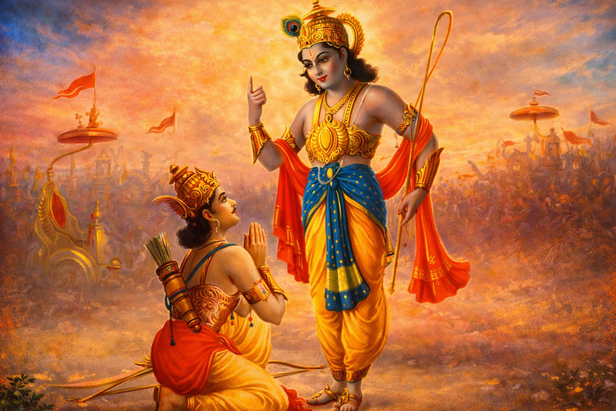
Krishna Guiding Arjuna on the Battlefield
Image credit : ChatGPT (ai)
In the Gita, Arjuna breaks down before the war. He must fight his own relatives and teachers. His hands tremble. His mind is confused. Krishna does not tell him to escape. He teaches him how to stand steady inside. This lesson applies today when we face family conflicts, workplace stress, or moral dilemmas. Karma Yoga teaches emotional strength. It says, do your duty without fear and without hatred. True peace is not the absence of problems. It is the ability to remain calm while solving them.
Action Without Attachment
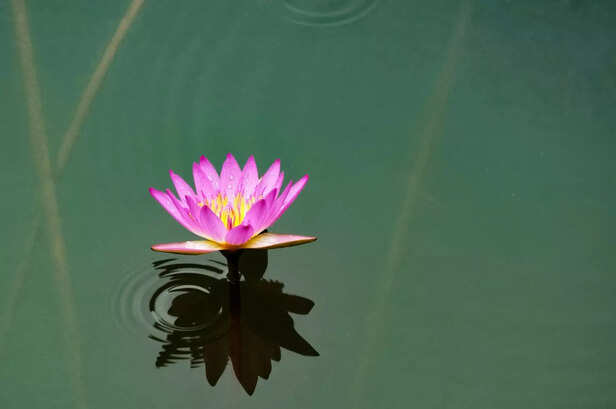
Lotus Rising Above Muddy Water
Image credit : Freepik
The core teaching of Karma Yoga is simple: act, but do not cling to results. When we work only for rewards, praise, or recognition, we become anxious and weak. But when we act with sincerity and dedication, something shifts inside. We feel lighter. Krishna tells Arjuna to focus on effort, not outcome. This wisdom is powerful in modern life where success is measured by marks, money, and likes. Karma Yoga reminds us that excellence comes from involvement, not obsession with results. Work becomes worship when ego disappears.
Responsibility Is Spiritual Strength

A Teacher Guiding a Child with Care
Image credit : Freepik
A Karma Yogi is not someone who runs away from life. It is someone who takes total responsibility. A teacher who cares for a child’s growth beyond salary is practicing Karma Yoga. A parent raising children with patience is practicing Karma Yoga. Even a student studying sincerely without comparing with others is a Karma Yogi. Spirituality is not escape. It is involvement with awareness. When work is done with dedication and without selfish craving, it purifies the mind and strengthens character.
Handling Emotional Battles
Balance of Silence and Dynamism
The Eternal Relevance of Karma Yoga
Stand in it. Act with total responsibility. Let go of craving and hatred. Be centered in peace and fight when necessary. This wisdom is timeless because human challenges are timeless. In classrooms, boardrooms, homes, and hearts Karma Yoga still works. When we practice it, we discover something powerful: The battlefield outside may remain. But inside, there is stillness. And from that stillness, right action naturally flows. That is why Karma Yoga is eternal.
Unlock insightful tips and inspiration on personal growth, productivity, and well-being. Stay motivated and updated with the latest at My Life XP.
Frequently Asked Questions (FAQs)
Karma Yoga is the path of selfless action taught in the Bhagavad Gita. It means doing your duty sincerely without worrying too much about the result. You work with full effort, but you do not become attached to success or failure. This keeps the mind peaceful and strong.
2. Who taught Karma Yoga and to whom?
Karma Yoga was taught by Krishna to Arjuna on the battlefield of Kurukshetra. Arjuna was confused and emotionally disturbed before the war. Krishna guided him on how to act with clarity and inner peace.
3. Is Karma Yoga only for spiritual people?
No. Karma Yoga is for everyone students, teachers, parents, workers, and leaders. You do not need to leave your job or go to the Himalayas. It is about your attitude while doing daily work.
4. How can Karma Yoga reduce stress?
Stress comes from fear of failure and craving for results. Karma Yoga teaches you to focus on effort, not outcome. When you give your best and let go of anxiety about results, the mind becomes lighter and calmer.
5. What is the main message of Karma Yoga?
The main message is simple: perform your duty with dedication, without attachment, and stay peaceful inside even during conflict.
6. Can Karma Yoga be practiced in modern life?
Yes. In today’s fast world full of competition and pressure, Karma Yoga is more relevant than ever. It helps you balance action and inner silence, ambition and peace.