Was Duryodhana a Villain- or a Victim of Circumstances?
Deepak Rajeev | Mon, 20 Apr 2026
This article explores whether Duryodhana was a villain or a victim of circumstances, highlighting how his upbringing, insecurities, and influences shaped his actions. While he made destructive choices driven by ego and jealousy, he was also deeply affected by environment and guidance, showing that his character reflects both personal responsibility and the powerful impact of circumstances.

Story of Duryodhana (Image Credit: AI)
In the vast and morally layered world of the Mahabharata, few characters provoke as much debate, discomfort, and divided opinion as Duryodhana, a man remembered by many as the face of arrogance and injustice, yet also seen by others as a product of forces far beyond his control. Because when you move beyond the surface narrative of good versus evil, a far more unsettling question begins to emerge: was Duryodhana truly the villain of the story, or was he shaped, pushed, and ultimately trapped by the very circumstances he was born into? The answer is not simple. And that is precisely why this question refuses to disappear.
![Duryodhana (Image Credit: AI)]()
There is no denying that Duryodhana stands at the center of the Mahabharata’s conflict, driving events that ultimately lead to one of the most devastating wars in mythology. From early childhood, his jealousy toward the Pandavas began to take form, growing into actions that crossed moral boundaries, including attempts to eliminate them and the infamous dice game that stripped them of their kingdom. His ego, often described as his defining trait, prevented him from accepting peace even when multiple opportunities were offered, pushing the world toward destruction instead of reconciliation. These actions are not small mistakes. They are decisions. And they come with consequences. From this perspective, the label of “villain” seems justified, because his choices did not just affect his own life, but led to the downfall of an entire dynasty.
![Duryodhana and Bhima (Image Credit: AI)]()
And yet, to stop the story here would be to ignore the deeper complexity that the Mahabharata itself presents. Duryodhana was not born in a vacuum. He was raised in a palace where insecurity, comparison, and silent rivalry were part of everyday life, growing up alongside cousins who were constantly praised, admired, and seen as rightful heirs, while he, despite being the king’s son, lived under the shadow of doubt and competition. His father, Dhritarashtra, was not just blind physically, but often blind in judgment as well, unable to discipline or guide him firmly, allowing his flaws to grow unchecked.
At the same time, his closest influence, Shakuni, did not calm his anger, but sharpened it, feeding his insecurities and turning them into calculated hostility. This does not excuse Duryodhana. But it explains him. Because human behavior rarely emerges without influence.
One of the most overlooked aspects of Duryodhana’s character is not his hatred, but its source. It was not born from nothing. It was born from comparison. Watching the Pandavas succeed, gain respect, and earn admiration created a constant sense of inferiority within him, which slowly transformed into resentment, and eventually into obsession. This psychological pattern is not unique to mythology. It is deeply human. And it raises a difficult question. If someone is shaped by jealousy, insecurity, and constant comparison from a young age, at what point do they become fully responsible for who they become?
Modern interpretations of the Mahabharata often take this question even further, suggesting that Duryodhana may not fit neatly into the role of a villain at all. Some scholars describe him as an anti-hero, a figure who embodies strength, loyalty, and warrior ethics, yet is undone by pride and refusal to compromise. He was not cowardly. He was not weak. He was a powerful warrior, a loyal friend to Karna, and someone who stood firmly by those he considered his own, even when the world stood against him. And perhaps this is what makes him so compelling. Because he was not entirely wrong. But he was not entirely right either.
At the center of this debate lies a truth that cannot be ignored. Circumstances may shape a person. But they do not remove choice. Duryodhana was given multiple chances to change course, to accept peace, to share power, and to avoid destruction, yet he refused each time, not because he was forced to, but because he chose not to. This is where the narrative shifts. From victim to decision-maker. From influence to accountability. Because at some point, every individual steps beyond their circumstances and defines themselves through action.
To call Duryodhana purely a villain is to ignore the complexity of his upbringing, his environment, and the psychological forces that shaped him. To call him purely a victim is to ignore the consequences of his decisions, the suffering he caused, and the opportunities he rejected. The Mahabharata does not offer easy labels. And perhaps that is intentional. Because Duryodhana represents something far more uncomfortable than a villain. He represents possibility. The possibility that under the right circumstances, with the wrong influences, and with unchecked emotions, anyone can walk a similar path.
So was Duryodhana a villain- or a victim of circumstances? The answer is not one or the other. He was both. A man shaped by his environment. And a man responsible for his choices. A victim of influence. And a creator of destruction. And perhaps that is why his story continues to resonate, because it refuses to let us separate good and evil cleanly. It forces us to confront something far more unsettling. That the line between the two is thinner than we think.
Unlock insightful tips and inspiration on personal growth, productivity, and well-being. Stay motivated and updated with the latest at My Life XP.
The Villain the World Remembers
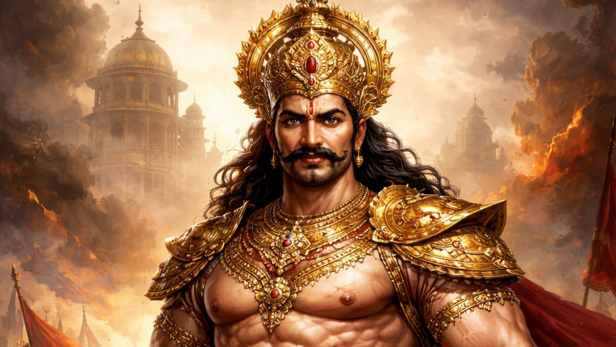
Duryodhana (Image Credit: AI)
There is no denying that Duryodhana stands at the center of the Mahabharata’s conflict, driving events that ultimately lead to one of the most devastating wars in mythology. From early childhood, his jealousy toward the Pandavas began to take form, growing into actions that crossed moral boundaries, including attempts to eliminate them and the infamous dice game that stripped them of their kingdom. His ego, often described as his defining trait, prevented him from accepting peace even when multiple opportunities were offered, pushing the world toward destruction instead of reconciliation. These actions are not small mistakes. They are decisions. And they come with consequences. From this perspective, the label of “villain” seems justified, because his choices did not just affect his own life, but led to the downfall of an entire dynasty.
The Circumstances Few Talk About
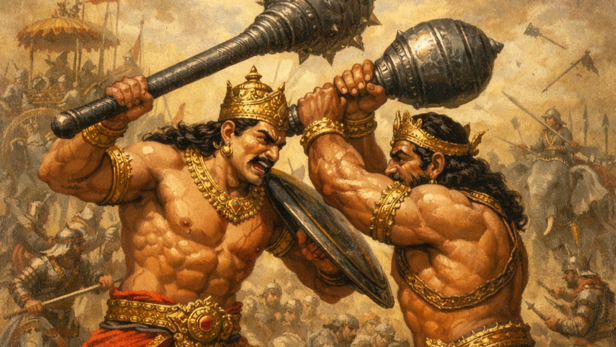
Duryodhana and Bhima (Image Credit: AI)
And yet, to stop the story here would be to ignore the deeper complexity that the Mahabharata itself presents. Duryodhana was not born in a vacuum. He was raised in a palace where insecurity, comparison, and silent rivalry were part of everyday life, growing up alongside cousins who were constantly praised, admired, and seen as rightful heirs, while he, despite being the king’s son, lived under the shadow of doubt and competition. His father, Dhritarashtra, was not just blind physically, but often blind in judgment as well, unable to discipline or guide him firmly, allowing his flaws to grow unchecked.
At the same time, his closest influence, Shakuni, did not calm his anger, but sharpened it, feeding his insecurities and turning them into calculated hostility. This does not excuse Duryodhana. But it explains him. Because human behavior rarely emerges without influence.
A Man Driven by Comparison
One of the most overlooked aspects of Duryodhana’s character is not his hatred, but its source. It was not born from nothing. It was born from comparison. Watching the Pandavas succeed, gain respect, and earn admiration created a constant sense of inferiority within him, which slowly transformed into resentment, and eventually into obsession. This psychological pattern is not unique to mythology. It is deeply human. And it raises a difficult question. If someone is shaped by jealousy, insecurity, and constant comparison from a young age, at what point do they become fully responsible for who they become?
The Anti-Hero Argument
Modern interpretations of the Mahabharata often take this question even further, suggesting that Duryodhana may not fit neatly into the role of a villain at all. Some scholars describe him as an anti-hero, a figure who embodies strength, loyalty, and warrior ethics, yet is undone by pride and refusal to compromise. He was not cowardly. He was not weak. He was a powerful warrior, a loyal friend to Karna, and someone who stood firmly by those he considered his own, even when the world stood against him. And perhaps this is what makes him so compelling. Because he was not entirely wrong. But he was not entirely right either.
The Choices That Changed Everything
At the center of this debate lies a truth that cannot be ignored. Circumstances may shape a person. But they do not remove choice. Duryodhana was given multiple chances to change course, to accept peace, to share power, and to avoid destruction, yet he refused each time, not because he was forced to, but because he chose not to. This is where the narrative shifts. From victim to decision-maker. From influence to accountability. Because at some point, every individual steps beyond their circumstances and defines themselves through action.
So Who Was He, Really?
To call Duryodhana purely a villain is to ignore the complexity of his upbringing, his environment, and the psychological forces that shaped him. To call him purely a victim is to ignore the consequences of his decisions, the suffering he caused, and the opportunities he rejected. The Mahabharata does not offer easy labels. And perhaps that is intentional. Because Duryodhana represents something far more uncomfortable than a villain. He represents possibility. The possibility that under the right circumstances, with the wrong influences, and with unchecked emotions, anyone can walk a similar path.
Conclusion: The Answer That Divides Everyone
So was Duryodhana a villain- or a victim of circumstances? The answer is not one or the other. He was both. A man shaped by his environment. And a man responsible for his choices. A victim of influence. And a creator of destruction. And perhaps that is why his story continues to resonate, because it refuses to let us separate good and evil cleanly. It forces us to confront something far more unsettling. That the line between the two is thinner than we think.
Unlock insightful tips and inspiration on personal growth, productivity, and well-being. Stay motivated and updated with the latest at My Life XP.