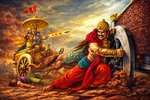
What Chandra Dev Hid About Abhimanyu’s Life and Death
Noopur Kumari | Mon, 16 Mar 2026
Abhimanyu wasn’t just any warrior he was the son of Chandra Dev, destined for greatness. But a father’s protective condition limited his lifespan on Earth. This divine stipulation explains why he met his end in the Chakravyuha, despite unmatched skill. Explore the untold story of courage, cosmic rules, and sacrifice that turned one young warrior into a timeless symbol of heroism. Discover how love, duty, and destiny intersected to create one of Mahabharata’s most heart-wrenching moments.

Chandra Dev’s
Image credit : ChatGPT (AI)
Abhimanyu’s bravery in the Mahabharata war is legendary, yet very few know why his life was so tragically short. The reason lies not in his enemies, but in a secret condition set by Chandra Dev, his celestial father. This hidden divine rule shaped his fate from birth, ensuring that his heroism was both awe inspiring and fleeting.
![Abhimanyu Entering Chakravyuha]()
Abhimanyu was not an ordinary child. Born to Arjuna and Subhadra, he carried the divine energy of Chandra Dev. Legends say his father, bound by love, set a condition: Abhimanyu could live on Earth, but only for a short period. This divine limit meant that while he would achieve unimaginable bravery, his life was destined to be tragically short. From a young age, he displayed extraordinary skills, courage, and intelligence, preparing for the day he would step into the battlefield and leave an everlasting mark on history.
Chandra Dev’s Protective Condition
![Divine Condition of Chandra Dev”]()
Chandra Dev’s condition was simple yet profound: Abhimanyu could live on Earth, but only briefly. The gods accepted this, knowing his heroism would be crucial for the Mahabharata war. This divine rule was designed to protect him while ensuring destiny unfolded. It was a cosmic balance—his life had to be powerful yet short, showing that even divine offspring are bound by rules. This hidden clause explains why Abhimanyu could penetrate the Chakravyuha with unmatched courage, yet could not survive the deadly battle, despite his unparalleled skills.
![Abhimanyu in the Chakravyuha”]()
During the Kurukshetra war, Abhimanyu entered the Chakravyuha, a complex military formation, alone. His skill and courage stunned everyone, including seasoned warriors. However, due to Chandra Dev’s condition, he could not master the exit strategy fully. His life’s divine limit intersected tragically with the battlefield, ensuring that while he displayed heroic brilliance, his fate was already sealed. This moment immortalized him as the ultimate symbol of courage and sacrifice, demonstrating how divine rules, human effort, and destiny collide in epic stories.
Abhimanyu’s death teaches a timeless lesson: heroism is measured not by lifespan but by impact. Despite his short time, he shaped the outcome of the war, inspired generations, and became a symbol of bravery. Chandra Dev’s protective condition shows that even divine beings must obey cosmic rules. The tragedy highlights how love, fate, and duty intertwine, making his story not just a tale of loss but a profound example of courage, sacrifice, and the inevitability of destiny.
Abhimanyu’s life, though short, is a lesson in bravery, focus, and acceptance of destiny. We learn that challenges may be unavoidable, yet how we face them defines our legacy. Like Abhimanyu, we can achieve greatness even within limitations. His story reminds us to act with courage, honor our responsibilities, and accept life’s constraints while leaving a lasting impact. Every obstacle can be a chance to shine if faced with determination, skill, and heart. Even in brevity, heroism can become eternal.
Abhimanyu’s life was a delicate balance of divine love, cosmic rules, and heroic destiny. Chandra Dev’s condition limited his time on Earth but ensured his courage would shine forever. His brief life teaches us that true heroism is not measured by years, but by deeds, courage, and the mark we leave behind. By embracing challenges with skill, focus, and bravery, we too can turn our fleeting moments into timeless legacies. Abhimanyu remains a shining example that even in limited time, one can achieve eternal greatness.
Unlock insightful tips and inspiration on personal growth, productivity, and well-being. Stay motivated and updated with the latest at My Life XP.
1. Who was Abhimanyu in Mahabharata?
Abhimanyu was the son of Arjuna and Subhadra, known for his unmatched bravery and skill, especially in entering the deadly Chakravyuha formation.
2. Why did Abhimanyu die so young?
A divine condition set by Chandra Dev, his celestial father, limited his lifespan on Earth, making his heroic life tragically short.
3. What was Chandra Dev’s secret condition?
Abhimanyu could live on Earth and display incredible heroism, but only for a limited time, as per his father’s love-driven restriction.
4. Could Abhimanyu have survived the war?
No. Even his exceptional skill couldn’t bypass the cosmic rule set by Chandra Dev—it was destiny.
5. What is the lesson from Abhimanyu’s story?
Heroism is measured not by lifespan but by courage, action, and legacy. Even a short life can leave a timeless impact.
Abhimanyu: A Hero Born of the Moon
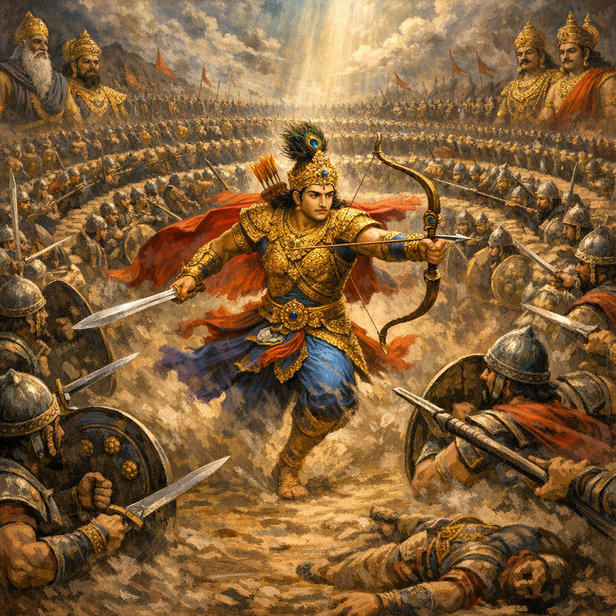
Abhimanyu Entering Chakravyuha
Image credit : CHATGPT(AI)
Abhimanyu was not an ordinary child. Born to Arjuna and Subhadra, he carried the divine energy of Chandra Dev. Legends say his father, bound by love, set a condition: Abhimanyu could live on Earth, but only for a short period. This divine limit meant that while he would achieve unimaginable bravery, his life was destined to be tragically short. From a young age, he displayed extraordinary skills, courage, and intelligence, preparing for the day he would step into the battlefield and leave an everlasting mark on history.
Chandra Dev’s Protective Condition
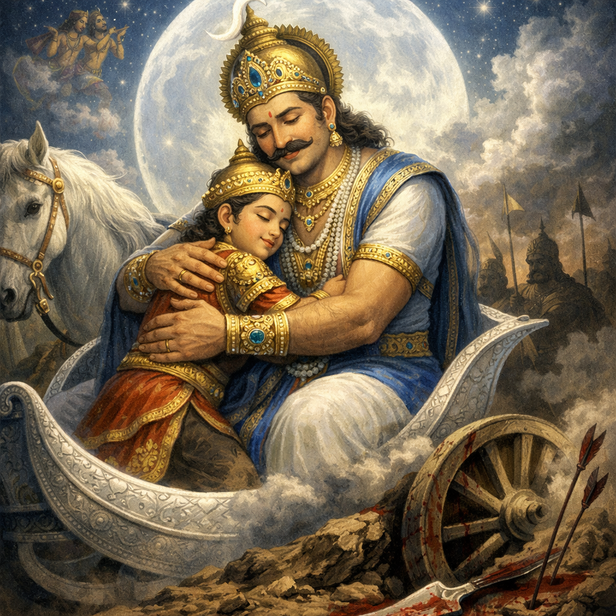
Divine Condition of Chandra Dev”
Image credit : CHATGPT(AI)
Chandra Dev’s condition was simple yet profound: Abhimanyu could live on Earth, but only briefly. The gods accepted this, knowing his heroism would be crucial for the Mahabharata war. This divine rule was designed to protect him while ensuring destiny unfolded. It was a cosmic balance—his life had to be powerful yet short, showing that even divine offspring are bound by rules. This hidden clause explains why Abhimanyu could penetrate the Chakravyuha with unmatched courage, yet could not survive the deadly battle, despite his unparalleled skills.
The Legendary Chakra-Vyuha Entry
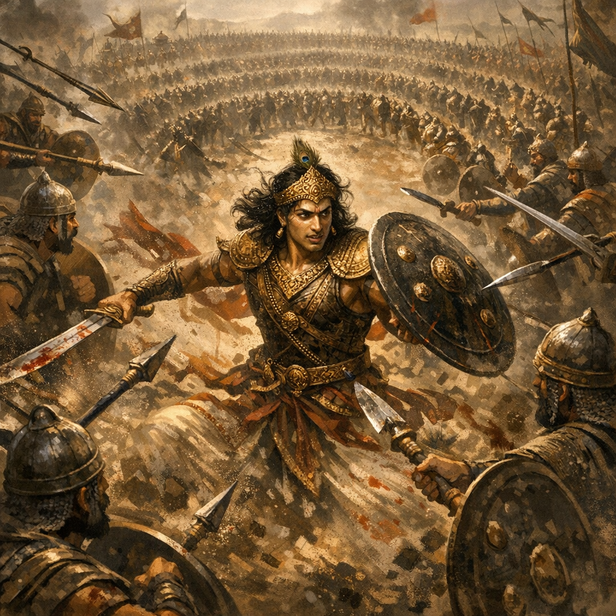
Abhimanyu in the Chakravyuha”
Image credit : CHATGPT(AI)
During the Kurukshetra war, Abhimanyu entered the Chakravyuha, a complex military formation, alone. His skill and courage stunned everyone, including seasoned warriors. However, due to Chandra Dev’s condition, he could not master the exit strategy fully. His life’s divine limit intersected tragically with the battlefield, ensuring that while he displayed heroic brilliance, his fate was already sealed. This moment immortalized him as the ultimate symbol of courage and sacrifice, demonstrating how divine rules, human effort, and destiny collide in epic stories.
The Cosmic Lesson of His Death
What We Can Learn From Abhimanyu
Legacy of Abhimanyu
Unlock insightful tips and inspiration on personal growth, productivity, and well-being. Stay motivated and updated with the latest at My Life XP.
Frequently Asked Questions (FAQs)
Abhimanyu was the son of Arjuna and Subhadra, known for his unmatched bravery and skill, especially in entering the deadly Chakravyuha formation.
2. Why did Abhimanyu die so young?
A divine condition set by Chandra Dev, his celestial father, limited his lifespan on Earth, making his heroic life tragically short.
3. What was Chandra Dev’s secret condition?
Abhimanyu could live on Earth and display incredible heroism, but only for a limited time, as per his father’s love-driven restriction.
4. Could Abhimanyu have survived the war?
No. Even his exceptional skill couldn’t bypass the cosmic rule set by Chandra Dev—it was destiny.
5. What is the lesson from Abhimanyu’s story?
Heroism is measured not by lifespan but by courage, action, and legacy. Even a short life can leave a timeless impact.